

 17 minutes
Conductor CEO Charlie Holtz Walks Us Through His AI Coding Setup
Set up a multi-agent coding workflow with explicit review boundaries so generated changes stay small, tested and owned.
AdvancedAI for Business
Production depth. System design, evals, and the hard architectural calls.
48 results
Nothing matches these filtersTry a different category or level, or clear the filters to see everything.
17 minutesSet up a multi-agent coding workflow with explicit review boundaries so generated changes stay small, tested and owned.
 56 minutes
Build an ROI case for one AI workflow with a baseline, direct and indirect benefits, quality gates and an explicit stop decision.
 41 minutes
Make AI build-vs-buy decisions around outcome, data control, workload economics, infrastructure readiness and operational ownership.
 20 minutes
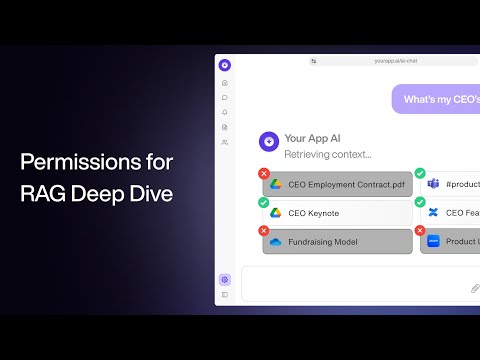
Evaluate practical access-control patterns for company knowledge RAG before indexing sensitive internal documents.
 30 minutes
Compare the video's historical timeline with current EU law, then map the current deadlines to the vendor-evidence and ownership tasks an SME must schedule.
 37 minutes
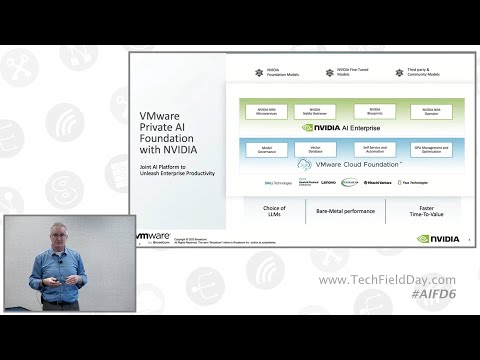
Evaluate private AI as an infrastructure and governance decision instead of defaulting to either SaaS or self-hosting by instinct.
 69 minutes
Recognize the failure modes your own agents will hit first and pre-plan the tests, fallbacks and kill criteria for each.
 7 minutes
Understand why document parsing, structure preservation and ingestion quality gates matter before building RAG over PDFs and mixed file formats.
 6 minutes
Recognize the core architecture of a voice agent and the failure points that affect customer trust in real calls.
 211 minutes
Understand the modern LLM stack well enough to reason about tokens, training, tools and failures.
 40 minutes
Evaluate partial-autonomy product ideas where humans keep control over high-risk decisions.
 190 minutes
You can build a LangGraph agent with typed state, conditional routing, checkpoints and tool use, and feel where the explicitness pays off.
 66 minutes
You can stand up a CrewAI crew in the role-goal-backstory style and judge how its hidden execution loop compares with explicit graphs.
 15 minutes
Design simpler agent loops with clear stopping rules, task boundaries and human control points.
 18 minutes
Recognize common agent-building pitfalls before adding multiple agents, complex prompts or hidden state.
 5 minutes
Understand why screenshot-based computer use is powerful, slow, expensive and brittle compared with API-native automation.
 8 minutes
Decide where browser or computer-use agents might be commercially useful despite their operational risk.
 22 minutes
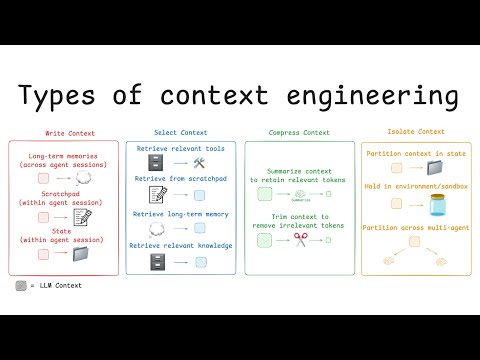
Apply write, select, compress and isolate patterns to manage agent context deliberately.
 8 minutes
Understand how long context can fail under ambiguity and distractors, then design tests around that risk.
 19 minutes
You can estimate when prompt caching pays off by weighing cache-write surcharges against read savings for your real workloads.
 56 minutes
Use prompt caching only when stable prefixes, latency and cost behavior match the workload.
 55 minutes
Design an eval ladder that catches regressions before prompt or model changes reach users.
 19 minutes
See how a production team layers assertions, human review and LLM judges so regressions surface before release.
 157 minutes
You will be able to run quantisation, LoRA and QLoRA fine-tunes end to end on hardware most developers already have.
 59 minutes
Place fine-tuning inside the broader training pipeline and decide when it is better than prompting or RAG.
 104 minutes
Understand how MCP fits into agentic systems beyond a local demo server.
 75 minutes
Build a first MCP server and understand how tools, schemas, prompts, resources and transports fit together.
 19 minutes
Improve tool design so agents select the right action with the right parameters.
 29 minutes
Decide which behavior belongs in the system prompt, tool description or tool precondition.
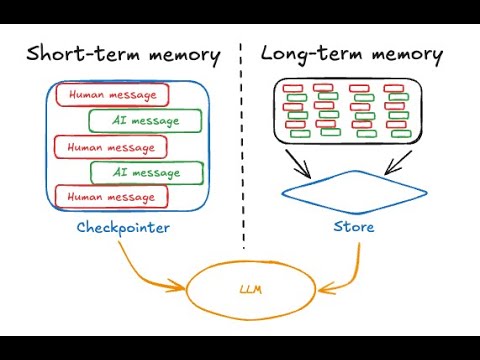 7 minutes
Separate short-term and long-term memory decisions and decide when agent memory should be written.
 44 minutes
You can wire episodic, semantic, working and procedural memory into an agent in code, not just name the categories.
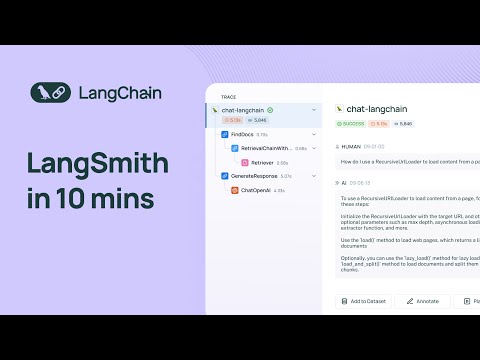 9 minutes
You can navigate traces, projects and datasets in LangSmith and read off token cost, latency, error rate and per-span detail.
 154 minutes
Connect tracing, evaluation, feedback and production review into an operating loop for LLM systems.
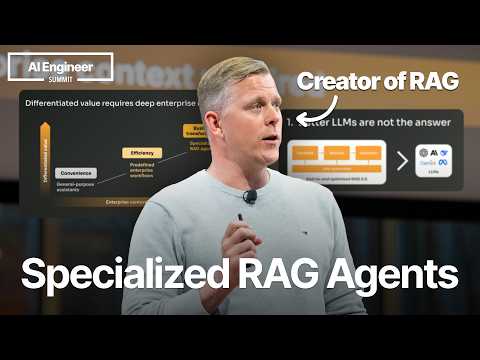 17 minutes
Understand what breaks when RAG moves into regulated, high-stakes enterprise use.
 19 minutes
Identify the production RAG controls missing from naive document-chat demos.
 13 minutes
Model prompt injection as untrusted-data mixing and design boundaries around tool use.
 17 minutes
Review prompt-injection defenses such as taint analysis, output-shape restrictions, user isolation, deterministic settings and redundant checks for critical paths.
 9 minutes
Explain when retrieval is the right fix and when fine-tuning may actually help.
 13 minutes
Choose between prompt engineering, RAG, fine-tuning or a combination based on the actual failure mode.
 77 minutes
Hear how production prompt engineers revise instructions, examples and behavioral constraints under real pressure instead of treating prompts as one-off text.
 25 minutes
Watch a vague insurance-claims prompt become a structured, testable prompt with clearer examples, output rules and refusal behavior.
 39 minutes
Compare agentic retrieval and graph retrieval in a concrete implementation.
 16 minutes
Understand the Microsoft-style GraphRAG flow: entity extraction, communities, summaries and query-focused synthesis.
 32 minutes
Understand why serving engines, batching and KV-cache memory dominate self-hosted inference economics.
 42 minutes
Assess when vertical AI agents create real defensibility and when they are only thin wrappers.
 34 minutes
Evaluate AI product pricing and specialization around measurable outcomes rather than seat counts.
 41 minutes
You can explain what strict mode guarantees, how it differs from old JSON mode, and how refusal handling fits the structured-output contract.
 18 minutes
Learn why schema-first LLM calls need typed objects, validators, retries and explicit handling for malformed or hallucinated fields.