
 7 minutes
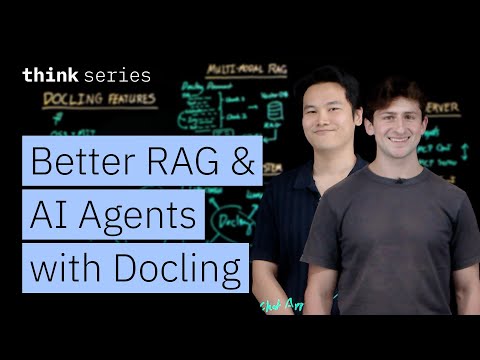
Unlock Better RAG & AI Agents with Docling
Understand why document parsing, structure preservation and ingestion quality gates matter before building RAG over PDFs and mixed file formats.
AdvancedAI Safety & Data Privacy
Paragon. Walks through the production RAG permission problem and compares tool-calling, namespaces, ACL tables and relationship-based permissions. That directly supports the article's core rule: retrieval must only return sources the current user is allowed to see, and source-system permissions cannot be treated as an afterthought.
This is a vendor tutorial, so do not copy the graph recommendation blindly. Use it to understand the tradeoffs, then choose the simplest permission model that matches the source systems, sensitivity level, tenancy model and operations capacity.
Evaluate practical access-control patterns for company knowledge RAG before indexing sensitive internal documents.
Basic RAG architecture, vector databases, OAuth or integration-provider permissions, and backend authorization concepts.
Last reviewed: May 18, 2026
Continue through the same learning path with the next curated companion videos.
7 minutesUnderstand why document parsing, structure preservation and ingestion quality gates matter before building RAG over PDFs and mixed file formats.
 66 minutes
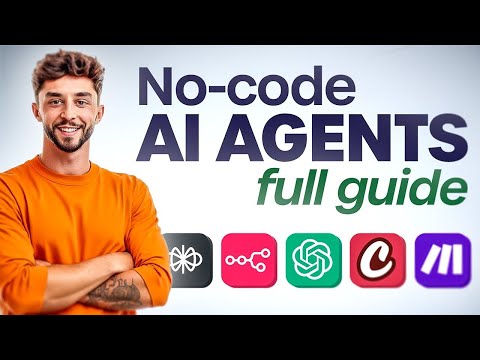
See the full beginner workflow for building a small Cursor project, including setup, prompting, debugging, basic Git and the limits of AI-assisted coding.
 231 minutes
See how a support agent combines retrieval, escalation and workflow tools before production hardening.
Hand-picked external courses that go deeper on this topic.
 AWS Skill Builder
AWS Training and Certification
A cloud-vendor-specific complement to the Macquarie specialization: AWS's own Generative AI Security Scoping Matrix, OWASP Top 10 for LLMs, and MITRE ATLAS, walked through governance, legal, and compliance controls for five different AI deployment scopes — from consumer apps to self-trained models. Not GDPR-specific, but a genuinely practical advanced pick for teams whose AI workloads actually run on AWS and need concrete data-governance and compliance controls, not just theory.
 Coursera · Macquarie University
Macquarie University Cyber Security Hub faculty
An advanced pick for professionals responsible for both GDPR compliance and AI security: a three-course specialization from Macquarie University's Cyber Security Hub that goes from GDPR/CCPA fundamentals and privacy-by-design, through privacy impact assessments, to a dedicated third course on securing AI systems against adversarial attacks and model leakage. It genuinely bridges the two rather than treating them as separate topics.
 EU Digital Skills & Jobs Platform · CyberSuite
CyberSuite
The rare AI Act course written for the companies the Act actually reaches: SMEs adopting AI, not the labs building it. Hosted on the European Commission's own skills platform, it pairs the legal side — roles, obligations, risk classification — with the security side (prompt injection, data leakage, supplier due diligence) that most compliance courses skip. For an Estonian SME deploying AI, this is the practical starting point.