

AI for Business
Business-facing AI systems, adoption choices, customer workflows, and measurable outcomes.
34 stories (17 articles · 17 videos)
Start here
A few good first pieces before you browse the full feed.
 9 min read
Designing a team AI adoption playbook
A practical AI adoption playbook: choose bounded use cases, involve affected staff, set data and decision rules, train on real work, and measure impact against a baseline.
Intermediate 7 min read
AI ROI and maturity: how to measure adoption that actually works
AI adoption should not be measured by how many people tried ChatGPT. A practical framework for measuring workflow ROI, quality, risk, maturity, and scale-readiness.
Advanced 7 min read
Build vs buy AI systems: the practical decision framework
Compare buy, configure, extend, build, and self-host options with the same requirements, veto gates, representative trial, and total-cost model.
AdvancedMore in this topic
 6 min read
DGX Spark: what it is, who it is for, and what changed for local agents
A grounded read of NVIDIA DGX Spark: Grace Blackwell GB10 specs from NVIDIA, coherent unified memory, ConnectX-7 clustering, and when a desk-side agent computer is the right private AI bet.
Advanced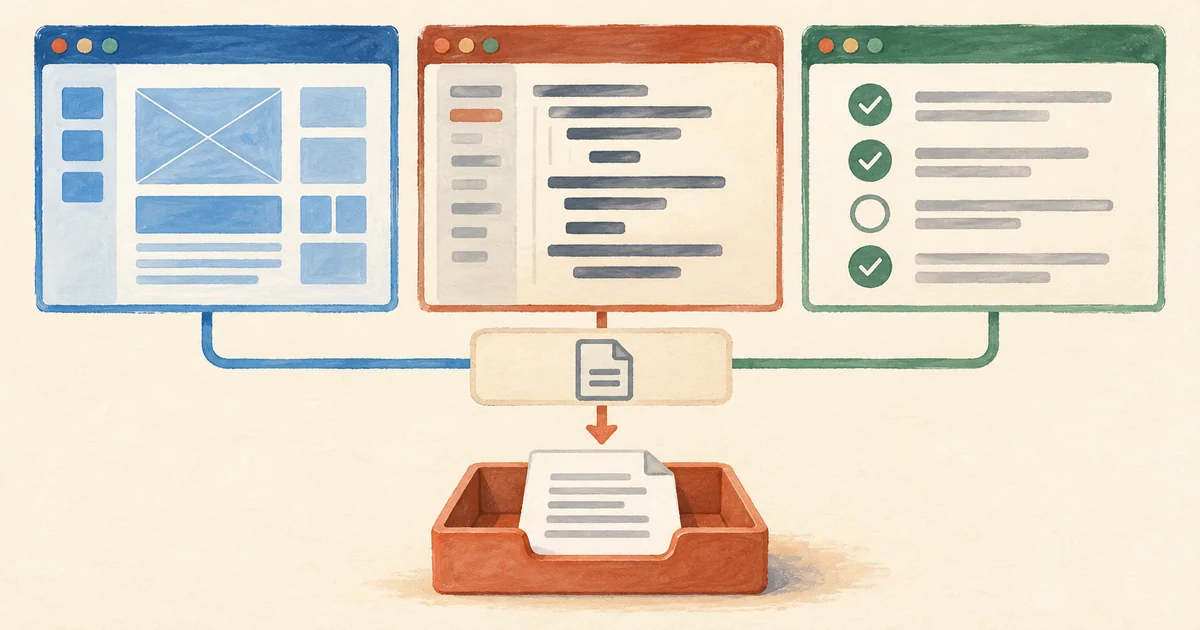 8 min read
Make Codex, Claude Code, and Cursor work as one CLI team
Coordinate interchangeable drafting, implementation and review roles across Codex, Claude Code and Cursor using shared instructions, isolated workspaces and a checked file handoff.
Advanced 8 min read
Multi-agent project management with Linear: Claude, Cursor, and Codex on one backlog
Run Claude Code, Cursor, and Codex against the same Linear project like a real engineering team: claim work, mark progress, hand off review, fix findings, and close issues without stepping on each other.
Advanced 8 min read
The dignity of work when machines can do more of it
A practical job-redesign assessment for SME leaders: examine worker voice, retained judgement, skill paths, workload, monitoring, and appeal before declaring an automation successful.
Intermediate 8 min read
What to tell your team when you automate part of their job
A practical communication sequence for automation projects: what to say before the decision hardens, which commitments build trust, and which promises managers should not make.
Intermediate 32 minutes
How to Build Human-Centered AI Workflows in Localization with Shashi Bhushan
Crowdin. Shashi Bhushan starts with workflow mapping rather than tool selection, then covers source-text quality, human review, AI proofreading, glossary checks, product-team involvement, pilots and privacy constraints. That is almost exactly the operating model the article recommends for Estonian teams working across Estonian, English, Russian, Finnish and customer-specific terminology.
Intermediate 4 minutes
Introducing EmbeddingGemma: The Best-in-Class Open Model for On-Device Embeddings
Google for Developers. The video introduces multilingual text embeddings that can run locally and support semantic search and RAG without sending every document to a hosted API. For Estonian companies, that is a useful technical complement to the article's internal-knowledge-search pattern: multilingual retrieval is valuable only when it also respects data locality, permissions and source authority.
Intermediate 17 minutes
Conductor CEO Charlie Holtz Walks Us Through His AI Coding Setup
Y Combinator. A concrete senior-engineering walkthrough rather than a panel: Holtz compares Claude Code and Codex, orchestrates several coding agents in parallel, and marks "slop-free zones" where generated code is not allowed to land unreviewed. The setup embodies the article's rules — repository context, small reviewable patches, and the human staying architect while the agents do the typing.
Advanced 56 minutes
AI Agents in Finance with HPE's Chief Financial Officer (CFO)
CXOTalk. HPE CFO Marie Myers describes rolling agentic AI (their "Alfred" platform) across a 3,600-person finance organization with the discipline the article argues for: a direct-versus-indirect ROI framework, stage gates that decide whether each use case continues or stops, mandatory human-in-the-loop quality controls, and workflow-level metrics such as a weekly review process losing roughly 90% of its manual effort. Adoption is measured as changed work, not tool logins.
Advanced 41 minutes
Private AI vs. Cloud: How Enterprise Leaders Can Make Smarter Build-or-Buy Decisions
World Wide Technology. Connects build-or-buy choices to business outcomes, workload placement, cloud economics, data sovereignty, security, infrastructure readiness and hybrid operating models. That makes it a useful strategic companion for deciding when to buy a tool, extend a platform, build a thin custom layer or own more of the deployment stack.
Advanced 7 min read
Multilingual AI workflows for Estonian companies
A practical workflow model for Estonian companies working across Estonian, English, Russian, Finnish, and other customer languages without losing tone, terminology, privacy, or accountability.
Intermediate 6 min read
AI-native IDEs and repository-aware coding workflows
Cursor, Copilot, Claude Code, and repository-aware agents change software work only when teams add boundaries. A practical workflow for codebase context, planning, tests, review, secrets, and production safety.
Advanced 9 min read
EU AI Act for SMEs: a practical governance plan
The EU AI Act is not just a legal problem for large vendors. A practical SME plan for inventory, risk classification, human oversight, transparency, vendor records, and rollout discipline.
Advanced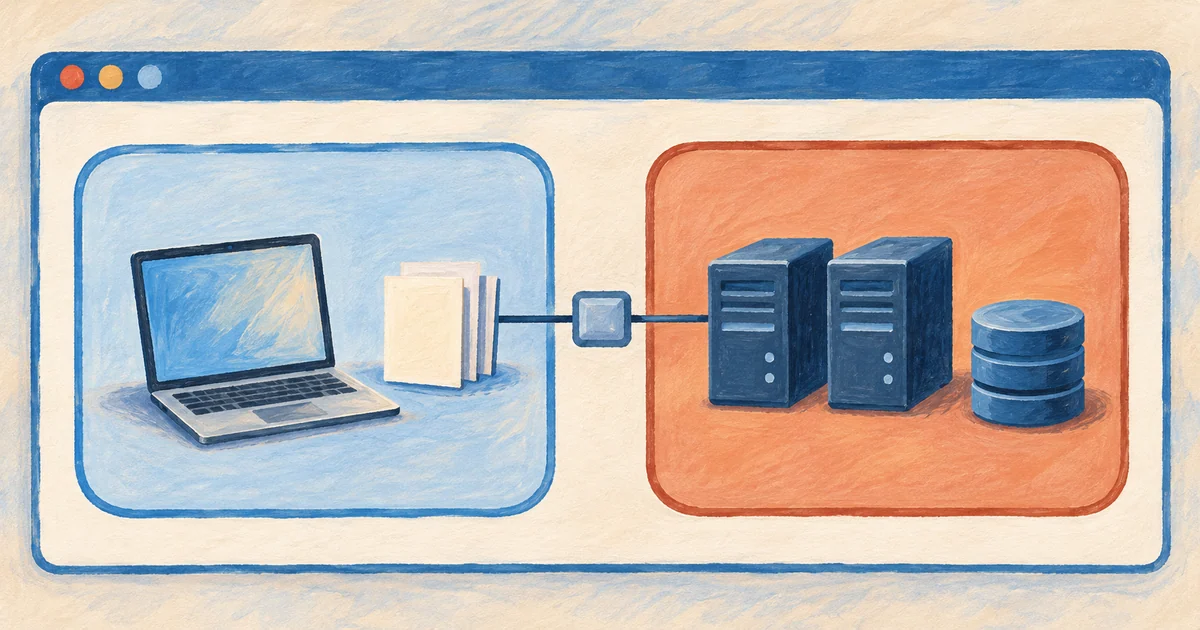 8 min read
Private AI deployment patterns: local, VPC, self-hosted, and hybrid
Private AI is not one architecture. A practical comparison of local models, enterprise SaaS, VPC deployments, self-hosted inference, and hybrid patterns for SMEs that care about privacy and control.
Advanced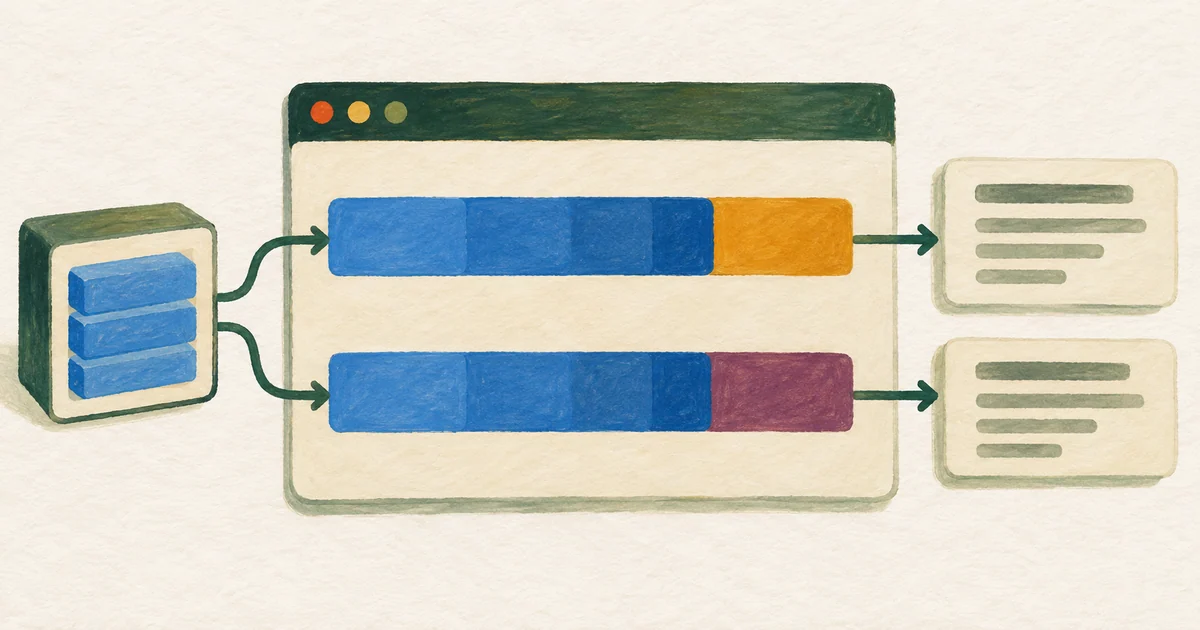 8 min read
Cost-optimizing inference: prompt caching, routing, and output control
Build a trace-based inference cost model, optimize the largest measured contributors, and prove that each change preserves task quality.
Advanced 13 min read
Evals for non-engineers: know if your AI workflow is getting better or worse
A practical introduction to evaluating an AI workflow with representative examples, explicit rubrics, qualified labels, release rules, and a spreadsheet when that is sufficient.
Intermediate 8 min read
Designing MCP tools that LLMs actually use correctly
An MCP tool can be technically correct yet difficult for a model to select or call safely. Learn how names, schemas, errors, authorization and evaluation shape agent tool use.
Advanced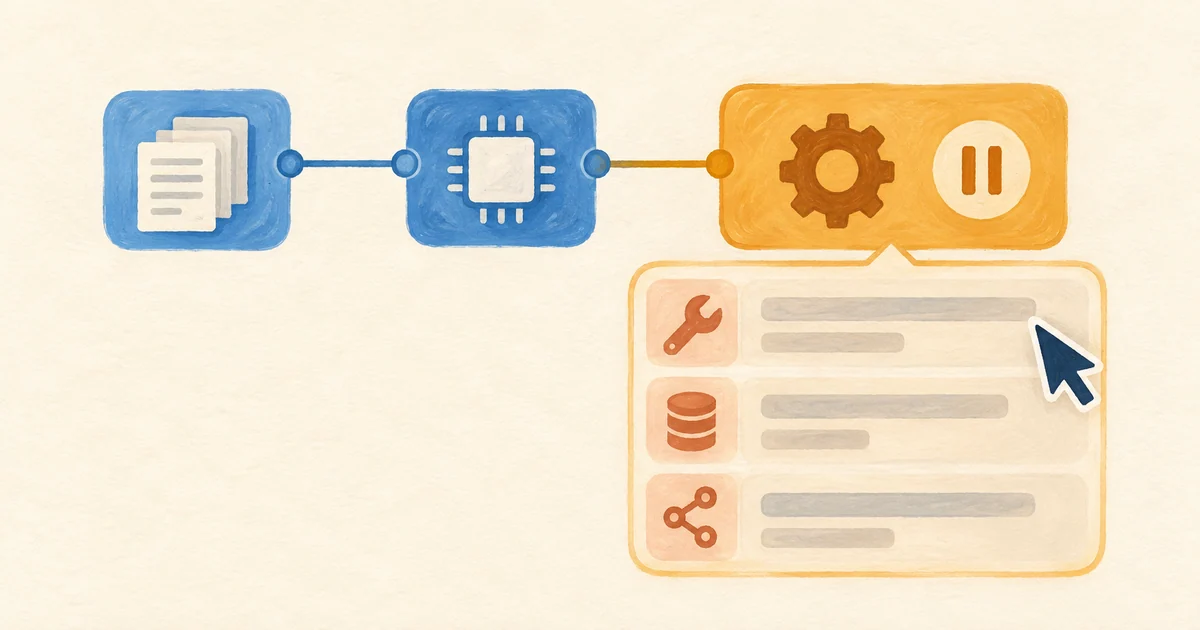 12 min read
Observability for LLM apps: tracing, costs, latency, quality drift
Extend ordinary observability with multi-step traces, attributable cost, prompt and model versions, evaluated quality signals, privacy controls, and workload-derived alerts.
Advanced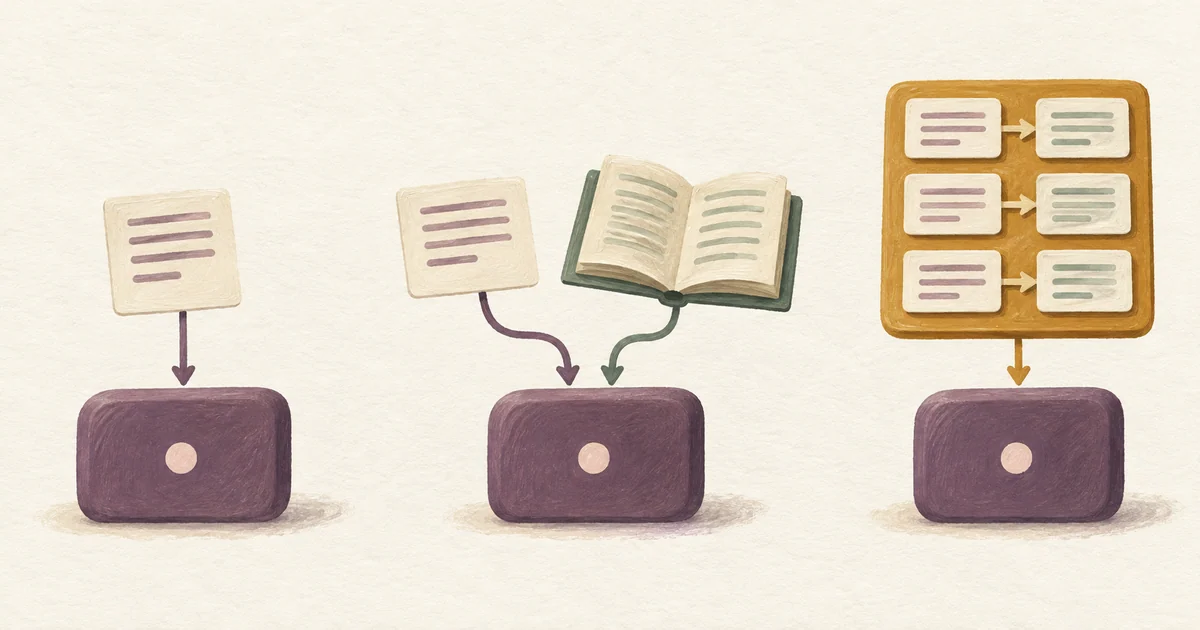 12 min read
Choosing between prompting, RAG, and fine-tuning (and when to combine)
Diagnose whether an LLM task needs clearer instructions, current source context or a training experiment. Compare quality, access requirements and total operating cost before combining methods.
Advanced 19 minutes
Is This the End of RAG? Anthropic's NEW Prompt Caching
Prompt Engineering. Walks through Anthropic's prompt caching against Gemini's context caching with concrete latency-and-cost reductions per use case (long-document chat, few-shot, multi-turn). The breakdown of cache-write surcharge vs. cache-read discount is exactly what the article assumes when it talks about when caching pays off.
Advanced 56 minutes
Build Hour: Prompt Caching
OpenAI. OpenAI's own Build Hour on prompt caching — the 1024-token threshold, the prefix-stability requirement, steep audio-caching discounts for realtime (check the current pricing page for the exact rate), time-to-first-token impacts at long inputs. Useful when you are sizing the engineering effort to actually hit the cache reliably on your production prompts.
Advanced 107 minutes
Why AI evals are the hottest new skill for product builders | Hamel Husain & Shreya Shankar
Lenny's Podcast. Hamel Husain and Shreya Shankar walk through the entire eval workflow on a real property-management AI assistant — looking at traces, open and axial coding of errors, deciding when to stop, building an LLM-as-judge, and validating it against human judgment. This is the rare long-form conversation that is genuinely aimed at PMs and team leads rather than ML engineers, and complements the article's requirement for an owned review cadence tied to changes, incidents and observed failures.
Intermediate 3 minutes
Evaluate prompts in the Anthropic Console
Anthropic. A three-minute Anthropic walkthrough of running a real eval inside the Workbench — auto-generating realistic test cases, grading outputs, tweaking the prompt, and re-running the same suite side-by-side. The view count sits below the usual bar, but for "how do I actually do this without writing code" this is the cleanest official demo and slots neatly under the more strategic Husain/Shankar conversation.
Intermediate 19 minutes
Building more effective AI agents
Anthropic. Anthropic engineers walking through what they actually changed when their multi-agent systems were misusing tools — collapsing endpoints, returning names instead of IDs, leaning on MCPs and Agent Skills instead of stuffing more tools into the system prompt. Maps point-for-point onto the article's checklist for tool descriptions and return-shape design.
Advanced 29 minutes
Prompting for Agents | Code w/ Claude
Anthropic. Hannah Moran and Jeremy Hadfield from Applied AI walking through how to phrase tool calls and agent prompts on a real Pokemon-playing agent — when to push behavior into the system prompt versus the tool description, what the model needs to know about each tool's preconditions. Useful immediately after you write your first MCP server and find Claude calling it in unexpected ways.
Advanced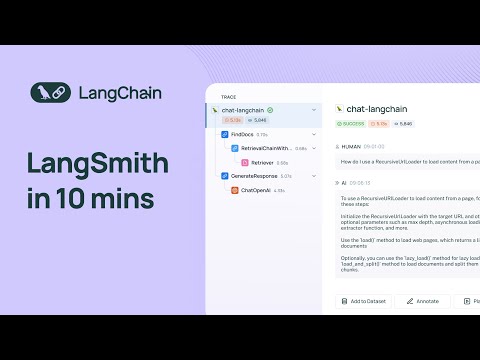 9 minutes
LangSmith in 10 Minutes
LangChain. A guided tour of an LLM trace, project, and dataset by LangChain's co-founder — token cost, latency, error rate, feedback aggregation, drilling into a single retrieval-step span. It's the closest visual analogue to what the article describes when it talks about "every call is a span" and why structured traces beat print logging.
Advanced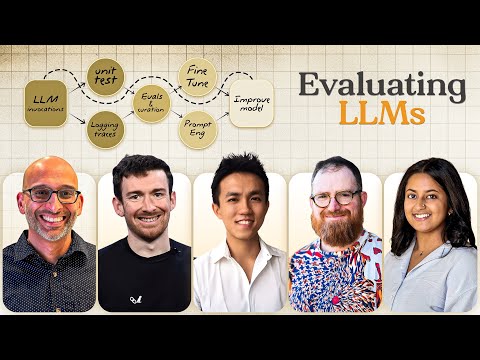 154 minutes
Instrumenting & Evaluating LLMs
Hamel Husain. Hamel Husain, Eugene Yan, Brian Bischof, Harrison Chase, and Shreya Shankar working through tracing, log analysis, LLM-as-judge, and the workflow around looking at real production data. Sit with it the same way you would a long podcast — it is the single best deep treatment of the article's "look at your traces" thesis on YouTube.
Advanced 9 minutes
RAG vs. Fine Tuning
IBM Technology. Tighter focus on the two techniques teams most often confuse. Goes deeper on data freshness, source attribution, and the inference-time speed argument for fine-tuning. Worth watching if you are specifically trying to argue against an unnecessary fine-tune project.
Advanced 13 minutes
RAG vs Fine-Tuning vs Prompt Engineering: Optimizing AI Models
IBM Technology. A clear whiteboard pass through all three techniques with their respective costs — retrieval latency, training compute and catastrophic forgetting, the limits of prompt-only solutions — and the combinations that actually make sense in production. The closing example of a legal AI system using all three is almost exactly the article's "when to combine" argument.
Advanced 8 minutes
Wharton professor: 4 scenarios for AI's future | Ethan Mollick for Big Think+
Big Think. A tight 8-minute version of Mollick's "four scenarios" model — static, linear, exponential, AGI — and why teams should plan against scenario two or three rather than betting everything on either extreme. Useful when you're trying to get a leadership team to agree on what they're actually preparing for before you write the playbook.
Intermediate 60 minutes
Every leader needs this AI strategy | Ethan Mollick explains
Sana. An hour with Mollick on what AI inside organizations actually looks like — why "cut costs" is the wrong framing, why traditional org charts are bending, and what "AI-native" teams do differently. Sits below the usual 100k bar but it is the cleanest practitioner-level conversation about adoption strategy from the researcher most consistently cited on this topic, and the playbook concerns in the article map almost 1:1 onto his framing.
Intermediate