

AI for Business
Business-facing AI systems, adoption choices, customer workflows, and measurable outcomes.
58 stories (25 articles · 33 videos)
Start here
A few good first pieces before you browse the full feed.
 11 min read
Designing a team AI adoption playbook
A practical AI adoption playbook: choose bounded use cases, involve affected staff, set data and decision rules, train on real work, and measure impact against a baseline.
Intermediate 9 min read
AI ROI and maturity: how to measure adoption that actually works
AI adoption should not be measured by how many people tried ChatGPT. A practical framework for measuring workflow ROI, quality, risk, maturity, and scale-readiness.
Advanced 9 min read
Build vs buy AI systems: the practical decision framework
Compare buy, configure, extend, build, and self-host options with the same requirements, veto gates, representative trial, and total-cost model.
AdvancedMore in this topic
 9 min read
DGX Spark: what it is, who it is for, and what changed for local agents
A grounded read of NVIDIA DGX Spark: Grace Blackwell GB10 specs from NVIDIA, coherent unified memory, ConnectX-7 clustering, and when a desk-side agent computer is the right private AI bet.
Advanced 12 min read
Make Codex, Claude Code, and Cursor work as one CLI team
Use AGENTS.md, CLAUDE.md, Cursor rules, and CLI print modes so Codex designs, Claude reviews, and Cursor implements—without a custom orchestration platform.
Advanced 15 min read
Multi-agent project management with Linear: Claude, Cursor, and Codex on one backlog
Run Claude Code, Cursor, and Codex against the same Linear project like a real engineering team: claim work, mark progress, hand off review, fix findings, and close issues without stepping on each other.
Advanced 8 min read
The dignity of work when machines can do more of it
A practical job-redesign assessment for SME leaders: examine worker voice, retained judgement, skill paths, workload, monitoring, and appeal before declaring an automation successful.
Intermediate 8 min read
What to tell your team when you automate part of their job
A practical communication sequence for automation projects: what to say before the decision hardens, which commitments build trust, and which promises managers should not make.
Intermediate 32 minutes
How to Build Human-Centered AI Workflows in Localization with Shashi Bhushan
Crowdin. Shashi Bhushan starts with workflow mapping rather than tool selection, then covers source-text quality, human review, AI proofreading, glossary checks, product-team involvement, pilots and privacy constraints. That is almost exactly the operating model the article recommends for Estonian teams working across Estonian, English, Russian, Finnish and customer-specific terminology.
Intermediate 4 minutes
Introducing EmbeddingGemma: The Best-in-Class Open Model for On-Device Embeddings
Google for Developers. The video introduces multilingual text embeddings that can run locally and support semantic search and RAG without sending every document to a hosted API. For Estonian companies, that is a useful technical complement to the article's internal-knowledge-search pattern: multilingual retrieval is valuable only when it also respects data locality, permissions and source authority.
Intermediate 17 minutes
Conductor CEO Charlie Holtz Walks Us Through His AI Coding Setup
Y Combinator. A concrete senior-engineering walkthrough rather than a panel: Holtz compares Claude Code and Codex, orchestrates several coding agents in parallel, and marks "slop-free zones" where generated code is not allowed to land unreviewed. The setup embodies the article's rules — repository context, small reviewable patches, and the human staying architect while the agents do the typing.
Advanced 56 minutes
AI Agents in Finance with HPE's Chief Financial Officer (CFO)
CXOTalk. HPE CFO Marie Myers describes rolling agentic AI (their "Alfred" platform) across a 3,600-person finance organization with the discipline the article argues for: a direct-versus-indirect ROI framework, stage gates that decide whether each use case continues or stops, mandatory human-in-the-loop quality controls, and workflow-level metrics such as a weekly review process losing roughly 90% of its manual effort. Adoption is measured as changed work, not tool logins.
Advanced 41 minutes
Private AI vs. Cloud: How Enterprise Leaders Can Make Smarter Build-or-Buy Decisions
World Wide Technology. Connects build-or-buy choices to business outcomes, workload placement, cloud economics, data sovereignty, security, infrastructure readiness and hybrid operating models. That makes it a useful strategic companion for deciding when to buy a tool, extend a platform, build a thin custom layer or own more of the deployment stack.
Advanced 10 min read
Multilingual AI workflows for Estonian companies
A practical workflow model for Estonian companies working across Estonian, English, Russian, Finnish, and other customer languages without losing tone, terminology, privacy, or accountability.
Intermediate 9 min read
AI-native IDEs and repository-aware coding workflows
Cursor, Copilot, Claude Code, and repository-aware agents change software work only when teams add boundaries. A practical workflow for codebase context, planning, tests, review, secrets, and production safety.
Advanced 9 min read
EU AI Act for SMEs: a practical governance plan
The EU AI Act is not just a legal problem for large vendors. A practical SME plan for inventory, risk classification, human oversight, transparency, vendor records, and rollout discipline.
Advanced 10 min read
Private AI deployment patterns: local, VPC, self-hosted, and hybrid
Private AI is not one architecture. A practical comparison of local models, enterprise SaaS, VPC deployments, self-hosted inference, and hybrid patterns for SMEs that care about privacy and control.
Advanced 10 min read
The AI marketing stack: content, SEO, and social with human review
Candidate AI-assisted marketing workflows for permitted research, sourced drafting, SEO review, adaptation, human publication approval, and measured outcomes, with jurisdiction-specific legal checks before launch.
Intermediate 11 min read
The AI sales stack: lead enrichment, personalization, follow-up at scale
A practical AI sales stack that handles research, personalization, sequencing, and follow-up — without becoming the spam everyone deletes. The architecture, the tools, the prompts, and the guardrails that separate effective from annoying.
Intermediate 12 min read
Cost-optimizing inference: prompt caching, routing, and output control
Build a trace-based inference cost model, optimize the largest measured contributors, and prove that each change preserves task quality.
Advanced 10 min read
Evals for non-engineers: know if your AI workflow is getting better or worse
A practical introduction to evaluating an AI workflow with representative examples, explicit rubrics, qualified labels, release rules, and a spreadsheet when that is sufficient.
Intermediate 13 min read
Building evals that actually catch regressions
Most eval suites look impressive but miss real regressions. Building evals that catch what matters requires careful dataset construction, sensitive metrics, judge calibration, and a culture of trust. The patterns from teams that get this right.
Advanced 14 min read
MCP server design in TypeScript: from minimal server to production review
Build a minimal Model Context Protocol server, then review the design for schemas, authorization, idempotency, observability, deployment, and security before calling it production-ready.
Advanced 12 min read
Designing MCP tools that LLMs actually use correctly
Most MCP tools we see are technically correct and practically useless. LLMs ignore them, misuse them, or call them in unhelpful ways. The principles for designing tools LLMs adopt naturally, with examples of common failures and their fixes.
Advanced 12 min read
Observability for LLM apps: tracing, costs, latency, quality drift
Extend ordinary observability with multi-step traces, attributable cost, prompt and model versions, evaluated quality signals, privacy controls, and workload-derived alerts.
Advanced 12 min read
Production RAG design: ingestion, retrieval, reranking, and evaluation
A production RAG pipeline is six stages, each with specific patterns that determine quality. The architecture, the choices at each stage, and the iterative evaluation discipline that distinguishes RAG that works from RAG that disappoints.
Advanced 12 min read
Choosing between prompting, RAG, and fine-tuning (and when to combine)
Prompting, RAG, and fine-tuning are the three big levers for adapting LLMs to your problem. Each is right for some problems and wrong for others. A framework for choosing, the realistic costs of each, and the production patterns where combining them shines.
Advanced 12 min read
RAG beyond chunks: graph RAG, agentic RAG, long-context RAG
Classic chunk-based RAG has limits. Graph RAG, agentic RAG, and long-context RAG each break those limits in different ways. When each is the right tool, how they actually work, and the production trade-offs that matter.
Advanced 13 min read
LLM product unit economics: an evidence-first pricing worksheet
Model usage distribution, contribution margin, failure handling, support, and retention before choosing a price. This worksheet replaces unsupported market ranges with auditable inputs.
Advanced 13 min read
Structured outputs and function calling: the production patterns
Structured outputs and function calling are the bridge from 'LLM that generates text' to 'system that does work'. In production, the patterns that matter are about schemas, error handling, idempotency, and graceful degradation — not just JSON mode.
Advanced 24 minutes
I Built an AI Content Agent With N8N and Claude (Step-by-Step)
Greg Isenberg. Isenberg builds a real content pipeline in n8n with The Boring Marketer — scraping top-performing posts on YouTube and X, drafting new pieces with Claude, researching with Perplexity, generating images, and publishing to LinkedIn with a human-approval step. It is exactly the "agent in the middle, tools on either side" shape the article describes, and the human-review stage is shown rather than just mentioned.
Intermediate 30 minutes
I'm REVEALING ALL the Vibe Marketing Secrets (NO Gatekeeping)
Greg Isenberg. A wider tour of the current AI marketing stack — workflow automation, model routing, AI video and voice tools, ad creation from competitor analysis. Good way to see which tools are doing what across the category before you decide where to put the first three Zaps or n8n flows for your own team.
Intermediate 26 minutes
Building an AI Sales Bot to Call Leads For Me LIVE
Liam Ottley. A live build of an AI voice agent that calls inbound leads, qualifies them, and tries to book a discovery call — Make.com plus a voice provider, with the qualification script and handoff logic shown. Good complement to the email side: same enrichment-then-personalization pattern, different channel, different failure modes.
Intermediate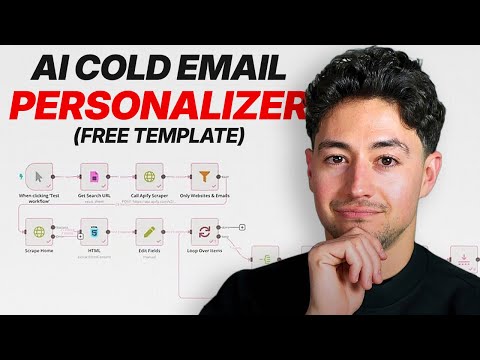 30 minutes
I Deep-Personalized 1000+ Cold Emails Using THIS AI System (FREE TEMPLATE)
Nick Saraev. Saraev builds the exact pipeline the article describes — Apollo for leads, Apify for scraping, n8n to enrich and run a multi-line icebreaker generator off each lead's site, then Instantly for sending — and is candid about per-lead costs and reply rates. It's the cleanest demonstration of "real personalization at scale," not just "mail merge with a first name."
Intermediate 19 minutes
Is This the End of RAG? Anthropic's NEW Prompt Caching
Prompt Engineering. Walks through Anthropic's prompt caching against Gemini's context caching with concrete latency-and-cost reductions per use case (long-document chat, few-shot, multi-turn). The breakdown of cache-write surcharge vs. cache-read discount is exactly what the article assumes when it talks about when caching pays off.
Advanced 56 minutes
Build Hour: Prompt Caching
OpenAI. OpenAI's own Build Hour on prompt caching — the 1024-token threshold, the prefix-stability requirement, steep audio-caching discounts for realtime (check the current pricing page for the exact rate), time-to-first-token impacts at long inputs. Useful when you are sizing the engineering effort to actually hit the cache reliably on your production prompts.
Advanced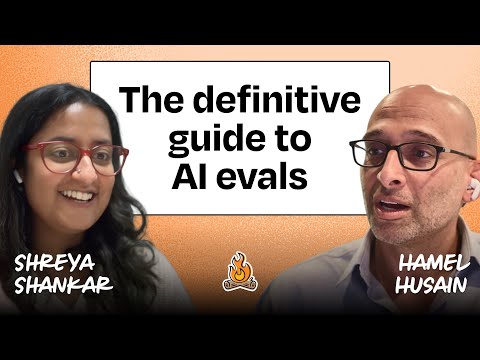 107 minutes
Why AI evals are the hottest new skill for product builders | Hamel Husain & Shreya Shankar
Lenny's Podcast. Hamel Husain and Shreya Shankar walk through the entire eval workflow on a real property-management AI assistant — looking at traces, open and axial coding of errors, deciding when to stop, building an LLM-as-judge, and validating it against human judgment. This is the rare long-form conversation that is genuinely aimed at PMs and team leads rather than ML engineers, and it covers the same "30 minutes a week after setup" rhythm the article recommends.
Intermediate 3 minutes
Evaluate prompts in the Anthropic Console
Anthropic. A three-minute Anthropic walkthrough of running a real eval inside the Workbench — auto-generating realistic test cases, grading outputs, tweaking the prompt, and re-running the same suite side-by-side. The view count sits below the usual bar, but for "how do I actually do this without writing code" this is the cleanest official demo and slots neatly under the more strategic Husain/Shankar conversation.
Intermediate 55 minutes
How to Systematically Setup LLM Evals (Metrics, Unit Tests, LLM-as-a-Judge)
Dave Ebbelaar. A working AI engineer walking through his actual eval ladder — assert-style unit tests, reference-free metrics, LLM-as-judge alignment with humans, and the analyze/measure/improve loop. The structure is the closest match on video to the article's argument that evals are a regression-catching system, not a leaderboard.
Advanced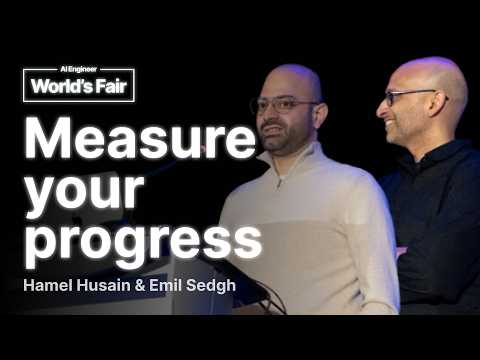 19 minutes
How to Construct Domain Specific LLM Evaluation Systems: Hamel Husain and Emil Sedgh
AI Engineer. Hamel Husain and Rechat's CTO walk through the eval system behind a real AI product: why generic off-the-shelf evals fail, a layered setup of assertions, logged traces with human review, and LLM judges kept aligned with a domain expert, and how a working eval system unlocks data curation and fine-tuning. It is the production case study for the article's argument that evals are regression-catching machinery, not a leaderboard.
Advanced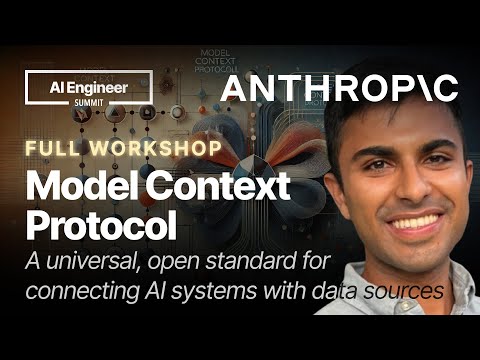 104 minutes
Building Agents with Model Context Protocol - Full Workshop with Mahesh Murag of Anthropic
AI Engineer. Anthropic's Mahesh Murag walking through MCP's design — why tools, resources, and prompts are separated, how clients negotiate capabilities, what production hosts actually do with the protocol. Watch it after the build to understand the parts of MCP the SDK quietly hides and to calibrate the article's "production-ready" checklist against the spec authors' intent.
Advanced 75 minutes
The Ultimate MCP Crash Course - Build From Scratch
Web Dev Simplified. A full, code-along build of both an MCP server and a client in TypeScript — tool definitions, schemas, prompts and resources, stdio transport, inspector debugging. It's the closest video on YouTube to actually doing what the article asks you to do, at a pace where you can pause and follow along in your own editor.
Advanced 19 minutes
Building more effective AI agents
Anthropic. Anthropic engineers walking through what they actually changed when their multi-agent systems were misusing tools — collapsing endpoints, returning names instead of IDs, leaning on MCPs and Agent Skills instead of stuffing more tools into the system prompt. Maps point-for-point onto the article's checklist for tool descriptions and return-shape design.
Advanced 29 minutes
Prompting for Agents | Code w/ Claude
Anthropic. Hannah Moran and Jeremy Hadfield from Applied AI walking through how to phrase tool calls and agent prompts on a real Pokemon-playing agent — when to push behavior into the system prompt versus the tool description, what the model needs to know about each tool's preconditions. Useful immediately after you write your first MCP server and find Claude calling it in unexpected ways.
Advanced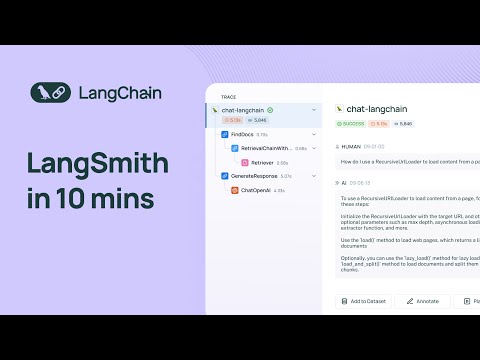 9 minutes
LangSmith in 10 Minutes
LangChain. A guided tour of an LLM trace, project, and dataset by LangChain's co-founder — token cost, latency, error rate, feedback aggregation, drilling into a single retrieval-step span. It's the closest visual analogue to what the article describes when it talks about "every call is a span" and why structured traces beat print logging.
Advanced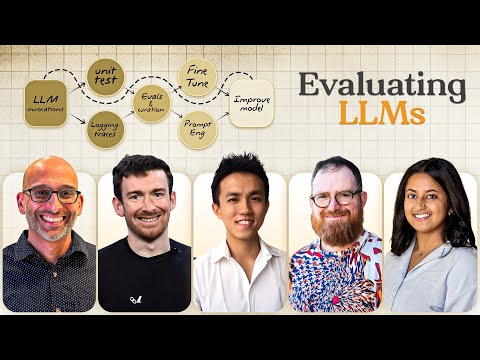 154 minutes
Instrumenting & Evaluating LLMs
Hamel Husain. Hamel Husain, Eugene Yan, Brian Bischof, Harrison Chase, and Shreya Shankar working through tracing, log analysis, LLM-as-judge, and the workflow around looking at real production data. Sit with it the same way you would a long podcast — it is the single best deep treatment of the article's "look at your traces" thesis on YouTube.
Advanced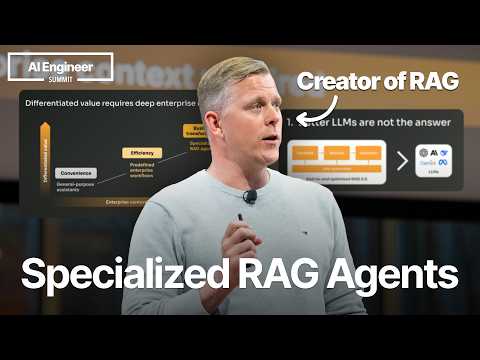 17 minutes
RAG Agents in Prod: 10 Lessons We Learned — Douwe Kiela, creator of RAG
AI Engineer. Douwe Kiela led the original RAG paper at FAIR and now ships RAG into regulated enterprises. The talk is mostly about what stops working at scale — chunking strategies that don't survive 100k documents, "accuracy is table stakes, inaccuracy is the real problem," and why attribution and observability matter more than the embedding model. Good calibration before re-reading the article's eval and monitoring sections.
Advanced 19 minutes
Building Production-Ready RAG Applications: Jerry Liu
AI Engineer. LlamaIndex's CEO walking the gap between "naive RAG demo" and a real pipeline — small-to-big retrieval, sub-question routing, hybrid search, evaluation. The shape of his slides maps almost directly onto the article's pipeline sections; watch first, then re-read the article with his diagrams in your head.
Advanced 9 minutes
RAG vs. Fine Tuning
IBM Technology. Tighter focus on the two techniques teams most often confuse. Goes deeper on data freshness, source attribution, and the inference-time speed argument for fine-tuning. Worth watching if you are specifically trying to argue against an unnecessary fine-tune project.
Advanced 13 minutes
RAG vs Fine-Tuning vs Prompt Engineering: Optimizing AI Models
IBM Technology. A clear whiteboard pass through all three techniques with their respective costs — retrieval latency, training compute and catastrophic forgetting, the limits of prompt-only solutions — and the combinations that actually make sense in production. The closing example of a legal AI system using all three is almost exactly the article's "when to combine" argument.
Advanced 39 minutes
Introducing RAG 2.0: Agentic RAG + Knowledge Graphs (FREE Template)
Cole Medin. A working agentic-RAG-plus-knowledge-graph build, with the agent deciding when to do vector search, when to hit Neo4j, and when to do both. It's the cleanest demonstration on YouTube of the "agent as the retrieval planner" pattern the article describes, in code you can actually pull down and run.
Advanced 16 minutes
Graph RAG: Improving RAG with Knowledge Graphs
Prompt Engineering. A focused walkthrough of Microsoft's GraphRAG — entity extraction, community summaries, query-focused summarization — set up on a local machine with cost notes. Watch it for the graph-RAG section of the article specifically; the cost discussion is the part most write-ups skip.
Advanced 42 minutes
Vertical AI Agents Could Be 10X Bigger Than SaaS
Y Combinator. The Lightcone hosts work through why vertical AI agents — not horizontal wrappers — are the defensible shape for application-layer companies, with concrete examples and a clear-eyed take on which categories the model providers will eat. That is the anti-moat trap the article warns about, expressed as a positive playbook.
Advanced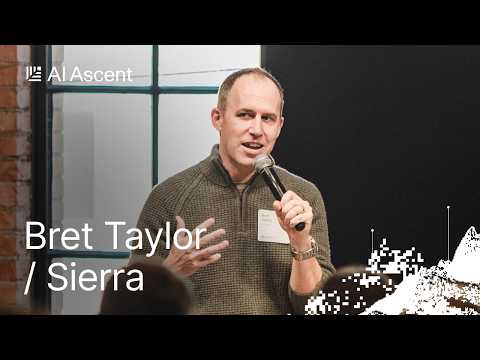 34 minutes
How AI is Reinventing Software Business Models ft. Bret Taylor of Sierra
Sequoia Capital. Bret Taylor walks through the shift from per-seat SaaS to outcomes-based pricing — what to anchor on (resolution, CSAT, NPS), why incumbents struggle to follow, and how vertical specialisation creates pricing power. It directly mirrors the article's pricing and margin sections.
Advanced 41 minutes
OpenAI DevDay 2024 | Structured outputs for reliable applications
OpenAI. Walks through `strict: true`, the difference from old JSON mode, refusal handling, and how function calling and response-format schemas compose. Useful precisely because it describes the contract the API gives you, which is what the article's production patterns are built on top of.
Advanced 18 minutes
Pydantic is all you need: Jason Liu
AI Engineer. The talk that crystallised the modern "define a Pydantic model, hand it to the LLM, let validation do the rest" pattern, with concrete examples of nested objects, validators that catch hallucinated URLs, and Chain-of-Thought as a typed field. Watch it before re-reading the article's section on validators and you will recognise where its retry and refusal rules come from.
Advanced 8 minutes
Wharton professor: 4 scenarios for AI's future | Ethan Mollick for Big Think+
Big Think. A tight 8-minute version of Mollick's "four scenarios" model — static, linear, exponential, AGI — and why teams should plan against scenario two or three rather than betting everything on either extreme. Useful when you're trying to get a leadership team to agree on what they're actually preparing for before you write the playbook.
Intermediate 60 minutes
Every leader needs this AI strategy | Ethan Mollick explains
Sana. An hour with Mollick on what AI inside organizations actually looks like — why "cut costs" is the wrong framing, why traditional org charts are bending, and what "AI-native" teams do differently. Sits below the usual 100k bar but it is the cleanest practitioner-level conversation about adoption strategy from the researcher most consistently cited on this topic, and the playbook concerns in the article map almost 1:1 onto his framing.
Intermediate