

Curated library

Videos

Watch the clearest companion videos without browsing everything at once. Pick a path, continue where you left off, or use the filters when you know what you need.

Foundation

Build confidence with AI basics, prompting, privacy, hallucinations, and everyday use.

Practitioner

Learn workflows for meetings, writing, research, no-code tools, and repeatable business tasks.

Builder

Go deeper into agents, RAG, MCP, structured outputs, evals, APIs, and local AI.

Strategic

Cover governance, EU AI Act readiness, build-vs-buy decisions, ROI, and private AI choices.
25 results

Viewing learning path: BuilderShow all

4 minutes

Introducing EmbeddingGemma: The Best-in-Class Open Model for On-Device Embeddings

Google for Developers. The video introduces multilingual text embeddings that can run locally and support semantic search and RAG without sending every document to a hosted API. For Estonian companies, that is a useful technical complement to the article's internal-knowledge-search pattern: multilingual retrieval is valuable only when it also respects data locality, permissions and source authority.

Understand why multilingual embeddings matter for private internal search and where local retrieval can reduce data-exposure risk.
IntermediateAI for Business
18 minutes

AWS re:Invent 2025 - Implementing Human-in-the-Loop Controls for Multi-Agent AI Systems (CNS428)

AWS Events. This lightning talk names the business moments where human control is needed: high-stakes decisions, irreversible actions, regulatory requirements, trust-building phases, ambiguous edge cases and graceful degradation. It also shows concrete implementation mechanisms such as MCP elicitations, Step Functions callback waits and approval nodes.

See how approval gates can be implemented as explicit workflow checkpoints rather than informal manual review after something goes wrong.

IntermediateAutomations
9 minutes

RouteLLM achieves 90% GPT4o Quality AND 80% CHEAPER

Matthew Berman. Walks through the LMSYS RouteLLM paper and code: a small classifier sits in front of a strong/weak model pair and decides which one to call, hitting roughly 95% of the strong model's quality at a fraction of the cost. The view count is under the usual 100k bar, but for the specific "show me real model routing, not just model comparisons" niche this is the cleanest explanation on YouTube and lines up directly with the article's quality/cost tradeoff section.

Evaluate model-routing tradeoffs between quality, cost and reliability before adding orchestration complexity.

IntermediateAutomations
19 minutes

Every AI Model Explained

Tina Huang. A clean tour of the current model landscape grouped by tier — flagships, lite models, mid-tier, specialized — with concrete picks for what each tier is actually good for. This is the "know your options before you route" half of the article, and Huang frames cost-vs-capability the same way the article does without leaning on benchmark hype.

Compare flagship, lite, mid-tier and specialized models so routing decisions are based on task fit, cost and latency instead of brand preference.
IntermediateAutomations
2 minutes

Claude | Computer use for orchestrating tasks

Anthropic. A two-minute Anthropic demo of Claude planning a small multi-app task — search the web, check Maps, drop a calendar invite — by driving the desktop directly. Useful contrast to Operator's cloud-browser-only model and a good gut check on the article's point that computer-use agents work best on short, well-bounded chores rather than open-ended work.

Compare desktop computer-use behavior with browser-only agents.
IntermediateAutomations
24 minutes

Introduction to Operator & Agents

OpenAI. The actual launch demo of Operator, where the team books restaurants, orders groceries, buys event tickets, and lets Operator stall on a redirect or hand control back when it hits a login. It is the clearest picture you will find of how a browser agent feels in practice — the screenshot-and-click loop, the confirmations before "stateful" actions, the prompt-injection guard rails — which is exactly the texture the article is trying to set expectations for.

Recognize the browser-agent action loop, where it helps, and where human confirmation is still required.

IntermediateAutomations
23 minutes

I Built a Team of Research Agents for Newsletter Automation in n8n (No Code)

Nate Herk | AI Automation. Walks through a sequential multi-agent newsletter pipeline in n8n — planner, researchers, editor, headline writer — that takes a topic and audience as input and ships a sourced newsletter out the other end. The view count sits below the usual 100k bar, but on this niche (no-code multi-agent newsletter builds) it is the cleanest, most complete tutorial currently on YouTube and maps directly onto the briefing pattern in the article.

Study a multi-agent newsletter pipeline and identify where sources, approval and failure handling belong.

IntermediateAutomations
5 minutes

The "vibe coding" mind virus explained…

Fireship. Fireship's three rules — pick a boring popular stack, get good at Git, treat yourself as the product manager — are the same guardrails the article is trying to install. Five minutes well spent before you let an AI write to your repo unsupervised.

Fireship's three rules — pick a boring popular stack, get good at Git, treat yourself as the product manager — are the same guardrails the article is trying to install.

IntermediateNo-code AI Tools
66 minutes

Cursor Vibe Coding Tutorial - For COMPLETE Beginners (No Experience Needed)

Tech With Tim. Tim is one of the steadier educators in this space, and this is the most complete "open Cursor, build something, ship it" walkthrough for a non-developer audience — setup, prompting, debugging, basic Git and even a touch of MCPs. Watch it once and you'll know what the article means by "build a small internal tool."

See the full beginner workflow for building a small Cursor project, including setup, prompting, debugging, basic Git and the limits of AI-assisted coding.

IntermediateNo-code AI Tools
20 minutes

The Model Context Protocol (MCP)

Anthropic. The protocol's designers — Theo Chu, David Soria Parra and Alex Albert — walking through why MCP exists, the components (server, client, transport), the reception since the November 2024 release, and which servers they actually use day-to-day. Useful as the canonical source after the Nate Herk overview.

Understand the protocol roles: host, client, server, tools, resources, prompts and transports.
IntermediateNo-code AI Tools
69 minutes

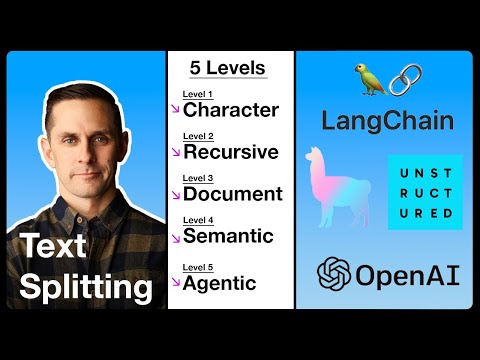
The 5 Levels Of Text Splitting For Retrieval

Greg Kamradt. The article spends a lot of words on chunking; this is the longest, most patient explanation of what each chunking strategy is actually doing — from character-recursive through document-aware to semantic and agentic splitting. Pair it with Greg's free ChunkViz tool to build intuition before you start tuning.

Build intuition for chunking choices before tuning a real retrieval system.
IntermediateNo-code AI Tools
24 minutes

"I want Llama3 to perform 10x with my private knowledge" - Local Agentic RAG w/ llama3

AI Jason. Covers the exact stack the article argues for — query translation, hybrid retrieval, reranking, and a corrective-RAG loop — in one runnable build. Useful as a working mental model for what the chunk → rerank → answer pipeline looks like when it's actually doing its job.

See how query rewriting, hybrid retrieval, reranking and corrective loops fit into one RAG pipeline.
IntermediateNo-code AI Tools
25 minutes

OWASP's Top 10 Ways to Attack LLMs: AI Vulnerabilities Exposed

IBM Technology. Zooms out from prompt injection to the wider OWASP Top 10 for LLMs — insecure output handling, sensitive information disclosure, excessive agency — which is exactly the failure-mode catalogue you want in mind before you grant Gmail or HubSpot scopes to anything.

Use the OWASP LLM risk categories to review tool access, output handling and sensitive-data exposure.

IntermediateAI Safety & Data Privacy
11 minutes

What Is a Prompt Injection Attack?

IBM Technology. Jeff Crume's "buy an SUV for $1" example is the cleanest 10-minute explanation of why direct and indirect prompt injection are different problems, and why filtering can't fully solve either. It pairs directly with the article's argument that you need least-privilege scopes, a dedicated agent account, and a human in the loop on anything irreversible — not a cleverer system prompt.

Distinguish direct and indirect prompt injection and why filtering alone is not enough.

IntermediateAI Safety & Data Privacy
31 minutes

How To Build An AI Customer Support Agent with n8n (free template)

Bart Slodyczka. A practical n8n workflow that plugs into Zendesk, Gorgias or Freshdesk, replies to tickets with a RAG-backed answer, and feeds solved tickets back into the knowledge base. Closest match on YouTube to the architecture the article describes.

A practical n8n workflow that plugs into Zendesk, Gorgias or Freshdesk, replies to tickets with a RAG-backed answer, and feeds solved tickets back into the knowledge base.

IntermediateAutomations
231 minutes

How to Build & Sell AI Agents: Ultimate Beginner's Guide

Liam Ottley. Customer support agents are Liam's bread-and-butter use case, and a sizeable chunk of this course is given over to RAG-grounded chatbots, escalation logic, and the no-code stack he uses with real clients (Botpress, Voiceflow, Make, n8n). The "anatomy of an agent" section in particular maps almost one-to-one onto the article's triage → answer → action → handoff structure.

See how a support agent combines retrieval, escalation and workflow tools before production hardening.

IntermediateAutomations
92 minutes

n8n Masterclass: Build AI Agents & Automate Workflows (Beginner to Pro)

Nate Herk | AI Automation. Nate is one of the most-watched practitioners on n8n specifically, and this masterclass goes deeper than the Futurepedia primer — memory, multi-agent setups, error handling, real business workflows. Reach for it once your lead-triage agent works and you want to extend it.

Extend a simple agent into multi-step workflows with memory, error handling and realistic business integrations.

IntermediateAutomations
3 minutes

Building OpenAI o1

OpenAI. Three minutes with the o1 team describing the moment the model started questioning its own reasoning during RL training. Useful as the primary source for the article's claim that the chain-of-thought is now happening inside the model, not in your prompt.

See the original product/research framing that made reasoning models different from ordinary chat models.

IntermediatePrompt Engineering
28 minutes

o1 - What is Going On? Why o1 is a 3rd Paradigm of Model + 10 Things You Might Not Know

AI Explained. The clearest non-hype explanation of why o1 (and by extension o3, R1, Claude extended thinking) is trained for correctness instead of next-token prediction, and what that means for how you talk to it. Watch this and the article's "stop saying think step by step, start writing the spec" advice stops feeling arbitrary.

Understand why reasoning-model prompts should specify the problem, constraints and success criteria instead of asking for visible chain-of-thought.
IntermediatePrompt Engineering
29 minutes

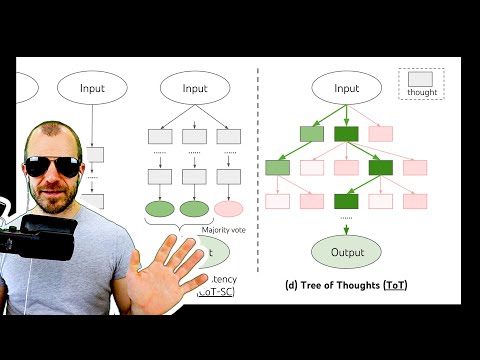
Tree of Thoughts: Deliberate Problem Solving with Large Language Models (Full Paper Review)

Yannic Kilcher. Yannic walks through the original Tree-of-Thoughts paper from Princeton/DeepMind — the generate-score-prune-backtrack loop, why it lifts Game of 24 accuracy from 4% to 74%, and where the technique stops being worth its 10× token cost. Useful precisely because it forces you to see ToT as a search algorithm, not a magic prompt prefix.

Understand generate-score-prune reasoning patterns and when they are too expensive for real work.

IntermediatePrompt Engineering
25 minutes

Prompting 101

Anthropic. Two members of Anthropic's Applied AI team build up a real-world prompt live, layering in role, structured sections and explicit thinking steps. It's the most credible "how to use chain-of-thought without ritualizing it" demo on YouTube, and it makes the article's "stop pasting Let's think step by step into everything" point concrete.

Two members of Anthropic's Applied AI team build up a real-world prompt live, layering in role, structured sections and explicit thinking steps.

IntermediatePrompt Engineering
14 minutes

101 Ways To Use AI In Your Daily Life

Tina Huang. A fast catalogue of concrete use cases mapped to ChatGPT, Claude, Gemini and Perplexity. Good for seeding ideas for which step in your workflow actually belongs in which tool, rather than defaulting everything to one chatbot.

A fast catalogue of concrete use cases mapped to ChatGPT, Claude, Gemini and Perplexity.

IntermediateAI Productivity
30 minutes

AI Tools You'll Use Everyday (And How To Use Them)

Matt Wolfe. Matt walks through the exact stack he uses daily — Claude for writing and Projects, Perplexity for research, plus the supporting cast for transcription, capture and images — and is honest about why each tool earns its slot. This is the closest analogue on YouTube to the article's "pick a default for each job" framing.

Map which AI tool belongs in each workflow step instead of forcing every task into one chatbot.

IntermediateAI Productivity
10 minutes

The best ChatGPT Prompt I've ever created - I spent 2 months curating this prompt to write prompts

Lawton Learns. A concrete, copy-pasteable C.R.A.F.T. meta-prompt (Context, Role, Action, Format, Target audience) that the article references in spirit. Useful as the first entry in a new library — a prompt whose job is to generate well-structured prompts for everyone else.

Use the C.R.A.F.T. structure as a reusable meta-prompt for generating more consistent prompts across a team library.

IntermediatePrompt Engineering

Showing 24 of 25