

 131 minutes
How I use LLMs
You can recognize when to follow up, when to switch models and when to start a fresh conversation, calibrated against real day-to-day usage.
BeginnerPrompt Engineering
Anthropic. Two members of Anthropic's Applied AI team build up a single prompt for a real customer use case (analyzing Swedish car accident reports), starting from a one-liner that fails and adding role, task context, dynamic content, examples, and final emphasis one layer at a time. It is the cleanest demonstration on YouTube of the exact "role + context + task + constraints + format" stack the article describes, with the failure modes shown along the way.
The demo uses Claude, but the layer-by-layer build maps one-to-one onto the article's role-context-task-constraints-format stack, whatever model you use.
Build stronger prompts by adding role, task context, examples, constraints and output format one layer at a time.
Comfortable writing basic prompts; the article's five-part breakdown is the ideal warm-up.
Last reviewed: May 18, 2026
Continue through the same learning path with the next curated companion videos.
131 minutesYou can recognize when to follow up, when to switch models and when to start a fresh conversation, calibrated against real day-to-day usage.
131 minutesLearn to route work across fast, cheap, deep-reasoning and source-grounded tools instead of using one model for everything.
 42 minutes
See how examples change model behavior and learn when few-shot prompting is worth the extra setup.
Hand-picked external courses that go deeper on this topic.
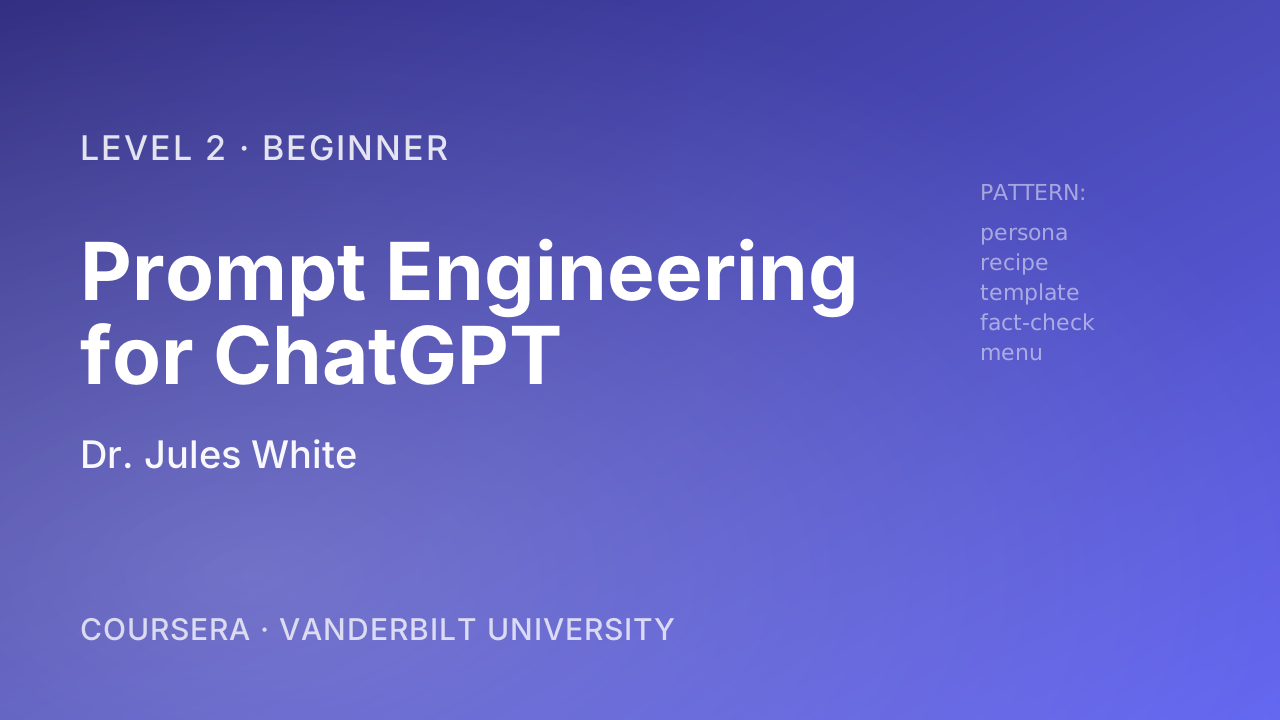 Coursera · Vanderbilt University
Dr. Jules White
The academic complement to DeepLearning.AI's short course — same discipline, longer arc, written for people who don't code. Dr. White teaches prompting as a set of reusable patterns (Ask for Input, Outline Expansion, Fact Check List, Menu Actions) rather than tricks. After this you'll prompt LLMs like a designer, not a guesser.
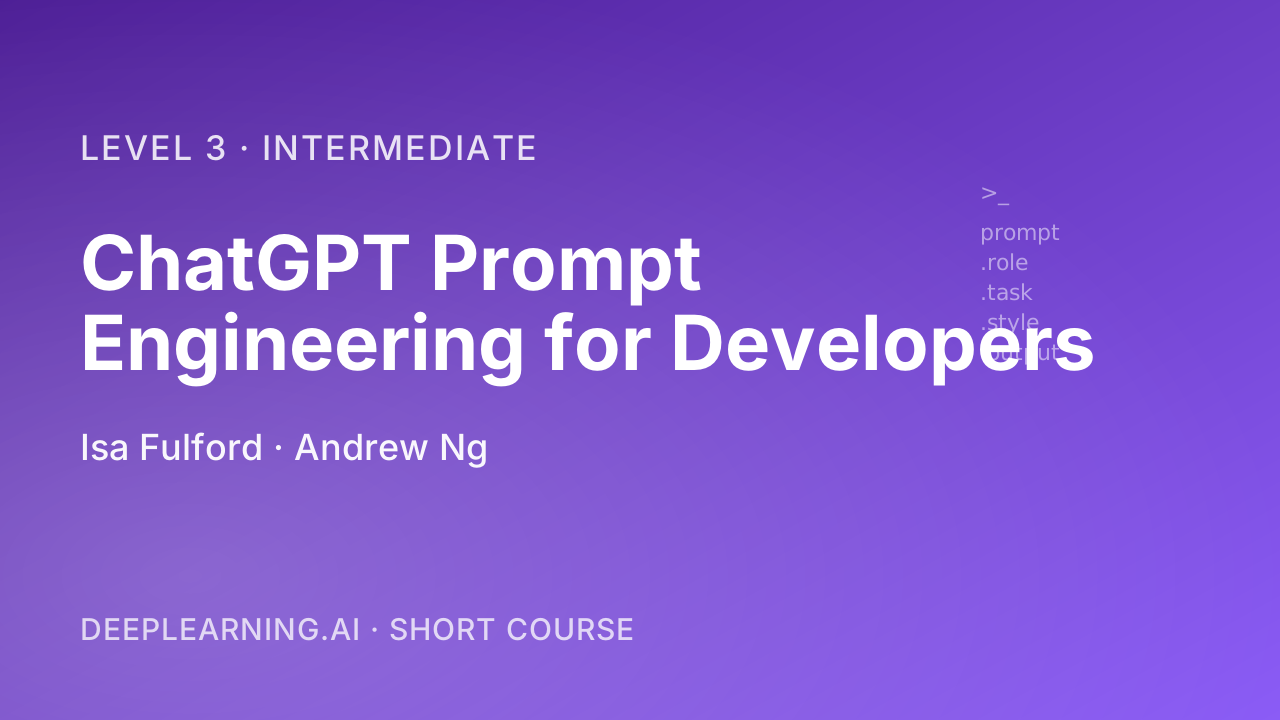 DeepLearning.AI
Isa Fulford · Andrew Ng
Ninety minutes to a year's worth of intuition. If you've started writing code that calls an LLM — or you're about to — this is the most efficient course online for closing the gap between "playing with ChatGPT" and "shipping a feature that calls an LLM."
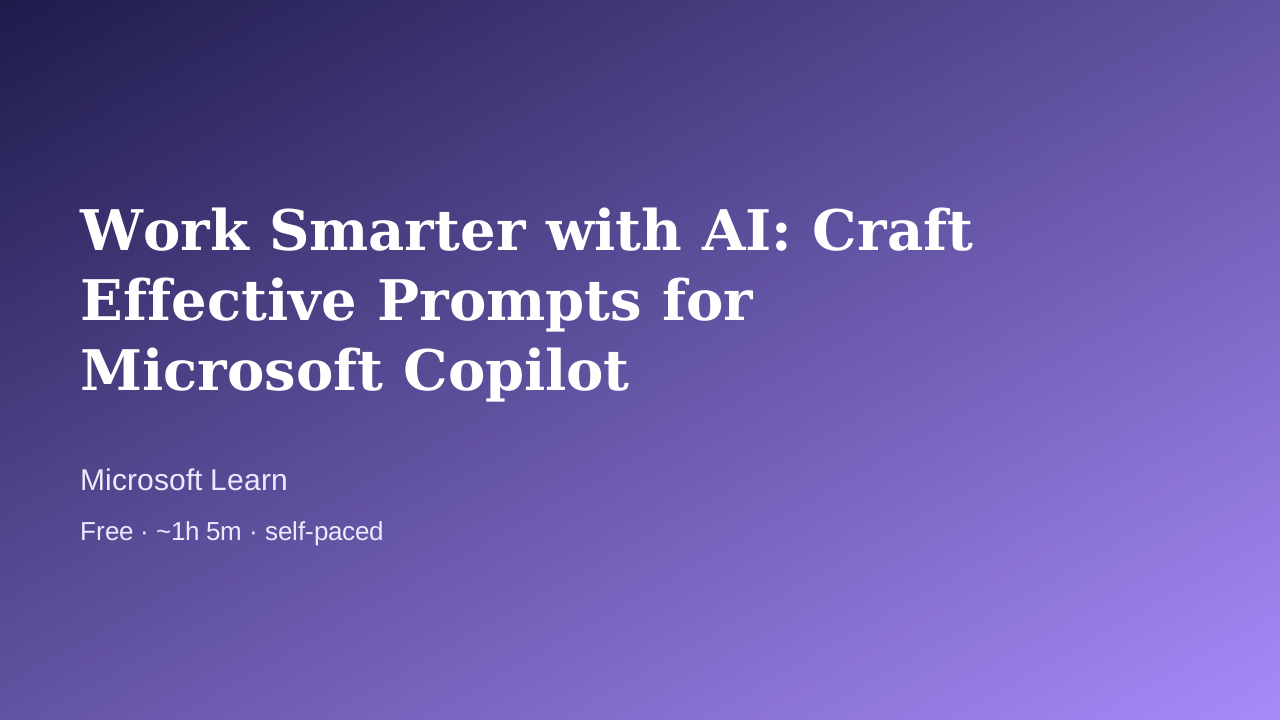 Microsoft Learn
Microsoft Learn
Prompt engineering, but for the tool most office workers will actually touch first. Microsoft's own four-part prompting framework (goal, context, source, expectation) is a genuinely useful mental model, and unlike the generic ChatGPT prompting courses already in our catalog, this one is grounded entirely in Microsoft 365 Copilot's specific quirks and grounding behavior.