

Strategy, ROI & Build vs Buy
Decide where AI belongs, what to buy, what to build, and how to measure whether it worked.
13 stories (7 articles · 6 videos)
Start here
A few good first pieces before you browse the full feed.
 9 min read
Build vs buy AI systems: the practical decision framework
Compare buy, configure, extend, build, and self-host options with the same requirements, veto gates, representative trial, and total-cost model.
Advanced 9 min read
AI ROI and maturity: how to measure adoption that actually works
AI adoption should not be measured by how many people tried ChatGPT. A practical framework for measuring workflow ROI, quality, risk, maturity, and scale-readiness.
Advanced 13 min read
LLM product unit economics: an evidence-first pricing worksheet
Model usage distribution, contribution margin, failure handling, support, and retention before choosing a price. This worksheet replaces unsupported market ranges with auditable inputs.
AdvancedMore in this topic
 9 min read
DGX Spark: what it is, who it is for, and what changed for local agents
A grounded read of NVIDIA DGX Spark: Grace Blackwell GB10 specs from NVIDIA, coherent unified memory, ConnectX-7 clustering, and when a desk-side agent computer is the right private AI bet.
Advanced 7 min read
The automation you should delete: maintenance cost and quiet failure
A practical audit for deciding which automations to keep, repair, simplify, or retire — including ownership, breakage, hidden review work, and silent-failure risk.
Intermediate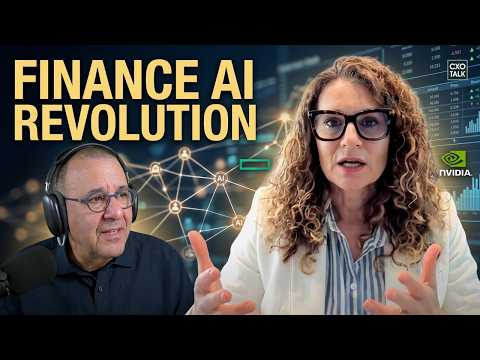 56 minutes
AI Agents in Finance with HPE's Chief Financial Officer (CFO)
CXOTalk. HPE CFO Marie Myers describes rolling agentic AI (their "Alfred" platform) across a 3,600-person finance organization with the discipline the article argues for: a direct-versus-indirect ROI framework, stage gates that decide whether each use case continues or stops, mandatory human-in-the-loop quality controls, and workflow-level metrics such as a weekly review process losing roughly 90% of its manual effort. Adoption is measured as changed work, not tool logins.
Advanced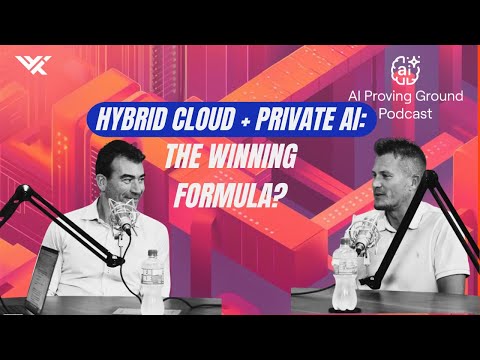 41 minutes
Private AI vs. Cloud: How Enterprise Leaders Can Make Smarter Build-or-Buy Decisions
World Wide Technology. Connects build-or-buy choices to business outcomes, workload placement, cloud economics, data sovereignty, security, infrastructure readiness and hybrid operating models. That makes it a useful strategic companion for deciding when to buy a tool, extend a platform, build a thin custom layer or own more of the deployment stack.
Advanced 30 minutes
EU AI Act Explained: Turning Compliance into Competitive Advantage | Carme Artigas
MSP GLOBAL. Carme Artigas chaired the Council negotiations that produced the AI Act, and here she explains it to managed service providers through which many SMEs buy AI systems. She walks the timeline understood at the time, from the August 2025 GPAI code of practice to an August 2026 conformity-assessment milestone, and discusses vendor documentation. The [AI Omnibus, Regulation (EU) 2026/1744](https://eur-lex.europa.eu/legal-content/EN/TXT/?uri=OJ%3AL_202601744), later moved the relevant Chapter III high-risk requirements to 2 December 2027 for Annex III systems and 2 August 2028 for systems covered by Annex I. The inventory, vendor-evidence and ownership work remains useful, but the video's dates are historical.
Advanced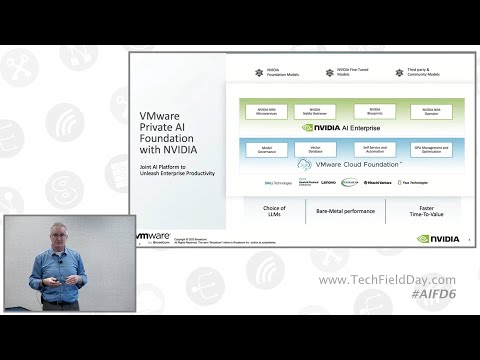 37 minutes
VMware Private AI Foundation Capabilities and Features Update from Broadcom
Tech Field Day. Shows private AI as layered infrastructure: controlled compute, isolated environments, Kubernetes, inference containers, model governance, self-service provisioning, GPU sharing and monitoring. That maps directly to the article's warning that privacy depends on deployment boundaries, logs, access and operations, not on the word "local."
Advanced 9 min read
EU AI Act for SMEs: a practical governance plan
The EU AI Act is not just a legal problem for large vendors. A practical SME plan for inventory, risk classification, human oversight, transparency, vendor records, and rollout discipline.
Advanced 10 min read
Private AI deployment patterns: local, VPC, self-hosted, and hybrid
Private AI is not one architecture. A practical comparison of local models, enterprise SaaS, VPC deployments, self-hosted inference, and hybrid patterns for SMEs that care about privacy and control.
Advanced 42 minutes
Vertical AI Agents Could Be 10X Bigger Than SaaS
Y Combinator. The Lightcone hosts work through why vertical AI agents — not horizontal wrappers — are the defensible shape for application-layer companies, with concrete examples and a clear-eyed take on which categories the model providers will eat. That is the anti-moat trap the article warns about, expressed as a positive playbook.
Advanced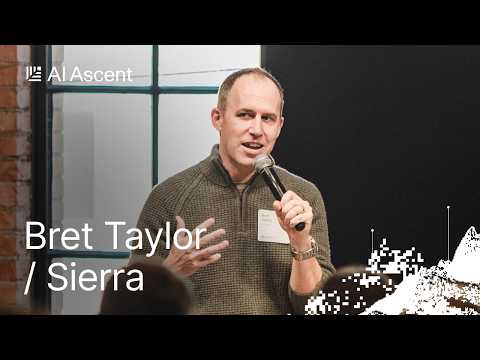 34 minutes
How AI is Reinventing Software Business Models ft. Bret Taylor of Sierra
Sequoia Capital. Bret Taylor walks through the shift from per-seat SaaS to outcomes-based pricing — what to anchor on (resolution, CSAT, NPS), why incumbents struggle to follow, and how vertical specialisation creates pricing power. It directly mirrors the article's pricing and margin sections.
Advanced