Reflective Practice
Journaling and weekly review that keep judgement with you, not with the model.
14 stories (12 articles · 2 videos)
Start here
A few good first pieces before you browse the full feed.
 9 min read
A reflection journal that does not outsource your inner life
A 10-minute private reflection loop that uses AI to organize your own words into observation, interpretation, and one next human action — without letting a chatbot become the judge of your inner life.
New to AI 8 min read
The weekly review: find the patterns, keep the judgement
Use AI to suggest themes in low-risk notes, check every quotation against the source, and choose your own next step. Repetition is a clue, not a verdict.
BeginnerMore in this topic
 6 min read
Use AI to clarify values without asking it what you should value
AI is genuinely useful for testing whether a decision is consistent with values you already hold, and for surfacing tradeoffs you have not named yet. It cannot tell you what to value, and asking it to is a different, riskier request than asking it to help you think. A values-conflict worksheet keeps the two separated.
Beginner 7 min read
AI is not therapy: what a language model can and cannot safely do
A green, amber and red guide to choosing between a narrow writing aid, an accountable person and qualified mental-health or crisis support.
New to AI 9 min read
When reflection becomes a reassurance loop
Repeatedly asking a chatbot the same worried question can intensify a reassurance loop. Recognize the pattern, use a pre-committed stopping condition, and move to an appropriate human or offline action.
Beginner 9 min read
Protect your attention from both algorithms and assistants
AI assistants can help you focus or fragment your day further, depending on how you open them. An attention budget names when AI opens, what job it has, and when the session ends.
New to AI 9 min read
Use AI to audit a decision for bias, not to certify it as objective
A fixed six-bias checklist and a counter-evidence requirement for auditing a decision you have already leaned toward — with a warning that the model auditing you is a biased participant, not a referee.
Intermediate 8 min read
Decision hygiene under stress: slow the process, not the choice
A reversible/irreversible check, an evidence ledger, and a delay rule for the moment a consequential decision meets an activated nervous system — without handing the choice to a chatbot.
Beginner 8 min read
Name the feeling, check the story: an emotional clarity workflow
A low-stakes worksheet that separates what happened, what you felt, and the story you told yourself about it — so you respond to the facts, not the first draft of the story.
Beginner 8 min read
Goals that survive contact with reality
Most goals fail quietly, not dramatically — they just lose to time, energy, and competing responsibilities. A workflow for turning a vague goal into a testable two-week experiment, with AI as the stress-tester, not the motivator.
Beginner 9 min read
Procrastination as friction: find the next visible action
Treat an avoided task as a stuck point to investigate, not a character verdict. A six-branch heuristic and a five-minute experiment can help you name one visible next action without pretending to diagnose the cause.
New to AI 8 min read
Stop the chat: five situations that need a person, not another prompt
Five recognizable moments — crisis, grief, conflict, high-stakes decisions, and isolation — where continuing the chat is the wrong move. A contact ladder names who to reach instead.
New to AI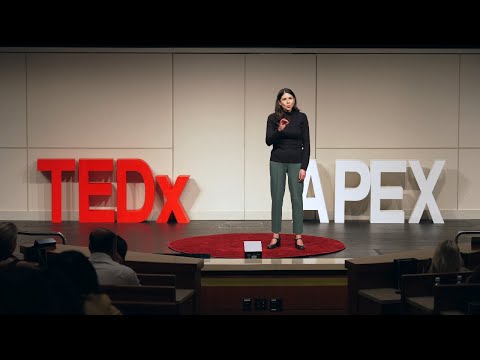 11 minutes
Why AI can't be your therapist | Candice Thompson | TEDxApex
TEDx Talks. A TEDx talk argues why chatbot 'therapy' lacks the clinical judgment and accountability of real therapeutic care - useful context beside the article's boundary.
New to AI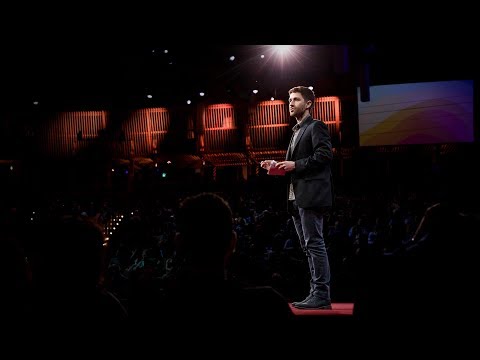 17 minutes
How a handful of tech companies control billions of minds every day | Tristan Harris
TED. Harris (ex-Google) explains how attention-capture design works, directly supporting the article's case for protecting attention in an AI-saturated life.
New to AI