

Curated library

Videos

Watch the clearest companion videos without browsing everything at once. Pick a path, continue where you left off, or use the filters when you know what you need.

42 results
4 minutes

Introducing EmbeddingGemma: The Best-in-Class Open Model for On-Device Embeddings

Google for Developers. The video introduces multilingual text embeddings that can run locally and support semantic search and RAG without sending every document to a hosted API. For Estonian companies, that is a useful technical complement to the article's internal-knowledge-search pattern: multilingual retrieval is valuable only when it also respects data locality, permissions and source authority.

Understand why multilingual embeddings matter for private internal search and where local retrieval can reduce data-exposure risk.
IntermediateAI for Business
32 minutes

How to Build Human-Centered AI Workflows in Localization with Shashi Bhushan

Crowdin. Shashi Bhushan starts with workflow mapping rather than tool selection, then covers source-text quality, human review, AI proofreading, glossary checks, product-team involvement, pilots and privacy constraints. That is almost exactly the operating model the article recommends for Estonian teams working across Estonian, English, Russian, Finnish and customer-specific terminology.

Learn how to introduce AI into localization without removing human ownership of meaning, tone, terminology and final approval.
IntermediateAI for Business
18 minutes

AWS re:Invent 2025 - Implementing Human-in-the-Loop Controls for Multi-Agent AI Systems (CNS428)

AWS Events. This lightning talk names the business moments where human control is needed: high-stakes decisions, irreversible actions, regulatory requirements, trust-building phases, ambiguous edge cases and graceful degradation. It also shows concrete implementation mechanisms such as MCP elicitations, Step Functions callback waits and approval nodes.

See how approval gates can be implemented as explicit workflow checkpoints rather than informal manual review after something goes wrong.
IntermediateAutomations
17 minutes

12-Factor Agents: Patterns of reliable LLM applications — Dex Horthy, HumanLayer

AI Engineer. Dex Horthy explains why reliable agent systems are mostly disciplined software around a few LLM calls: own the prompt, own the context window, keep control flow deterministic and use tool calls to contact humans when the workflow needs judgment. That maps directly to the article's approval, exception and escalation patterns.

Learn how to design AI workflows that can pause, resume, ask for human judgment and keep business state separate from model guesses.

IntermediateAutomations
3 minutes

Evaluate prompts in the Anthropic Console

Anthropic. A three-minute Anthropic walkthrough of running a real eval inside the Workbench — auto-generating realistic test cases, grading outputs, tweaking the prompt, and re-running the same suite side-by-side. The view count sits below the usual bar, but for "how do I actually do this without writing code" this is the cleanest official demo and slots neatly under the more strategic Husain/Shankar conversation.

See the smallest no-code version of a repeatable prompt eval.
IntermediateAI for Business
107 minutes

Why AI evals are the hottest new skill for product builders | Hamel Husain & Shreya Shankar

Lenny's Podcast. Hamel Husain and Shreya Shankar walk through the entire eval workflow on a real property-management AI assistant — looking at traces, open and axial coding of errors, deciding when to stop, building an LLM-as-judge, and validating it against human judgment. This is the rare long-form conversation that is genuinely aimed at PMs and team leads rather than ML engineers, and it covers the same "30 minutes a week after setup" rhythm the article recommends.

Learn the product-builder eval loop: inspect traces, label failures, define criteria, test changes and compare against human judgment.

IntermediateAI for Business
26 minutes

Building an AI Sales Bot to Call Leads For Me LIVE

Liam Ottley. A live build of an AI voice agent that calls inbound leads, qualifies them, and tries to book a discovery call — Make.com plus a voice provider, with the qualification script and handoff logic shown. Good complement to the email side: same enrichment-then-personalization pattern, different channel, different failure modes.

Evaluate where voice agents might fit sales workflows and where disclosure, consent and escalation become blockers.
IntermediateAI for Business
30 minutes

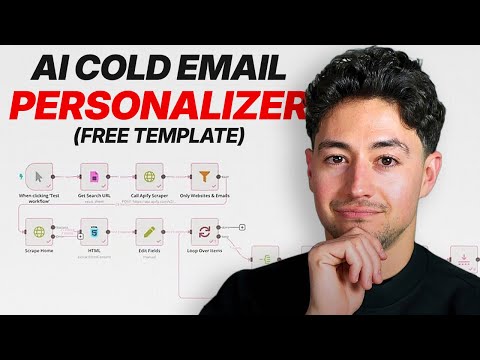
I Deep-Personalized 1000+ Cold Emails Using THIS AI System (FREE TEMPLATE)

Nick Saraev. Saraev builds the exact pipeline the article describes — Apollo for leads, Apify for scraping, n8n to enrich and run a multi-line icebreaker generator off each lead's site, then Instantly for sending — and is candid about per-lead costs and reply rates. It's the cleanest demonstration of "real personalization at scale," not just "mail merge with a first name."

Understand the data-enrichment and personalization pipeline behind AI-assisted outbound without confusing automation with quality.
IntermediateAI for Business
30 minutes

I'm REVEALING ALL the Vibe Marketing Secrets (NO Gatekeeping)

Greg Isenberg. A wider tour of the current AI marketing stack — workflow automation, model routing, AI video and voice tools, ad creation from competitor analysis. Good way to see which tools are doing what across the category before you decide where to put the first three Zaps or n8n flows for your own team.

Map the current marketing-tool landscape before deciding which workflows deserve automation.

IntermediateAI for Business
24 minutes

I Built an AI Content Agent With N8N and Claude (Step-by-Step)

Greg Isenberg. Isenberg builds a real content pipeline in n8n with The Boring Marketer — scraping top-performing posts on YouTube and X, drafting new pieces with Claude, researching with Perplexity, generating images, and publishing to LinkedIn with a human-approval step. It is exactly the "agent in the middle, tools on either side" shape the article describes, and the human-review stage is shown rather than just mentioned.

Design a marketing workflow where AI drafts and routes work, but humans keep control over strategy, brand voice and publishing.

IntermediateAI for Business
8 minutes

Wharton professor: 4 scenarios for AI's future | Ethan Mollick for Big Think+

Big Think. A tight 8-minute version of Mollick's "four scenarios" model — static, linear, exponential, AGI — and why teams should plan against scenario two or three rather than betting everything on either extreme. Useful when you're trying to get a leadership team to agree on what they're actually preparing for before you write the playbook.

Use multiple AI future scenarios to plan adoption without betting the company on one forecast.

IntermediateAI for Business
60 minutes

Every leader needs this AI strategy | Ethan Mollick explains

Sana. An hour with Mollick on what AI inside organizations actually looks like — why "cut costs" is the wrong framing, why traditional org charts are bending, and what "AI-native" teams do differently. Sits below the usual 100k bar but it is the cleanest practitioner-level conversation about adoption strategy from the researcher most consistently cited on this topic, and the playbook concerns in the article map almost 1:1 onto his framing.

Frame AI adoption around workflow change, capability building and realistic organizational risk.

IntermediateAI for Business
9 minutes

RouteLLM achieves 90% GPT4o Quality AND 80% CHEAPER

Matthew Berman. Walks through the LMSYS RouteLLM paper and code: a small classifier sits in front of a strong/weak model pair and decides which one to call, hitting roughly 95% of the strong model's quality at a fraction of the cost. The view count is under the usual 100k bar, but for the specific "show me real model routing, not just model comparisons" niche this is the cleanest explanation on YouTube and lines up directly with the article's quality/cost tradeoff section.

Evaluate model-routing tradeoffs between quality, cost and reliability before adding orchestration complexity.

IntermediateAutomations
19 minutes

Every AI Model Explained

Tina Huang. A clean tour of the current model landscape grouped by tier — flagships, lite models, mid-tier, specialized — with concrete picks for what each tier is actually good for. This is the "know your options before you route" half of the article, and Huang frames cost-vs-capability the same way the article does without leaning on benchmark hype.

Compare flagship, lite, mid-tier and specialized models so routing decisions are based on task fit, cost and latency instead of brand preference.
IntermediateAutomations
2 minutes

Claude | Computer use for orchestrating tasks

Anthropic. A two-minute Anthropic demo of Claude planning a small multi-app task — search the web, check Maps, drop a calendar invite — by driving the desktop directly. Useful contrast to Operator's cloud-browser-only model and a good gut check on the article's point that computer-use agents work best on short, well-bounded chores rather than open-ended work.

Compare desktop computer-use behavior with browser-only agents.
IntermediateAutomations
24 minutes

Introduction to Operator & Agents

OpenAI. The actual launch demo of Operator, where the team books restaurants, orders groceries, buys event tickets, and lets Operator stall on a redirect or hand control back when it hits a login. It is the clearest picture you will find of how a browser agent feels in practice — the screenshot-and-click loop, the confirmations before "stateful" actions, the prompt-injection guard rails — which is exactly the texture the article is trying to set expectations for.

Recognize the browser-agent action loop, where it helps, and where human confirmation is still required.

IntermediateAutomations
23 minutes

I Built a Team of Research Agents for Newsletter Automation in n8n (No Code)

Nate Herk | AI Automation. Walks through a sequential multi-agent newsletter pipeline in n8n — planner, researchers, editor, headline writer — that takes a topic and audience as input and ships a sourced newsletter out the other end. The view count sits below the usual 100k bar, but on this niche (no-code multi-agent newsletter builds) it is the cleanest, most complete tutorial currently on YouTube and maps directly onto the briefing pattern in the article.

Study a multi-agent newsletter pipeline and identify where sources, approval and failure handling belong.
IntermediateAutomations
6 minutes

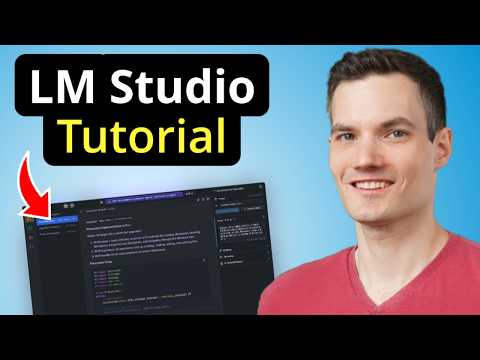
LM Studio Tutorial: Run Large Language Models (LLM) on Your Laptop

Kevin Stratvert. Same workflow as Ollama but in a GUI: download LM Studio, pull a Llama or Gemma model, chat, drop a PDF in and ask questions about it. Good for readers who'd rather not live in the terminal — also useful for getting a feel for how a 1B–3B model actually performs against a heavier one.

Try local AI through a GUI and compare small-model behavior with hosted frontier models.
IntermediatePrivate / Local AI
14 minutes

Learn Ollama in 15 Minutes - Run LLM Models Locally for FREE

Tech With Tim. A tight, no-nonsense Ollama walkthrough — install, pull a model, chat, then poke at the local HTTP API from Python and create a custom model with a Modelfile. Covers exactly the workflow the article describes for daily use on a Mac, including how to think about model size vs. your machine's RAM.

Install a local model runner, pull a small model and understand the privacy/performance tradeoff before using it for real work.

IntermediatePrivate / Local AI
5 minutes

The "vibe coding" mind virus explained…

Fireship. Fireship's three rules — pick a boring popular stack, get good at Git, treat yourself as the product manager — are the same guardrails the article is trying to install. Five minutes well spent before you let an AI write to your repo unsupervised.

Fireship's three rules — pick a boring popular stack, get good at Git, treat yourself as the product manager — are the same guardrails the article is trying to install.

IntermediateNo-code AI Tools
66 minutes

Cursor Vibe Coding Tutorial - For COMPLETE Beginners (No Experience Needed)

Tech With Tim. Tim is one of the steadier educators in this space, and this is the most complete "open Cursor, build something, ship it" walkthrough for a non-developer audience — setup, prompting, debugging, basic Git and even a touch of MCPs. Watch it once and you'll know what the article means by "build a small internal tool."

See the full beginner workflow for building a small Cursor project, including setup, prompting, debugging, basic Git and the limits of AI-assisted coding.

IntermediateNo-code AI Tools
20 minutes

The Model Context Protocol (MCP)

Anthropic. The protocol's designers — Theo Chu, David Soria Parra and Alex Albert — walking through why MCP exists, the components (server, client, transport), the reception since the November 2024 release, and which servers they actually use day-to-day. Useful as the canonical source after the Nate Herk overview.

Understand the protocol roles: host, client, server, tools, resources, prompts and transports.
IntermediateNo-code AI Tools
16 minutes

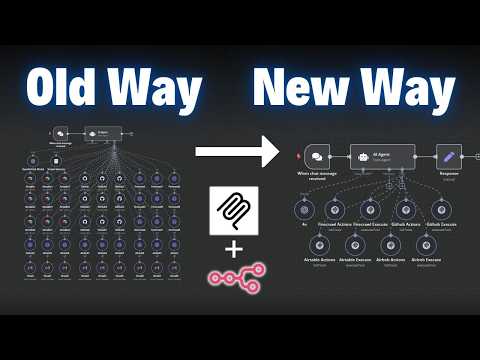
How MCPs Make Agents Smarter (for non-techies)

Nate Herk | AI Automation. A 16-minute, no-jargon explanation of what an MCP server is, how clients like Claude and n8n use them, and what you actually do differently once you have one. Lines up almost exactly with the article's "connect Claude or Cursor to your tools" framing.

Explain what MCP changes in plain language and decide whether a tool connection should use MCP or a simpler integration.
IntermediateNo-code AI Tools
69 minutes

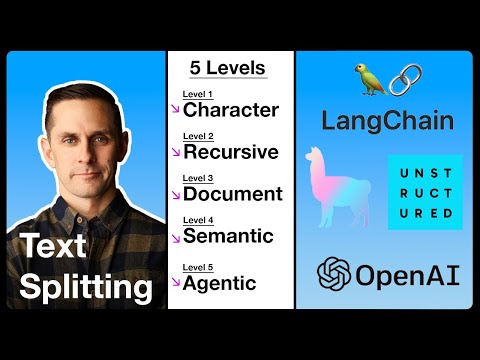
The 5 Levels Of Text Splitting For Retrieval

Greg Kamradt. The article spends a lot of words on chunking; this is the longest, most patient explanation of what each chunking strategy is actually doing — from character-recursive through document-aware to semantic and agentic splitting. Pair it with Greg's free ChunkViz tool to build intuition before you start tuning.

Build intuition for chunking choices before tuning a real retrieval system.

IntermediateNo-code AI Tools

Showing 24 of 42