

 13 minutes
RAG vs Fine-Tuning vs Prompt Engineering: Optimizing AI Models
Choose between prompt engineering, RAG, fine-tuning or a combination based on the actual failure mode.
AdvancedAI for Business
 Play video
Anthropic. Hannah Moran and Jeremy Hadfield from Applied AI walking through how to phrase tool calls and agent prompts on a real Pokemon-playing agent — when to push behavior into the system prompt versus the tool description, what the model needs to know about each tool's preconditions. Useful immediately after you write your first MCP server and find Claude calling it in unexpected ways.
Treat the demo game as a teaching surface, not the point. The transferable lesson is prompt/tool contract design; validate any production prompt with eval cases that include wrong-tool and missing-parameter failures.
Decide which behavior belongs in the system prompt, tool description or tool precondition.
Have built or inspected at least one tool-using agent.
Last reviewed: May 18, 2026
Continue through the same learning path with the next curated companion videos.
13 minutesChoose between prompt engineering, RAG, fine-tuning or a combination based on the actual failure mode.
 157 minutes
Use the course's examples to study quantisation, LoRA and QLoRA fine-tuning. Verify the selected configuration's hardware requirements and evaluate your adapter before release.
 7 minutes
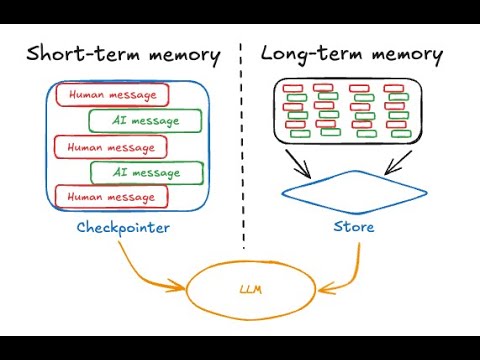
Separate short-term and long-term memory decisions and decide when agent memory should be written.
Hand-picked external courses that go deeper on this topic.
 Coursera · Emory University
Emory University Goizueta Business School faculty
The deeper, university-level counterpart to our beginner HubSpot marketing pick — Emory's business-school treatment goes past 'how to prompt' into training generative models for brand-specific output, the purchase-funnel economics of AI-generated content, and a full module of genuine skepticism about when generative AI is and isn't worth using in marketing.
 Coursera · IBM
IBM AI Academy
The genAI-era answer to the executive-strategy question. Three short courses aimed squarely at business leaders — no technical background required — on where generative AI creates value, how to govern it responsibly, and how to turn a vague "we should use AI" into a concrete, defensible use case. Rated 4.6 across ~700 reviews. Best taken before your next AI budget decision.