

Models & Tool Choice
Choose between ChatGPT, Claude, Gemini, Copilot, reasoning models, and hosted or local inference.
27 stories (12 articles · 15 videos)
Start here
A few good first pieces before you browse the full feed.
 6 min read
ChatGPT, Claude, Gemini, Copilot — which should a beginner pick?
Four mainstream AI assistants, picked apart in plain English. A non-technical guide to choosing your first AI based on what you already use and what you actually want from it.
New to AI 7 min read
Picking the right model for the job: a 2026 decision cheat sheet
Which model to reach for, by task type. GPT, Claude, Gemini, reasoning variants, and open-weights options, with decision rules and mid-2026 examples rather than a timeless ranking.
Beginner 10 min read
Multi-model orchestration: routing by cost, latency, and quality
Routing different tasks to different models can reduce cost or latency, but only workload-specific evaluation can show whether the added complexity pays off. The patterns, measurements, and failure modes.
IntermediateMore in this topic
 13 min read
The 2026 LLM stack: models, inference, tooling, and trade-offs
A working architect's view of the 2026 LLM stack — the model tiers, inference providers, orchestration layers, evaluation tooling, and the trade-offs that actually matter when shipping production AI. Everything you wish someone had laid out before you started.
Advanced 10 min read
Chain-of-thought, self-critique, tree-of-thoughts — when to use each
Three reasoning techniques that can improve AI output on hard problems — and the cost-benefit tradeoffs of using them. With concrete prompts, side-by-side comparisons, and the gotchas modern reasoning models introduce.
Intermediate 12 min read
Cost-optimizing inference: prompt caching, routing, and output control
Build a trace-based inference cost model, optimize the largest measured contributors, and prove that each change preserves task quality.
Advanced 13 min read
Fine-tuning in 2026: an evidence-first LoRA and QLoRA experiment
Decide whether parameter-efficient tuning is justified, govern the data, pin a reproducible experiment, compare held-out and safety results, and benchmark serving before deployment.
Advanced 6 min read
Free vs paid ChatGPT: what the upgrade actually buys
A jargon-free comparison of free ChatGPT, ChatGPT Plus, and ChatGPT Pro — what changes when you upgrade and how to tell if you actually need to.
New to AI 10 min read
Local AI on your Mac: Ollama, LM Studio, and what 7B models can really do
Running AI locally has matured. With Ollama or LM Studio and a modern Mac, you can run capable models offline, free, and private. What works, what doesn't, and the use cases that actually benefit.
Intermediate 10 min read
Choosing and prompting reasoning models
Reasoning settings change quality, latency, cost, and sometimes prompting behavior. A practical guide to choosing them by evaluation rather than folklore.
Intermediate 12 min read
Choosing between prompting, RAG, and fine-tuning (and when to combine)
Prompting, RAG, and fine-tuning are the three big levers for adapting LLMs to your problem. Each is right for some problems and wrong for others. A framework for choosing, the realistic costs of each, and the production patterns where combining them shines.
Advanced 11 min read
Self-hosted vs hosted inference: a break-even model you can audit
At what scale does self-hosting beat API calls? The actual math, the operational realities, and the patterns that distinguish teams who should self-host from teams who should keep paying for managed inference.
Advanced 211 minutes
Deep Dive into LLMs like ChatGPT
Andrej Karpathy. This is the clearest end-to-end explanation on YouTube of what an LLM actually is — pretraining, tokenization, SFT, RLHF, reasoning RL, tool use, hallucinations — at the level of detail an engineer needs to reason about model trade-offs. Watch it once and the "GPT-class vs. open-weights vs. reasoning model" decisions in the article stop feeling like brand choices and start feeling like training-recipe choices.
Advanced 40 minutes
Andrej Karpathy: Software Is Changing (Again)
Y Combinator. Karpathy's AI Startup School keynote frames LLMs as a new kind of computer — utility, fab, and OS rolled together — and argues for "partial autonomy" products with a human-controlled leash. It is the cleanest articulation of the stack-level mental model the article assumes: that you are picking inference vendors and tooling for a programmable substrate, not a chatbot.
Advanced 19 minutes
Is This the End of RAG? Anthropic's NEW Prompt Caching
Prompt Engineering. Walks through Anthropic's prompt caching against Gemini's context caching with concrete latency-and-cost reductions per use case (long-document chat, few-shot, multi-turn). The breakdown of cache-write surcharge vs. cache-read discount is exactly what the article assumes when it talks about when caching pays off.
Advanced 56 minutes
Build Hour: Prompt Caching
OpenAI. OpenAI's own Build Hour on prompt caching — the 1024-token threshold, the prefix-stability requirement, steep audio-caching discounts for realtime (check the current pricing page for the exact rate), time-to-first-token impacts at long inputs. Useful when you are sizing the engineering effort to actually hit the cache reliably on your production prompts.
Advanced 157 minutes
Fine Tuning LLM Models – Generative AI Course
freeCodeCamp.org. Long, theory-then-code course covering quantisation, LoRA, QLoRA, and full PEFT on Llama 2 and Gemma — on hardware most developers actually have. It is the closest thing to a "shadow somebody who has done this" experience on YouTube and lines up with the article's "you don't need a cluster" claim with concrete VRAM budgets.
Advanced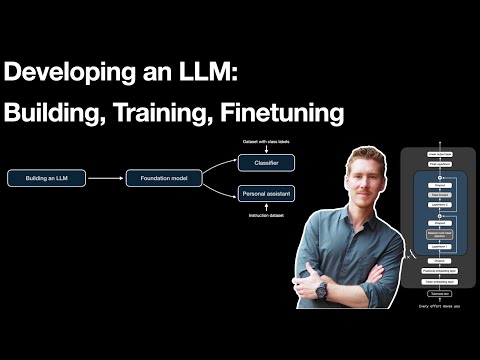 59 minutes
Developing an LLM: Building, Training, Finetuning
Sebastian Raschka. Sebastian Raschka's slower walkthrough of where fine-tuning sits in the broader LLM training pipeline — instruction tuning, classification fine-tuning, parameter-efficient methods, and the trade-offs the article calls out before recommending LoRA. Good calibration before you start, especially if your team is debating whether fine-tuning is even the right step.
Advanced 15 minutes
Is ChatGPT Plus Worth it? Here's My Updated Review for 2025
Ryan Doser. Ryan walks through every feature actually gated behind the $20 tier — usage caps, advanced voice mode, image and Sora limits, custom GPTs, the reasoning-model tier — and contrasts it with current free alternatives like Claude, Gemini, and Perplexity. The view count is on the lower side because the topic is narrow, but this is the cleanest current side-by-side that doesn't dissolve into hype, which is why we picked it over the louder "Plus changed my life" videos.
New to AI 19 minutes
Every AI Model Explained
Tina Huang. A clean tour of the current model landscape grouped by tier — flagships, lite models, mid-tier, specialized — with concrete picks for what each tier is actually good for. This is the "know your options before you route" half of the article, and Huang frames cost-vs-capability the same way the article does without leaning on benchmark hype.
Intermediate 9 minutes
RouteLLM achieves 90% GPT4o Quality AND 80% CHEAPER
Matthew Berman. Walks through the LMSYS RouteLLM paper and code: a small classifier sits in front of a strong/weak model pair and decides which one to call, hitting roughly 95% of the strong model's quality at a fraction of the cost. The view count is under the usual 100k bar, but for the specific "show me real model routing, not just model comparisons" niche this is the cleanest explanation on YouTube and lines up directly with the article's quality/cost tradeoff section.
Intermediate 9 minutes
RAG vs. Fine Tuning
IBM Technology. Tighter focus on the two techniques teams most often confuse. Goes deeper on data freshness, source attribution, and the inference-time speed argument for fine-tuning. Worth watching if you are specifically trying to argue against an unnecessary fine-tune project.
Advanced 13 minutes
RAG vs Fine-Tuning vs Prompt Engineering: Optimizing AI Models
IBM Technology. A clear whiteboard pass through all three techniques with their respective costs — retrieval latency, training compute and catastrophic forgetting, the limits of prompt-only solutions — and the combinations that actually make sense in production. The closing example of a legal AI system using all three is almost exactly the article's "when to combine" argument.
Advanced 131 minutes
How I use LLMs
Andrej Karpathy. Karpathy spends explicit chapters on "Be aware of the model you're using, pricing tiers" and "Thinking models and when to use them," then keeps switching between ChatGPT, Claude, Gemini, Grok, and Perplexity throughout the rest of the walkthrough. It is the closest thing to watching the article's cheat sheet applied live by someone with strong opinions about when each tier earns its keep.
Beginner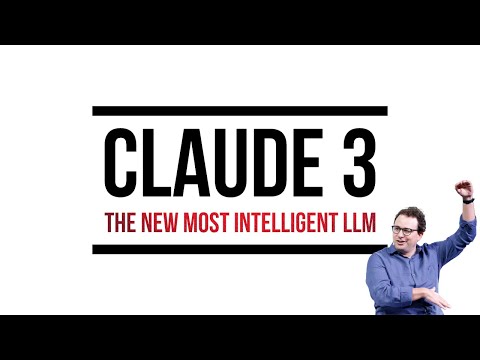 17 minutes
The New, Smartest AI: Claude 3 – Tested vs Gemini 1.5 + GPT-4
AI Explained. Older than the article (March 2024), but the methodology is what's useful: a single careful reviewer running the same hard tasks — OCR, theory of mind, instruction following, math — through three frontier models side by side and showing exactly where each one cracks. The model names are dated, the framework for comparing models is not.
Beginner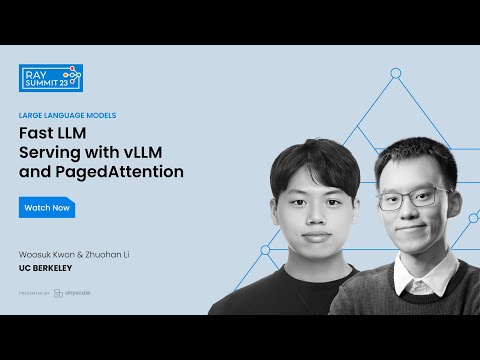 32 minutes
Fast LLM Serving with vLLM and PagedAttention
Anyscale. Walks through why naive LLM serving wastes 60–80% of GPU memory, how PagedAttention borrows OS-style paging to fix that, and why continuous batching produces the 24× throughput numbers the article uses in its math. After this, the article's "you'll be lucky to hit 50% utilisation" line stops feeling abstract.
Advanced19 minutesEvery AI Model Explained
Tina Huang. A calm 19-minute map of the major model families — OpenAI's GPT line, Anthropic's Claude, Google's Gemini, plus the open-source players — and which tier inside each family is worth your time. After the article tells you "pick one and stick with it for a month," this video tells you what the dropdown menu inside that one is actually offering. Honestly opinionated without being a hot take.
New to AI