

Customer Support
Support agents, voice flows, safe escalation, multilingual handling, and knowledge boundaries.
10 stories (4 articles · 6 videos)
Start here
A few good first pieces before you browse the full feed.
 11 min read
Design an AI customer support agent: triage, knowledge, actions, and escalation
A queue-evaluated reference design for support triage, retrieval, response drafting, controlled actions, and human escalation, with the policy and measurement boundaries needed for a safe pilot.
Intermediate 9 min read
Voice agents for customer flows: where they work and where they fail
Voice agents are useful when the flow is bounded, the data is available, and the fallback is clean. A practical decision framework for Twilio/Retell-style systems, disclosure, handoff, testing, and rollout.
AdvancedMore in this topic
 32 minutes
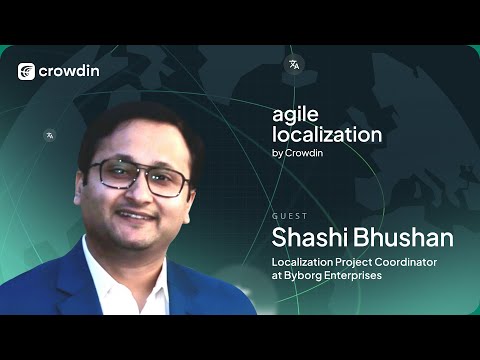
How to Build Human-Centered AI Workflows in Localization with Shashi Bhushan
Crowdin. Shashi Bhushan starts with workflow mapping rather than tool selection, then covers source-text quality, human review, AI proofreading, glossary checks, product-team involvement, pilots and privacy constraints. That is almost exactly the operating model the article recommends for Estonian teams working across Estonian, English, Russian, Finnish and customer-specific terminology.
Intermediate 4 minutes
Introducing EmbeddingGemma: The Best-in-Class Open Model for On-Device Embeddings
Google for Developers. The video introduces multilingual text embeddings that can run locally and support semantic search and RAG without sending every document to a hosted API. For Estonian companies, that is a useful technical complement to the article's internal-knowledge-search pattern: multilingual retrieval is valuable only when it also respects data locality, permissions and source authority.
Intermediate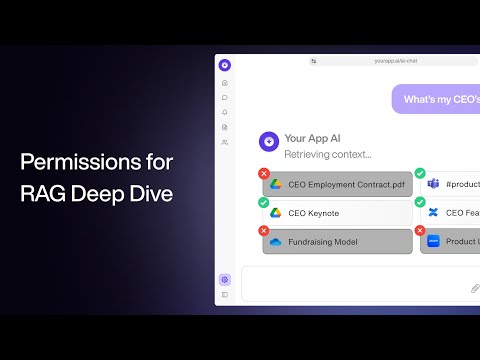 20 minutes
Permissions & Access Control for RAG - a Deep Dive Tutorial
Paragon. Walks through the production RAG permission problem and compares tool-calling, namespaces, ACL tables and relationship-based permissions. That directly supports the article's core rule: retrieval must only return sources the current user is allowed to see, and source-system permissions cannot be treated as an afterthought.
Advanced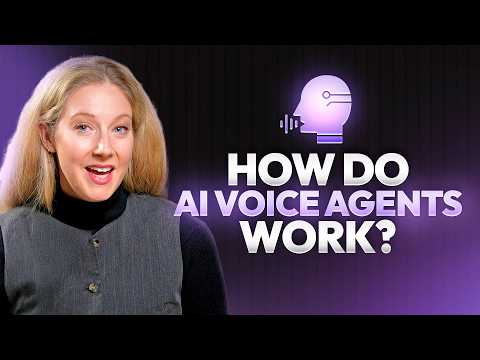 6 minutes
AI Voice Agents: How They Actually Work & Why They Sound So Human
CX Foundation. Breaks voice agents into the practical pipeline: speech recognition, language model, business-system APIs, text-to-speech and interruption handling. That gives the article's rollout framework a concrete technical foundation before readers choose Twilio, Retell, Vapi, LiveKit or another platform.
Advanced 10 min read
Multilingual AI workflows for Estonian companies
A practical workflow model for Estonian companies working across Estonian, English, Russian, Finnish, and other customer languages without losing tone, terminology, privacy, or accountability.
Intermediate 10 min read
Company knowledge RAG: permissions, leakage, and source boundaries
A company knowledge assistant is only safe if retrieval respects permissions. How to design RAG source boundaries, ACL filtering, document ownership, logging, stale-source handling, and refusal behavior.
Advanced 31 minutes
How To Build An AI Customer Support Agent with n8n (free template)
Bart Slodyczka. The n8n workflow connects to help-desk products, drafts replies from retrieved material, and turns solved tickets into candidate knowledge-base content. Before using that ingestion pattern, add human approval, redact personal data and secrets, preserve the source ticket and content version as provenance, and run retrieval evaluations against a held-out ticket set.
Intermediate 231 minutes
How to Build & Sell AI Agents: Ultimate Beginner's Guide
Liam Ottley. The course covers RAG-grounded chatbots, escalation logic, and a no-code stack built with tools such as Botpress, Voiceflow, Make, and n8n. Its "anatomy of an agent" section gives a concrete implementation to compare with the article's triage → evidence → proposed action → policy gate → handoff responsibilities.
Intermediate