

 77 minutes
AI prompt engineering: A deep dive
Hear how production prompt engineers revise instructions, examples and behavioral constraints under real pressure instead of treating prompts as one-off text.
AdvancedPrompt Engineering
AI Engineer. The talk that crystallised the modern "define a Pydantic model, hand it to the LLM, let validation do the rest" pattern, with concrete examples of nested objects, validators that catch hallucinated URLs, and Chain-of-Thought as a typed field. Watch it before re-reading the article's section on validators and you will recognise where its retry and refusal rules come from.
Kept as the origin of the schema-first pattern — watch it to see where the article's validator, retry and refusal rules come from, then implement with whatever structured-output tooling your stack uses.
Learn why schema-first LLM calls need typed objects, validators, retries and explicit handling for malformed or hallucinated fields.
Comfortable with Python and LLM API calls; Pydantic experience helps but isn't required.
Last reviewed: May 18, 2026
Continue through the same learning path with the next curated companion videos.
77 minutesHear how production prompt engineers revise instructions, examples and behavioral constraints under real pressure instead of treating prompts as one-off text.
 55 minutes
Design an eval ladder that catches regressions before prompt or model changes reach users.
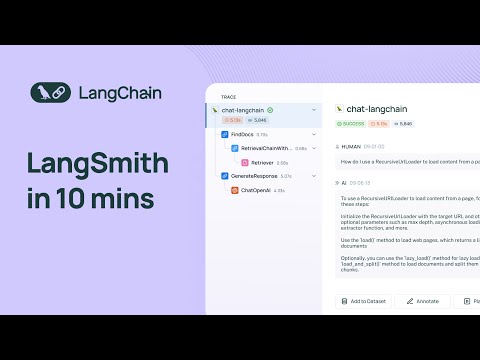 9 minutes
You can navigate traces, projects and datasets in LangSmith and read off token cost, latency, error rate and per-span detail.
Hand-picked external courses that go deeper on this topic.
 Coursera · Emory University
Emory University Goizueta Business School faculty
The deeper, university-level counterpart to our beginner HubSpot marketing pick — Emory's business-school treatment goes past 'how to prompt' into training generative models for brand-specific output, the purchase-funnel economics of AI-generated content, and a full module of genuine skepticism about when generative AI is and isn't worth using in marketing.
 Coursera · IBM
IBM AI Academy
The genAI-era answer to the executive-strategy question. Three short courses aimed squarely at business leaders — no technical background required — on where generative AI creates value, how to govern it responsibly, and how to turn a vague "we should use AI" into a concrete, defensible use case. Rated 4.6 across ~700 reviews. Best taken before your next AI budget decision.