

Governance & EU AI Act
Policies, human review, risk ownership, SME governance, and regulatory readiness.
10 stories (6 articles · 4 videos)
Start here
A few good first pieces before you browse the full feed.
 9 min read
EU AI Act for SMEs: a practical governance plan
The EU AI Act is not just a legal problem for large vendors. A practical SME plan for inventory, risk classification, human oversight, transparency, vendor records, and rollout discipline.
Advanced 9 min read
Human-in-the-loop design patterns for AI workflows
Human review is not a vague safety blanket. A practical guide to deciding what humans approve, sample, audit, escalate, or never delegate in AI workflows.
IntermediateMore in this topic
 8 min read
Idempotency, retries, and human gates for n8n AI nodes
AI nodes fail differently from CRUD APIs. Design n8n retries, idempotency keys, human-in-the-loop gates, and logging so a flaky model call does not double-send email or skip review.
Intermediate 8 min read
OpenClaw allowlists, pairing, and group mention security
Channel allowlists, DM pairing, and group mention rules are the real security boundary for OpenClaw — because tools can include shell, files, and browser. A practical lockdown checklist.
Intermediate 6 min read
The voice on the phone sounds familiar: recognising AI-enabled scams
A calm, practical guide to voice-clone emergencies, impersonation messages, fake media, and AI-polished scams — with a family verification plan that works even when the fake looks or sounds convincing.
New to AI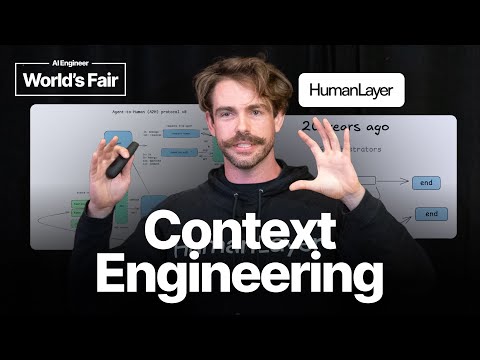 17 minutes
12-Factor Agents: Patterns of reliable LLM applications — Dex Horthy, HumanLayer
AI Engineer. Dex Horthy explains why reliable agent systems are mostly disciplined software around a few LLM calls: own the prompt, own the context window, keep control flow deterministic and use tool calls to contact humans when the workflow needs judgment. That maps directly to the article's approval, exception and escalation patterns.
Intermediate 18 minutes
AWS re:Invent 2025 - Implementing Human-in-the-Loop Controls for Multi-Agent AI Systems (CNS428)
AWS Events. This lightning talk names the business moments where human control is needed: high-stakes decisions, irreversible actions, regulatory requirements, trust-building phases, ambiguous edge cases and graceful degradation. It also shows concrete implementation mechanisms such as MCP elicitations, Step Functions callback waits and approval nodes.
Intermediate 56 minutes
AI Agents in Finance with HPE's Chief Financial Officer (CFO)
CXOTalk. HPE CFO Marie Myers describes rolling agentic AI (their "Alfred" platform) across a 3,600-person finance organization with the discipline the article argues for: a direct-versus-indirect ROI framework, stage gates that decide whether each use case continues or stops, mandatory human-in-the-loop quality controls, and workflow-level metrics such as a weekly review process losing roughly 90% of its manual effort. Adoption is measured as changed work, not tool logins.
Advanced 30 minutes
EU AI Act Explained: Turning Compliance into Competitive Advantage | Carme Artigas
MSP GLOBAL. Carme Artigas chaired the Council negotiations that produced the AI Act, and here she explains it to managed service providers through which many SMEs buy AI systems. She walks the timeline understood at the time, from the August 2025 GPAI code of practice to an August 2026 conformity-assessment milestone, and discusses vendor documentation. The [AI Omnibus, Regulation (EU) 2026/1744](https://eur-lex.europa.eu/legal-content/EN/TXT/?uri=OJ%3AL_202601744), later moved the relevant Chapter III high-risk requirements to 2 December 2027 for Annex III systems and 2 August 2028 for systems covered by Annex I. The inventory, vendor-evidence and ownership work remains useful, but the video's dates are historical.
Advanced 9 min read
AI ROI and maturity: how to measure adoption that actually works
AI adoption should not be measured by how many people tried ChatGPT. A practical framework for measuring workflow ROI, quality, risk, maturity, and scale-readiness.
Advanced