

Variant prompts feel productive because they produce visible novelty. The failure mode is subtle: round after round, the “best” option is the one that photographs well in the chat window, not the one that still serves the brief you wrote in creative brief before you prompt. By the end you have a polished orphan — attractive, and no longer the piece you meant to make.
This is the control system for iteration. It assumes you already refused muse-dependency in AI is not your muse and that you can still map stages with keep your taste.
Scenario
Illustrative scenario: a designer needs three homepage hero lines for a tool that helps ceramics studios schedule kiln time. Thesis: “boring logistics, treated with respect.” After twelve variant rounds, the chat prefers “Ignite your studio’s potential” — which violates the non-hype non-goal. The designer almost ships it because it tested well with a colleague who never saw the brief.
Direction lost. Variants won.
Workflow: lock, vary, score, kill
1. Freeze the direction artifact
Before any variant prompt, paste or attach:
- One-sentence thesis
- Non-goals
- Taste notes
- “Do not change these unless I explicitly revise the brief”
If you cannot freeze those lines, you are not ready to iterate — go back to the brief.
2. Vary one axis per round
Pick a single axis:
- Tone (warmer / dryer)
- Length
- Concrete detail level
- Structure (question open vs. statement open)
- Visual motif (for image work: lighting, crop, not “new concept”)
Ask for three to five variants on that axis only.
Thesis (immutable): [thesis]
Non-goals (immutable): [list]
Axis to vary this round: [axis]
Produce 4 variants. Label them A-D.
After each, note which brief field it stresses.
If a variant would require changing the thesis, omit it.
3. Score against the brief, not against vibes
Use a tiny scorecard (also in the variant iteration card):
| Variant | Serves thesis? (Y/N) | Hits a non-goal? (Y/N) | Still sounds/looks like me? (Y/N) | Keep? |
|---|
Any “N” on thesis or “Y” on non-goal is a kill, even if you like the sparkle.
4. Promote one variant, then reset axes
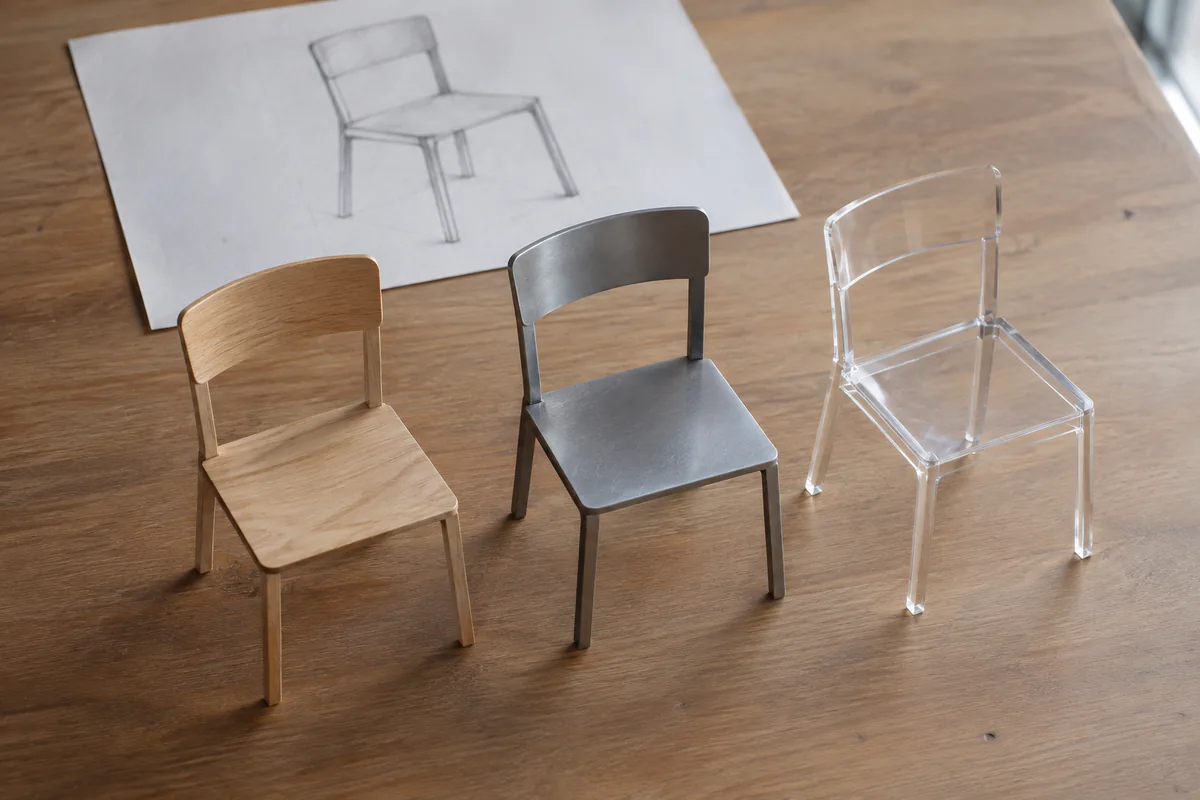
Choose one keeper. Make it the new baseline draft. Start a fresh round on a different axis. Do not keep a running museum of twenty almost-winners — that invites thesis drift.
Endless variant shopping is a creative avoidance pattern with a productivity costume. Cap rounds in advance (for example: three rounds, one axis each). If none work, revise the brief deliberately rather than prompting for a miracle fourth concept.
Validation and fallback
Validation: read the keeper beside your original thesis sentence. If you need to rewrite the thesis to justify the keeper, the variant process failed.
Fallback: stop generating. Sketch variants by hand or with a human collaborator for one round. Return to the model only for craft critique (draft-then-critique).
Variant loops multiply how much unpublished material you send to a vendor. Prefer short excerpts over full manuscripts, and strip client names from every round — not only the first paste.
Where credits and law still matter
Iteration does not change authorship rules. Purely generative stretches still sit under the U.S. Copyright Office’s human-authorship analysis (Copyrightability Report). If you later register a work that includes more than minimal AI-generated material, disclose it and limit authorship claims to human-authored portions (Copyright Registration Guidance, 2023). If you publish AI-assisted marketing claims, remember that unfair or deceptive practices remain regulated regardless of the tool — the FTC’s crackdown on deceptive AI claims and schemes is a useful external anchor for commercial hype (FTC announces crackdown on deceptive AI claims and schemes). Hype variants that overclaim product capability are not “just creative exploration.”
For EU-facing releases, plan how in-scope synthetic content will be disclosed under AI Act Article 50 (Regulation (EU) 2024/1689; in-scope duties from 2 August 2026, with a limited Article 50(2) marking grace to 2 December 2026 for certain systems already on the market — Commission FAQ). Disclosure does not rescue an off-brief thesis; it only reduces deception about production method.
Shown variant round (illustrative)
Immutable thesis: “Kiln booking should feel as ordinary and trustworthy as booking a dentist — calm, precise, no hustle theater.”
Axis this round: concrete detail level.
Produce 4 hero lines. Vary only how concrete the detail is.
Do not introduce fire metaphors, "unleash," or studio-as-revolution language.
Illustrative outputs and scorecard calls:
- A: “Schedule kiln time without the group-chat chaos.” — Keep candidate (concrete, on-thesis).
- B: “Ignite capacity across your creative practice.” — Kill (non-goal + thesis break).
- C: “Pick a shelf, pick a window, get a confirmation.” — Keep candidate (very concrete).
- D: “The operating system for modern makers.” — Kill (generic SaaS fog).
You then promote C, and in the next round vary tone only (slightly warmer vs. dryer) without reopening metaphor space.
Team and client friction
Clients sometimes ask for “more options” as a substitute for deciding. Your job is to bring options that still serve the agreed brief. When a stakeholder falls in love with an off-brief variant, surface the scorecard: show which field breaks. That is easier than arguing taste in the abstract — and it protects you from becoming the person who ships work they cannot stand behind (keep your name on AI-assisted work).
If stakeholders want volume for research, label it research. Do not mix research dumps into the production baseline without a deliberate brief revision.
Cost and attention reality
Each variant round costs attention even when tokens are cheap. Automation-bias literature warns that fluent recommendations reduce checking (Mosier et al., 1998); variant UIs amplify that by making the next option one click away. Cap rounds. Schedule a human stop: “three rounds then decide.”
Connection to critique and edit
Variants explore options. Critique judges a chosen draft (draft then critique). Edit preserves taste in the keeper (edit pass that preserves your taste). Do not run all three as one vague “make versions until it’s done” session — that is how direction dissolves.
Pick a direction before you generate more
Take a project currently stuck in variant limbo. Write the thesis on paper. Kill every option that fails the scorecard. Keep one. Run at most one new axis round using the worksheet. Then move to an edit pass — not another concept hunt.