
A writer staring at a blank page asks a model to “write the opening.” An hour later they have polished paragraphs that sound like everyone else’s newsletter. A different writer pastes their own rough opening and asks: “Where does this lose specificity? Quote the weak lines. Do not rewrite unless I ask.” Same tool class. Different ownership of the draft.
Here is the practitioner workflow for that second path. It deepens the critique stage sketched in keep your taste and pairs with writing with AI without sounding like AI. It is not permission to hide AI use when disclosure matters — see keep your name on AI-assisted work.
Business and practice scenario
Illustrative scenario: a solo essayist has 600 words of a personal essay on learning a craft late in life. Deadline is tomorrow. Temptation: “finish this in my voice.” Risk: the model invents anecdotes, smooths away the odd phrasing that made the draft theirs, and produces a piece that is publishable and forgettable.
Better job for the model: pressure-test structure, flag vagueness, list places where a reader would bounce — without becoming a silent co-author of the lived detail.
Tool and workflow choice
Use any capable chat model you already trust for drafting work. The decision criteria are not brand loyalty:
- Can you paste a draft without sending client secrets or third-party personal data? If not, redact first (work secrets stop habit).
- Can you instruct “critique only, no rewrite” and have the model mostly obey?
- Can you keep the draft file as the source of truth outside the chat?
If your employer or client forbids consumer tools for unpublished work, stop and use the approved channel — or critique offline with a human reader.
Step-by-step: the draft-then-critique loop
- Write a real draft offline — messy is fine; empty is not. Aim for enough substance that critique has something to bite.
- Write critique criteria before you paste — three to five checks (specificity, structure, voice drift, factual risk, pacing).
- Paste the minimum — the section under review, not your entire unpublished manuscript plus client email thread.
- Prompt for critique, not co-writing:
Critique the draft below against ONLY these criteria:
1) [criterion]
2) [criterion]
3) [criterion]

For each issue: quote the passage, name the problem, suggest a direction in one sentence.
Do not rewrite the draft. Do not add new anecdotes or facts.
If something is already strong, say so briefly.
- Decide what to accept. Treat every suggestion as optional. Rewrite in your own file.
- Optional second pass: ask the model to check whether your revision fixed the named issues — still no free rewrite of whole paragraphs unless you explicitly request a local alternative you will rewrite again.
Keep the chat as a critique log, not as the manuscript. The manuscript lives in your editor with version history. If copyright or credit questions arise later, that history is the provenance trail the U.S. Copyright Office’s human-authorship focus cares about (Copyrightability Report, Jan 2025). For registration, disclose more than minimal AI-generated material and claim authorship only for human-authored portions (Copyright Registration Guidance, 2023).
Validation and fallback
Validation: after edits, read the piece aloud. If it sounds like the generic tells in writing without sounding like AI — filler openings, hedged endings, metronomic rhythm — you accepted too much model language.
Fallback: if the critique is vague (“make it more engaging”), tighten the criteria and ask again. If it still fails, switch to a human reader or a printed self-critique checklist. Do not “fix” a bad critique by letting the model rewrite the piece end-to-end.
Personal essays, client scripts, and unpublished lyrics often contain other people’s names, medical details, or confidential projects. Redact before critique. Consent to appear in your art is separate from consent to have their story pasted into a third-party model.
Human review rule
You remain the author. Journal-ethics bodies such as COPE state that AI tools cannot meet authorship requirements because they cannot take responsibility for the work. Creative publishing is not identical to scholarly publishing, but the accountability line transfers: if it ships under your name, you judged it. NIST’s AI Risk Management Framework likewise treats human oversight and documented context as part of trustworthy use — critique assistance included (NIST AI RMF). If you publish for EU audiences, plan transparency for in-scope synthetic content under AI Act Article 50 (Regulation (EU) 2024/1689; Commission FAQ) separately from the critique habit.
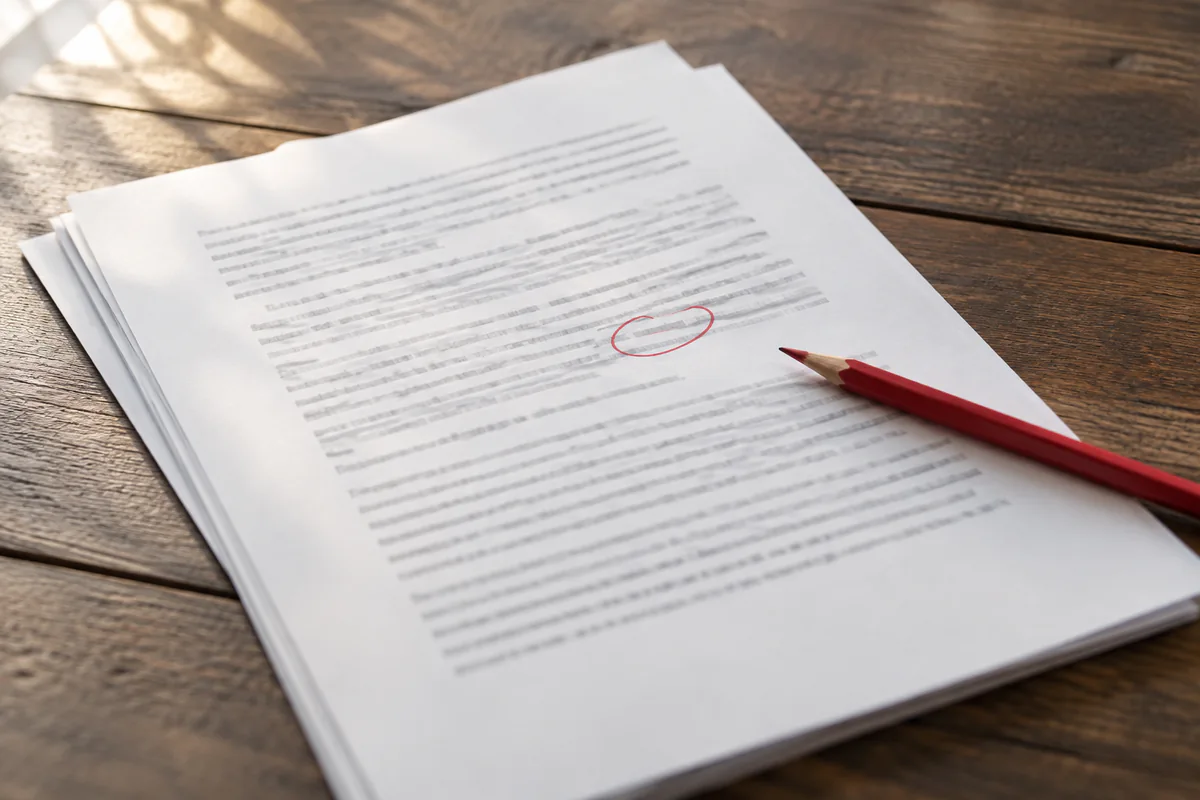
Shown critique exchange (illustrative)
Draft fragment the writer actually wrote:
I returned to the wheel at forty-two because the office had run out of
problems I could feel with my hands. The first bowl collapsed. I kept
the lump as a paperweight for a week before I could throw it away.
Critique prompt used:
Criteria: (1) specificity of sensory detail (2) sentimentality risk
(3) whether the ending earns the emotion
Quote weak spots. Do not rewrite.
Useful model response shape (illustrative composite, not a vendor screenshot): it quotes “problems I could feel with my hands” as strong; flags “I kept the lump as a paperweight for a week” as possibly tipping into tidy moral; asks whether the paperweight week is true. That last question is gold — it returns judgment to the writer instead of inventing a prettier ending.
Useless response shape: a full rewritten paragraph with a neat lesson about resilience. That is co-authorship creeping in through the side door. Reject it and restate “critique only.”
Failure modes to expect
- Critique becomes ghostwriting. You asked for issues; the model delivered a replacement draft. Delete the rewrite. Keep only the quoted problems.
- Criteria are too vague. “Make it better” produces style soup. Name measurable craft checks.
- You paste the whole book. Long pastes raise privacy risk and dilute attention. Critique in sections.
- You accept factual inventions. Models will calmly suggest vivid details that never happened. Personal and documentary work need a truth pass you alone can run — related to what not to delegate.
- You skip disclosure later. Heavy AI rewrite of public prose may still need a credit line even if you “mostly” drafted — see disclose AI in creative credits.
Pairing with voice-protection articles
If the piece is public-facing and the risk is that AI prose replaces your recognizable voice entirely, escalate to refuse to ghostwrite your voice. If the issue is likeness or voice cloning for a project character, that is a consent problem, not a critique problem — use voice or likeness consent for projects and the personal safety check in voice clone personal safety.
Run the loop on one unfinished piece
Open a draft you abandoned. Write three critique criteria. Run the prompt above using the draft-critique loop card. Accept at most three changes. Leave the rest. Notice whether the piece got clearer without getting smoother in the wrong way.