
Asking an image model for “a poster in the style of [living illustrator]” is the shortest path to a fight you do not want: ethical, platform, and sometimes legal. This article does not teach how to clone a living artist’s style. It teaches how to use references like a professional — with consent awareness, fair description, and clear risk labels — while still getting useful generative help.
“Style” is not one universal legal category; copyright, trademark, passing off, publicity, contract, platform, and unfair-competition rules depend on the work and jurisdiction. Technique-based prompting reduces ethical imitation risk but does not itself clear rights.
It goes deeper than the imitation paragraph in keep your taste. For photos of real people, pair with photo consent before AI edit or share. For credits after the fact, see disclose AI in creative credits.
What “reference” means in a generative workflow
Traditional reference: you study a painting’s composition, then draw your own marks. Generative reference: you describe or upload cues, and a model produces new pixels. The second path can still be legitimate — genre, era, lens type, palette, composition notes — or it can become a request to reproduce a living person’s identifiable style for your gain.
The U.S. Copyright Office’s copyrightability report focuses on human authorship of outputs; it does not bless scraping a peer’s livelihood as a prompt ingredient (Copyrightability Report, Jan 2025). Separately, training-data transparency remains uneven across vendors; WIPO’s overview of generative AI and IP stresses clearance and uncertainty rather than casual confidence (WIPO generative AI and IP).
“Everyone does style prompts” is not a clearance. Check the selected tool’s current terms and safeguards on the day of use. A platform accepting a prompt does not grant a licence or establish that the use is lawful.
Fair reference toolkit (use these instead)
Prefer descriptors a teacher could put on a whiteboard:
- Era and movement — “1970s documentary color,” “Bauhaus poster geometry”
- Medium and process — “risograph grain,” “charcoal on newsprint,” “35mm film push-process”
- Composition — “low horizon, subject in upper third, negative space left”
- Palette — “limited to three inks: ochre, slate, bone”
- Prior work you have the rights and permission to reuse — “match the line weight in my 2024 zine covers” (check client, collaborator, employment, and licence terms rather than assuming possession equals ownership)
Avoid as a commercial default:
- Named living artists as style keywords
- “Make it indistinguishable from [artist]”
- Uploading a living artist’s portfolio pages to “match exactly” without a license or commission relationship
Illustrative scenario: a theater company needs a season poster. Bad prompt: “in the style of [famous living poster artist].” Better brief: “silk-screen look, two-color, bold typographic hierarchy, 1990s community-theater energy, no celebrity caricatures.” The second still uses culture; it does not ask the model to wear a peer’s skin.
Consent when references include people
Reference boards often include photographs of models, friends, or found faces.
Uploading someone else’s photo to an image model is a likeness decision as well as a data decision. Get consent for AI processing and for the intended publication context. A photo taken at a party is not blanket permission to generate lookalike marketing stills.
If intimate or sexualized imagery is involved without consent, stop and use adult safety paths such as StopNCII.org for adults affected by non-consensual intimate imagery, and the adult deepfake first-response article if you are the person depicted. This article will not walk through how to generate such content.
Risk register (label it)
Before you ship AI-assisted visuals, label the risk honestly:
| Risk | Question | If yes |
|---|---|---|
| Living-artist imitation | Would a peer recognize a specific working artist’s signature moves? | Redescribe with technique/era; or license/commission |
| Training-data uncertainty | Are you implying the model “cleared” a specific work? | Remove the claim; you usually cannot verify |
| Likeness | Is a real person identifiable? | Consent on file; see photo-consent article |
| Misleading audience | Could viewers think a human drew every mark? | Disclose AI assist in credits |
Creative Commons licenses can help when you reuse specific works under stated terms (Creative Commons licenses) — they do not automatically authorize “style of” prompting against a living artist who never offered that bargain.
Workflow steps
- Write the visual job in a brief (creative brief habit).
- Build a reference list of techniques/eras — not a hit list of living names.
- Generate with technique language; save prompts beside outputs.
- Run the risk register before client review.
- Keep human mark-making where authorship and taste live (keep your taste).
Commission, license, or walk away
Sometimes the honest answer is that you want that artist’s sensibility because you admire them. Generative prompting is the wrong instrument. Options that respect authorship:
- Commission the artist, or hire someone working in a related craft openly.
- License an existing work under terms you can actually meet (Creative Commons when the work is offered that way; direct licenses otherwise).
- Study publicly, then make something that would still stand if the admired name were never mentioned.
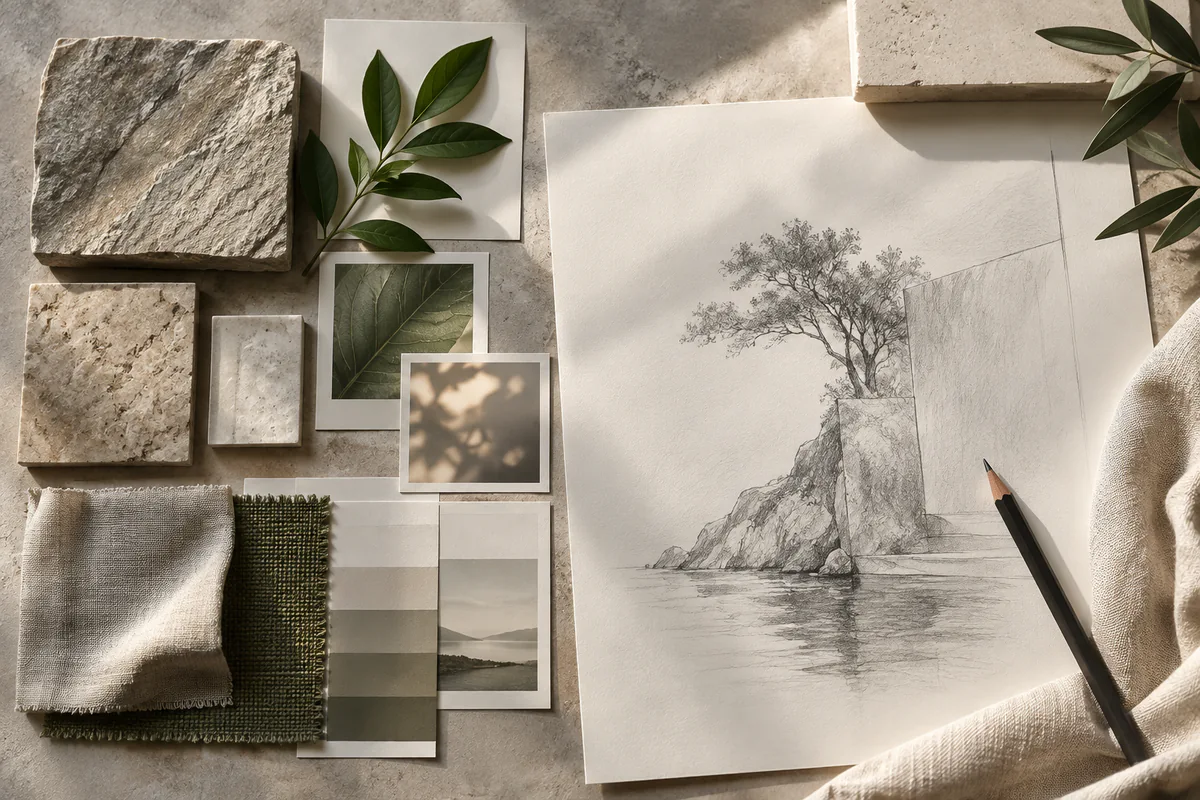
Illustrative scenario: a board-game designer loves a living cover artist’s framing habits. Instead of “in the style of Name,” they hire a different illustrator and share a mood board of composition notes and color limits with no portfolio scrapes from the admired artist. The cover can still nod to a genre lineage without pretending the model can rent a person’s style.
Platform and commercial reality
Product rules on artist-name prompts vary and change. Verify the current terms rather than claiming a market-wide restriction. If a client asks for close imitation, document the request, offer technique-based alternatives, and obtain counsel or a licence where a specific work or protected asset is implicated.
For EU-facing releases, check the Commission’s current Article 50 guidelines and quick facts. The rules apply from 2 August 2026, but scope, actor, content category, and exceptions matter. Disclosure does not clear intellectual-property or personality rights.
Audit your last three reference prompts
Open your last three image chats. Highlight any living-artist names. Replace each with era/medium/composition language using the visual reference ethics checklist. If you cannot describe the look without the name, you may be chasing a person, not a craft — commission or license instead of prompting.