

 30 minutes
AI Tools You'll Use Everyday (And How To Use Them)
Identify distinct workflow stages and create testable tool-selection criteria for each one.
IntermediateAI Productivity
Tina Huang. Tina presents a five-part task/context/references/evaluate/iterate framework and four named iteration moves. Those elements can help you draft a candidate schema, but the agent and chain-of-thought examples reflect the course's time and context. Test any extracted pattern on representative cases before adding it to an approved library.
Use the framework as historical course material to test, not as a complete library standard. Approval should depend on your current model, policy, data boundary and evaluation results.
Extract a candidate prompt structure, then add ownership, versioning, evaluation, limits and fallback fields before review.
Comfortable prompting on your own; this is about turning that into shared assets.
Last reviewed: Aug 11, 2026
Continue through the same learning path with the next curated companion videos.
30 minutesIdentify distinct workflow stages and create testable tool-selection criteria for each one.
 25 minutes
You can layer role, structured sections and explicit thinking steps into a prompt without turning chain-of-thought into a ritual.
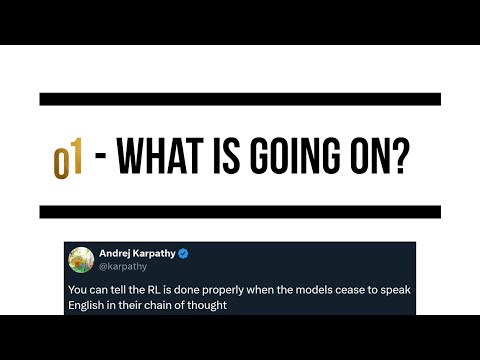 28 minutes
Understand one historical account of o1, then compare a direct task specification with other supported prompt variants on your current model and workload.
Hand-picked external courses that go deeper on this topic.
 DeepLearning.AI
Isa Fulford · Andrew Ng
Ninety minutes to a year's worth of intuition. If you've started writing code that calls an LLM — or you're about to — this is the most efficient course online for closing the gap between "playing with ChatGPT" and "shipping a feature that calls an LLM."
 Microsoft Learn
Microsoft Learn
Prompt engineering, but for the tool most office workers will actually touch first. Microsoft's own four-part prompting framework (goal, context, source, expectation) is a genuinely useful mental model, and unlike the generic ChatGPT prompting courses already in our catalog, this one is grounded entirely in Microsoft 365 Copilot's specific quirks and grounding behavior.
 Coursera · Vanderbilt University
Dr. Jules White
The academic complement to DeepLearning.AI's short course — same discipline, longer arc, written for people who don't code. Dr. White teaches prompting as a set of reusable patterns (Ask for Input, Outline Expansion, Fact Check List, Menu Actions) rather than tricks. After this you'll prompt LLMs like a designer, not a guesser.