

 32 minutes
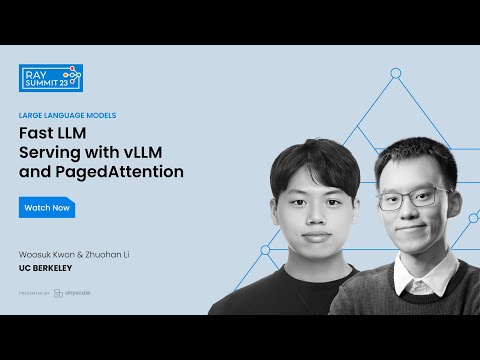
Fast LLM Serving with vLLM and PagedAttention
Understand why serving engines, batching and KV-cache memory dominate self-hosted inference economics.
AdvancedPrivate / Local AI
OpenAI. OpenAI's own Build Hour on prompt caching — the 1024-token threshold, the prefix-stability requirement, steep audio-caching discounts for realtime (check the current pricing page for the exact rate), time-to-first-token impacts at long inputs. Useful when you are sizing the engineering effort to actually hit the cache reliably on your production prompts.
Well under our view bar but it's the official deep dive; the 1024-token threshold and prefix-stability rules decide whether caching works for you at all, and current rates live on the pricing page.
Use prompt caching only when stable prefixes, latency and cost behavior match the workload.
You should already be shipping prompts against the OpenAI API — the session is about hitting the cache reliably in production.
Last reviewed: May 18, 2026
Continue through the same learning path with the next curated companion videos.
32 minutesUnderstand why serving engines, batching and KV-cache memory dominate self-hosted inference economics.
 34 minutes
Evaluate AI product pricing and specialization around measurable outcomes rather than seat counts.
 6 minutes
Recognize the core architecture of a voice agent and the failure points that affect customer trust in real calls.
Hand-picked external courses that go deeper on this topic.
 Coursera · Emory University
Emory University Goizueta Business School faculty
The deeper, university-level counterpart to our beginner HubSpot marketing pick — Emory's business-school treatment goes past 'how to prompt' into training generative models for brand-specific output, the purchase-funnel economics of AI-generated content, and a full module of genuine skepticism about when generative AI is and isn't worth using in marketing.
 Coursera · IBM
IBM AI Academy
The genAI-era answer to the executive-strategy question. Three short courses aimed squarely at business leaders — no technical background required — on where generative AI creates value, how to govern it responsibly, and how to turn a vague "we should use AI" into a concrete, defensible use case. Rated 4.6 across ~700 reviews. Best taken before your next AI budget decision.