

 13 minutes
RAG vs Fine-Tuning vs Prompt Engineering: Optimizing AI Models
Choose between prompt engineering, RAG, fine-tuning or a combination based on the actual failure mode.
AdvancedAI for Business
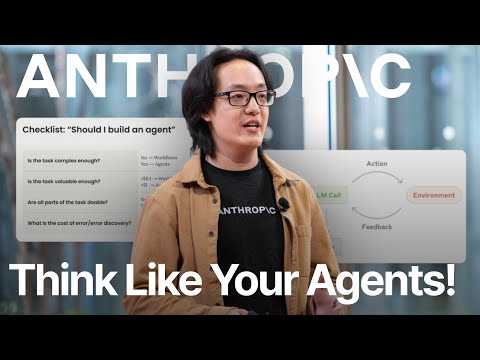
Cole Medin. A working agentic-RAG-plus-knowledge-graph build, with the agent deciding when to do vector search, when to hit Neo4j, and when to do both. It's the cleanest demonstration on YouTube of the "agent as the retrieval planner" pattern the article describes, in code you can actually pull down and run.
Treat template dependencies, model choices and orchestration code as version-sensitive. The useful idea is retrieval planning; production use still needs permissions, evals and failure handling.
Compare agentic retrieval and graph retrieval in a concrete implementation.
Comfortable with basic RAG, graph databases and running a template locally.
Last reviewed: May 18, 2026
Continue through the same learning path with the next curated companion videos.
13 minutesChoose between prompt engineering, RAG, fine-tuning or a combination based on the actual failure mode.
 157 minutes
You will be able to run quantisation, LoRA and QLoRA fine-tunes end to end on hardware most developers already have.
 15 minutes
Design simpler agent loops with clear stopping rules, task boundaries and human control points.
Hand-picked external courses that go deeper on this topic.
 Coursera · Emory University
Emory University Goizueta Business School faculty
The deeper, university-level counterpart to our beginner HubSpot marketing pick — Emory's business-school treatment goes past 'how to prompt' into training generative models for brand-specific output, the purchase-funnel economics of AI-generated content, and a full module of genuine skepticism about when generative AI is and isn't worth using in marketing.
 Coursera · IBM
IBM AI Academy
The genAI-era answer to the executive-strategy question. Three short courses aimed squarely at business leaders — no technical background required — on where generative AI creates value, how to govern it responsibly, and how to turn a vague "we should use AI" into a concrete, defensible use case. Rated 4.6 across ~700 reviews. Best taken before your next AI budget decision.