
Learning With AI
Use AI as a tutor, quiz partner, research aide, and source-based learning companion.
23 stories (13 articles · 10 videos)
Start here
A few good first pieces before you browse the full feed.
 7 min read
Learning anything faster with AI: from "explain like I'm 12" to practice quizzes
A four-prompt loop that turns any AI into a private tutor — explainer, examples, practice, and feedback. Works for any topic, any background.
New to AI 7 min read
AI for learning a new skill: a 30-day self-study plan
A 30-day AI-supported study scaffold built around practice, retrieval, feedback, and a real project, with clear limits on curriculum and assessment claims.
Beginner 8 min read
NotebookLM: Build a Source-Grounded Research Notebook
Build a focused NotebookLM collection, ask source-grounded questions, and verify the cited passage before relying on an answer.
BeginnerMore in this topic
 7 min read
Going back to study after years away: a return plan that keeps the thinking yours
Returning to formal study can involve subject gaps, confidence, accessibility, time, and logistics in different proportions. A syllabus-grounded plan uses AI for scheduling while keeping assessed thinking with the learner.
Beginner 7 min read
What deteriorates when you outsource thinking
Letting a model start every essay, email, and argument can remove opportunities to practise starting them yourself. A skill-preservation audit — baseline, unaided attempt, assisted phase, independent check — makes that trade-off visible without claiming permanent cognitive decline.
Beginner 7 min read
Using AI to support a neurodivergent learner, without diagnosing anyone
A cautious way to explore AI-assisted format or pacing changes with the learner, teacher, and existing support plan — without diagnosing the child or withdrawing accommodations by default.
Beginner 9 min read
Read less, remember more: an AI-assisted reading loop
Asking AI to summarize a document is the fastest way to feel informed and forget everything by Friday. A reading workflow — preview, active questions, unaided recall, source-checked synthesis — that keeps you the one who understood the text.
Beginner 9 min read
Deliberate practice with AI: feedback that makes you do the work
The fastest way to make AI-assisted practice useless is to ask for the answer before you have attempted the problem. A practice-loop workflow — subskill, rubric, attempt, feedback, retry — that keeps the effort where the learning actually happens.
Beginner 9 min read
Build a skill curriculum from outcomes, not a pile of links
A method for turning a target capability into prerequisites, practice tasks, evidence, and review checkpoints — instead of a bookmark pile of courses you never finish.
Intermediate 7 min read
Spaced practice, retrieval, and interleaving—with AI doing the right work
Build a practical study system around three evidence-backed learning techniques, two of them strongly supported and one more tentative. AI prepares questions and feedback; you perform the retrieval and make the distinctions.
Beginner 7 min read
Why AI explanations feel like learning—and often aren't
A fluent explanation can make a subject feel familiar before you can actually use it. These three tests reveal whether AI helped you learn or merely helped you follow along.
New to AI 8 min read
Deep Research mode: frame the question and audit the sources
Deep Research — the multi-step web research mode in ChatGPT, Gemini, Claude, Perplexity, and similar tools — can return a cited, structured report after a longer autonomous run. A practical guide to framing questions, auditing sources, and knowing when not to use it.
Beginner 10 min read
MCP for the non-engineer: connect Claude or Cursor to your tools
A practical introduction to MCP: verify client support, install one official local server, constrain its filesystem scope, and test both allowed and denied operations before adding real accounts.
Intermediate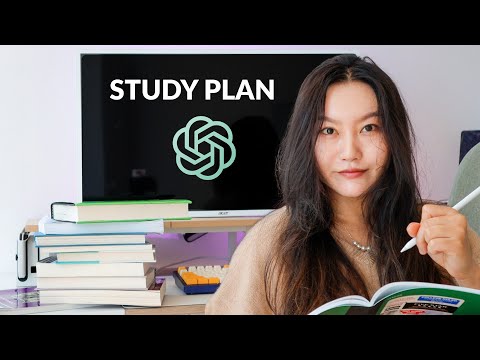 17 minutes
How to Become a Speed Learner (with ChatGPT)
Tina Huang. Walks through the structured self-study system Huang used to learn SQL in 11 days for a Meta interview — active recall, spaced repetition, and using ChatGPT to generate practice problems and explain mistakes. Useful as the "how do I actually execute my plan" follow-up to the primary pick.
Beginner 22 minutes
How to learn to code FAST using ChatGPT (it's a game changer seriously)
Tina Huang. Hands you a study-plan prompt template ("Act as a coding tutor that creates study plans…") that takes the student's goal, time commitment, and resource preferences, then generates a structured plan. The framing is coding, but the prompt pattern is exactly what the article applies to any 30-day learning sprint.
Beginner 22 minutes
AI For Data Analysis In 21 Minutes
Tina Huang. Tina puts Perplexity's Deep Research and ChatGPT/Claude analysis modes in the context of a working analyst's day — pulling together market signals, exploratory data analysis, and structured outputs. Useful as the "what else is this good for besides academic literature reviews" companion to the primary pick.
Beginner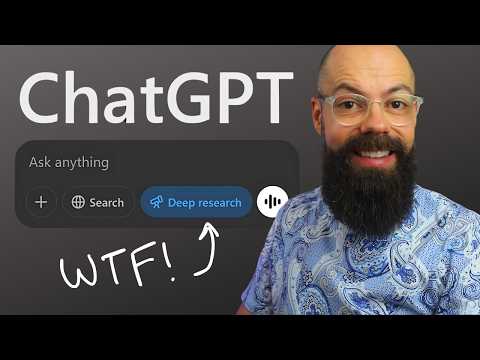 14 minutes
How to Use ChatGPT's Deep Research to Save HOURS on Research
Andy Stapleton. Stapleton runs Deep Research against the exact use case it shines at — a literature review with a clear scope, time frame, and structure — and shows the clarifying-questions handshake, the 10-minute wait, the 40-source output, and where the citations and tone still need a human pass. Calls out the limits honestly (no BibTeX export, occasionally too generous in source choice).
Beginner 32 minutes
How To Learn Anything 10x Faster Than Anyone With AI
Dan Koe. A different angle on the same problem: pick a real project, then let the AI surface only what you need to know to finish it. Useful counterweight to the Mike and Matty video if you learn better by building than by studying, and it pushes back gently on the "consume more courses" reflex.
New to AI 10 minutes
How to learn anything fast using ChatGPT | Full guide to studying with AI
Mike and Matty. A 10-minute framework — Construct, Connect, Challenge — applied with specific ChatGPT prompts for each phase: ask for a syllabus, ask for analogies, ask for a practice test, ask for feedback on your explanation. These prompts work on essentially any subject from physiology to programming, and the tone is exactly the article's: AI as a tutor, not a substitute for thinking.
New to AI 20 minutes
The Model Context Protocol (MCP)
Anthropic. The protocol's designers — Theo Chu, David Soria Parra and Alex Albert — walking through why MCP exists, the components (server, client, transport), the reception since the November 2024 release, and which servers they actually use day-to-day. Useful as the canonical source after the Nate Herk overview.
Intermediate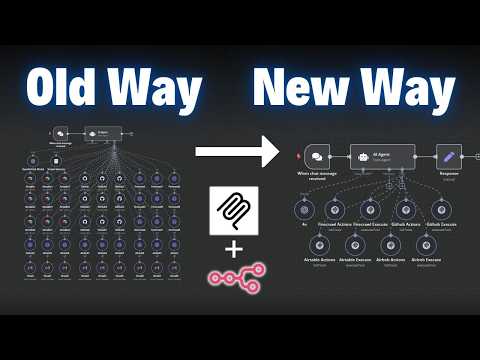 16 minutes
How MCPs Make Agents Smarter (for non-techies)
Nate Herk | AI Automation. A 16-minute, no-jargon explanation of what an MCP server is, how clients like Claude and n8n use them, and what you actually do differently once you have one. Lines up almost exactly with the article's "connect Claude or Cursor to your tools" framing.
Intermediate 28 minutes
35+ INSANE Ways To Use NotebookLM (For FREE)
Matt Wolfe. Once you understand the basics, this is the right second video. Matt runs through a long list of less obvious uses — turning a book into a study guide, briefing yourself on a competitor from their content, generating mind maps from a folder of PDFs — that help you see how flexible the "grounded notebook" frame actually is.
Beginner 35 minutes
How To Master NotebookLM in 2026 (Free Course)
Paul J Lipsky. A clean three-step framing — curate sources, ask the right questions, produce final outputs — that maps almost one-to-one onto how the article tells you to think about NotebookLM. Recent enough (early 2026) to match the current UI, including Studio, audio overviews, and mind maps.
Beginner