

Viral Claim Verification
Trace viral posts, news summaries, and group-chat rumors to primary sources before sharing.
26 stories (22 articles · 4 videos)
Start here
A few good first pieces before you browse the full feed.
 7 min read
Trace a viral claim before you share it
A viral post spreads faster than anyone can check it. A short source-trace method turns 'this sounds true' into a documented decision: share, share with context, or do not share - using AI to find sources, not to render a verdict.
New to AI 6 min read
Search vs chat: which one actually gets you a verifiable fact
For a question you plan to act on or repeat, the right first move is not 'search or chat' - it is 'can I get a citation I can actually open.' A practical decision rule for facts that matter.
New to AIMore in this topic
 6 min read
AI is not your contractor
A generative model can invent fluent build plans, materials lists, and timelines. It cannot inspect your house, hold a license, or carry liability. Why treating AI as a contractor creates false confidence - and how to keep it as a planning and literacy tool instead.
New to AI 6 min read
Home repair scam red flags — using AI without trusting doorstep quotes
Home-improvement scammers use urgency, leftover materials, and full-upfront cash demands. Use AI to rehearse FTC-aligned verification questions - not to validate a doorstep quote. How this differs from general AI-enabled scam literacy.
Beginner 6 min read
Investment claim verification before acting
Viral and AI-polished investment claims need a primary-source trace before any money moves. How to verify promoters, promised returns, and urgency tactics using official investor-protection resources - without asking a chatbot what to buy.
Beginner 6 min read
Materials lists: verify against specs, not against fluency
AI can draft a plausible materials list in seconds. Plausible is not purchase-ready. How to check every line against manufacturer datasheets, listing marks, and local requirements - without treating the chat as a code official.
Beginner 6 min read
Using AI in civic life without outsourcing your judgement
Summarize a local proposal or public document from its actual primary sources, surface disputed claims, and prepare real questions for a meeting — while your vote, your public comment, and your judgement stay entirely your own.
Beginner 6 min read
What AI image tools get wrong, and why detectors don't fix it
AI-generated and AI-edited images can contain useful visual clues, but the clues change and detector results depend on the models, edits, and test data involved. Use source and provenance checks instead of treating a score as certification.
Beginner 7 min read
Content Credentials and watermarks: what the little badge actually means
A 'Content Credentials' badge or an 'AI-generated' watermark tells you something real and specific - and a lot less than most people assume. What the badge can prove, what it can't, and what happens when it disappears.
Beginner 8 min read
If there is an AI deepfake of you: an adult first-response plan
Finding an AI-generated image or video of yourself that you never made or agreed to is disorienting. This is a first-response sequence for adults: preserve evidence safely, use the reporting tools built for this, and know when law enforcement and legal counsel belong in the picture.
New to AI 7 min read
How to interrupt a rumor in a group chat without starting a fight
By the time you notice a false claim spreading in a family or work group chat, it already has momentum. A short, low-confrontation script - backed by a quick AI-assisted check - interrupts it without turning into a fight about who was wrong.
Beginner 6 min read
Before you trust an AI news summary, check the primary source
Published evaluations have found substantial sourcing and accuracy problems in AI-generated news answers. A primary-source check tests the specific claims you plan to repeat without promising a fixed completion time.
Beginner 7 min read
Get consent before you AI-edit or share someone's photo
Uploading a friend's photo to an AI tool to remove a background, swap a smile, or turn it into an illustration feels like a small, personal edit. For the person in the photo, it can be a much bigger decision they never got to make.
Beginner 7 min read
Synthetic media: check provenance and consent before you post
Before an AI-generated or AI-edited image or video of a real person goes anywhere public, two separate questions need a yes: did the person consent, and is the synthetic origin disclosed. A practical checklist for both.
Beginner 7 min read
Travel planning that survives opening hours, visas, and reality
Build an itinerary the model helped assemble but you verified — every opening hour, visa requirement, and connection margin checked against a primary source, with a fallback for anything that depends on something outside your control.
Beginner 6 min read
Check a health claim before sharing it
Turn a public health claim into a neutral search query, open suitable sources yourself and record a bounded share, contextualize or do-not-share decision.
New to AI 7 min read
Before you act on an AI answer about HR policy, verify it
Ask a chat tool what your company's parental leave or expense policy allows and it answers fluently and specifically — often from generic patterns about 'typical' companies, sometimes from a retrieved document belonging to someone else entirely. Treat any AI answer about your employer's rules as a starting point to verify, never as the answer itself.
Beginner 6 min read
Before you act on AI-given local info, verify it
When a chat tool tells you a clinic's hours, an agency's required documents, or a shop's return policy, treat it as a starting point, not a fact — and verify on the official site or with a phone call before you act on it.
Beginner 7 min read
Voice cloning and you: a personal safety check
Modern voice-cloning tools need only a few seconds of audio to produce a convincing fake. A short personal audit of your own voice's exposure, plus one household habit, closes most of the realistic risk.
New to AI 9 min read
Use AI to audit a decision for bias, not to certify it as objective
A fixed six-bias checklist and a counter-evidence requirement for auditing a decision you have already leaned toward — with a warning that the model auditing you is a biased participant, not a referee.
Intermediate 9 min read
Build a skill curriculum from outcomes, not a pile of links
A method for turning a target capability into prerequisites, practice tasks, evidence, and review checkpoints — instead of a bookmark pile of courses you never finish.
Intermediate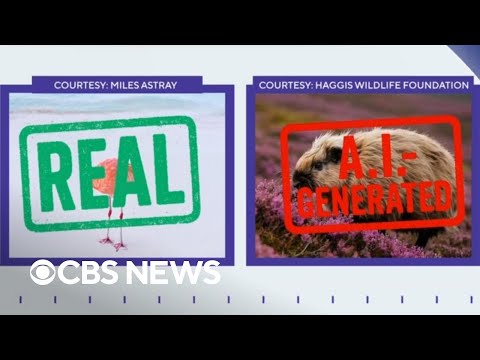 5 minutes
How to tell if an image is fake content from AI
CBS News. A mainstream news explainer on visual tells for AI images, while acknowledging detection is imperfect - matching the article's 'limits, not detectors' framing.
Beginner 1 minutes
What are Content Credentials || Content Authenticity
Adobe. Adobe's short Content Credentials explainer introduces provenance labeling - useful vocabulary beside the article's watermark/credentials literacy.
Beginner 5 minutes
Why do AI models hallucinate?
Claude. Anthropic's Claude channel explains, from a model-maker's perspective, why chatbots can confidently state wrong facts - useful context for still verifying with search.
New to AI 4 minutes
How to protect yourself from AI-powered scams
CBS News. Explains family 'safe word' / verification habits discussed in coverage of AI voice-cloning scams - a practical personal-safety check beside the article.
New to AI 7 min read
How to make AI disagree with you honestly
Five practical prompting patterns turn agreeable AI output into a more useful challenge—without pretending that a generated counterargument is evidence.
Beginner