


A chat can emit a materials list that resembles a contractor takeoff: fasteners, membranes, fixtures, sealants, or purportedly “code-compliant” cable types. Formatting is not validation. Each item still needs the relevant manufacturer specification, certification/listing, compatibility and exposure conditions, adopted local rules, and a qualified review of whether the work belongs in DIY scope at all.
What you are building here is a verification habit for home projects. It assumes you already wrote a brief (project brief before you prompt) and that you are not asking AI for life-safety DIY sequences (electrical, gas, and structural stop rules). It is not a product recommendation engine and not a permit answer sheet.
Why fluency fails materials
Models optimize for plausible continuation. Construction materials fail in more specific ways:
- Wrong listing or rating. Fire, moisture, electrical, and structural products often carry listing marks and published ratings. A generic name is not a listed product.
- Wrong environment. Interior vs exterior, wet location, freeze-thaw, and chemical exposure change the product family.
- Silent substitutions. “Or equivalent” in a chat is not an engineered substitution.
- Hazardous legacy materials. Sanding, cutting, or demolishing older finishes can disturb asbestos or lead; EPA’s homeowner asbestos guidance is leave-alone / use accredited professionals when remodeling may disturb suspect material (Protect Your Family from Exposures to Asbestos; asbestos overview). Lead-safe awareness belongs in the brief for older housing (EPA lead).
Do not buy or install electrical, gas, structural, or roof-structure materials from an AI list alone. If the line item implies licensed work, stop and hire the licensed trade. Consumer product hazard education starts at sources such as the CPSC, not at a shopping cart filled from a chat.
Everyday example (illustrative)
Illustrative scenario: a homeowner asks for “materials to fix a damp basement corner.” The model lists sealants, a dehumidifier, and “waterproof paint.” Path A: they buy everything that night. Path B: they treat the list as hypotheses, check each product datasheet for substrate limits, and schedule a licensed assessment for moisture source and any suspected hazardous finishes before demolition. Same list. Different purchase gate.
Indoor air and moisture problems also have public primers that are not DIY demolition manuals (EPA indoor air quality; EPA mold).
The verification grid
For every AI-suggested line, record these five things before money leaves the account:
- Manufacturer + exact product ID — not a category
- Datasheet says OK for my use? — substrate, temperature, exposure
- Listing / rating noted — the certification mark, written down
- DIY or licensed? — see the stop rules if this is electrical, gas or structural
- Source link / PDF date — what you read, and when
Rules:
- No anonymous generics. “Exterior-rated caulk” must become a named product with a datasheet.
- Datasheet wins. If the sheet excludes your substrate or temperature, the chat is wrong.
- Local requirements are separate. A datasheet is not your AHJ. Prepare questions; do not invent answers (permit and code questions, not answers). Public code portals such as ICC digital codes show why editions matter; they still need local confirmation.
- Life-safety lines escalate. Wire types, gas fittings, structural fasteners for load-bearing work, and roof-structure members are licensed-trade territory unless a qualified professional says otherwise for your jurisdiction.
Building-science primers from public research programs can help you ask better questions of professionals - not replace them (PNNL Building America Solution Center; DOE Building Technologies Office; NIST buildings and construction).
How to prompt without outsourcing the check
Here is my project brief: [scope, must-not-touch, environment].
Propose a candidate materials list as HYPOTHESES only.
For each line, include: what datasheet field I must verify,
and whether a licensed trade should confirm before purchase.
Do not claim code compliance. Do not give DIY life-safety steps.
I will paste manufacturer datasheet excerpts I already downloaded.
Check my notes for contradictions with my brief.
Do not invent missing ratings. Mark unknowns as unknowns.
Keep datasheets in a folder you control. Paste excerpts, not entire account-bearing invoices. Use the materials spec verify sheet as the purchase gate. Pair quote-line materials with contractor quote comparison literacy.
Fire, carbon monoxide, and electrical context
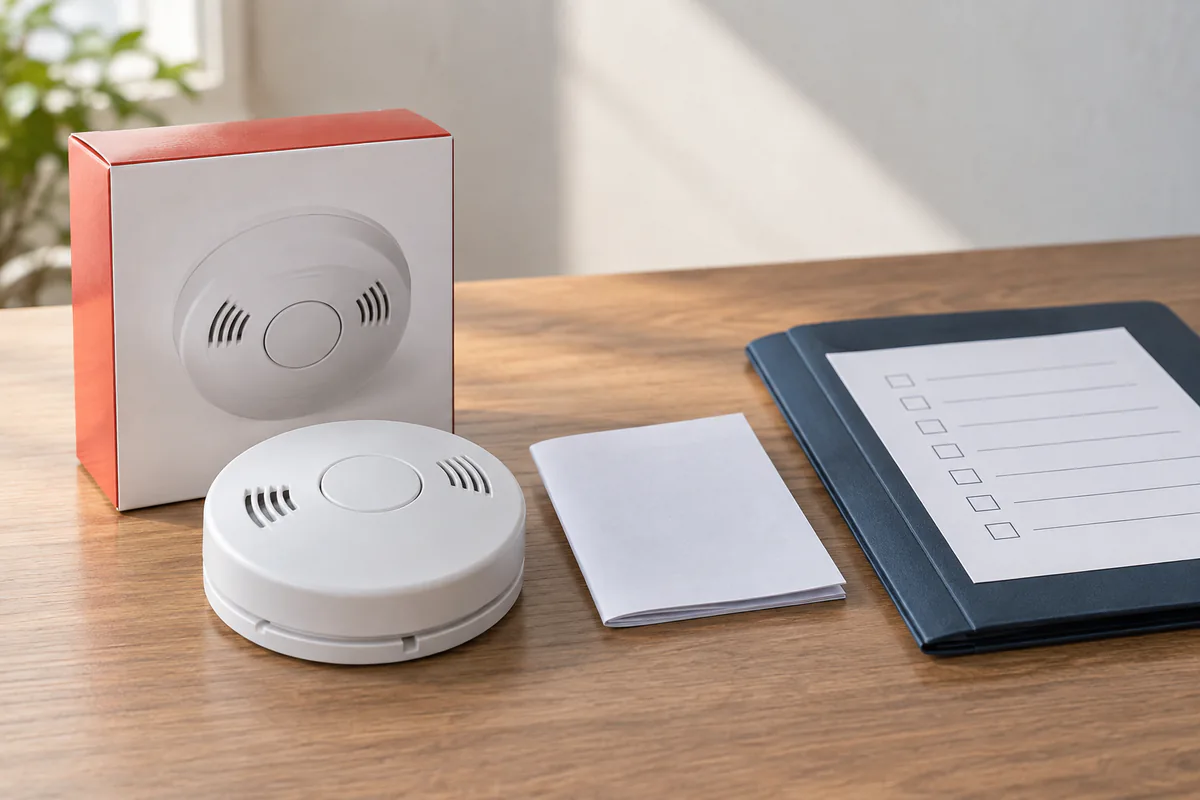
Materials that touch fire safety, smoke alarms, CO alarms, or electrical distribution deserve extra skepticism. Start with public education pages, then licensed installers:
OSHA’s construction and PPE pages are written for workplaces, but they are a useful reminder that protective equipment and qualified persons exist for a reason - not as a homeowner DIY checklist to copy blindly (OSHA construction; OSHA PPE).
Scam-adjacent materials pitches
Storm-chaser and doorstep sellers often push “leftover materials” and urgent product swaps (FTC: How To Avoid a Home Improvement Scam). An AI list plus a high-pressure seller is a bad combination: the chat makes the purchase feel researched; the seller makes it feel urgent. Keep verification slow. Report fraud patterns through official channels when needed (ReportFraud.ftc.gov).
Common failure modes (and the fix)
“The model said it was equivalent.” Equivalence is an engineering or listing judgment. Ask the manufacturer or a licensed professional; do not accept chat synonymy.
“The quote already listed it, so datasheets are optional.” Quotes still mis-specify products. Run the same grid on quote lines (contractor quote comparison literacy).
“I will verify after purchase.” Returns do not undo a cut into a hazardous finish or a wrong electrical device already energized. Verify before money and before demolition.
“Public energy tips mean I can improvise.” Public energy-efficiency literacy from DOE’s Energy Savings Hub is useful context for questions; it is not a license to ignore listings, wet-location ratings, or combustion safety. Pair efficiency interest with fire and CO literacy (NFPA carbon monoxide; Ready.gov home fires).
Healthy-homes framing from HUD is another reminder that materials choices sit inside health and safety, not only aesthetics (HUD healthy homes).
NIST AI risk language helps here too: document how you will use the tool (hypothesis lists), and keep a human accountable for purchase gates (NIST AI Risk Management Framework).
One shopping trip rule
On the next materials run, refuse to buy any AI-suggested item that lacks a named product ID and a datasheet check dated by you. If the item implies electrical, gas, structural, roof-structure, or asbestos disturbance, the correct next step is a licensed professional - not a substitute SKU. Keep the purchase gate on paper with the materials spec verify sheet. Escalation map: when DIY AI is not enough, hire licensed. If a seller is rushing the SKU choice, run scam checks in parallel (home repair scam red flags with AI).