A vague home-project prompt leaves important constraints unstated: scope, exclusions, budget basis, property conditions, and systems that require qualified help. A model may fill those gaps with plausible defaults. Those defaults are not a site assessment, design, price, code determination, or permission to perform plumbing, electrical, structural, gas, or hazardous-material work.
This article teaches one habit: write a home project brief first. It sits beside AI is not your contractor and ahead of practitioner pieces on materials verification, quotes, permits, and stop rules. For creative work the parallel habit is a creative brief; here the stakes include shock, fire, collapse, and hazardous materials.
Why a brief beats a clever prompt
A prompt is an instruction to a generator. A brief is a decision record for you. The brief answers questions the model should not be allowed to answer for you:
- Which rooms and surfaces are in scope?
- What budget band and timeline band are real (from your numbers, not market folklore)?
- Which systems are must-not-touch without licensed help?
- What does “done” mean in observable terms (not “make it nice”)?
- What photos, if any, are privacy-safe to share?
NIST’s AI risk framing is useful here even for a household project: map the context, decide how the tool will be used, and keep a human accountable for outcomes (NIST AI Risk Management Framework). A dated brief is that map on one page.
Keep the full brief in a document you control. Paste into the model only the fields the task needs - not floorplans, kids’ rooms, address-linked bills, or security cues. Prefer redacted text over whole-home imagery. Full checklist: home photos and floorplans privacy.
Draft the six fields offline first. When you do paste, paste the minimum slice for that ask, then clear or archive the chat if your tool allows.
The six-field home brief
Copy these fields before you open a chat:
- Scope rooms - named rooms and surfaces, not “the whole house.”
- Outcome - one observable end state (for example, “replace finish flooring in bedroom 2 only”).
- Budget band and contingency - a range you set, with a contingency percentage you choose; not an AI market rate.
- Must-not-touch systems - electrical panels, gas lines, structural members, roof structure, suspected asbestos, and anything your insurer or lease restricts.
- Non-goals - what you will refuse (DIY electrical steps, invented permit answers, picking a contractor from vibes).
- Verification plan - who you will ask (licensed trade, building department, manufacturer datasheet) before acting.
Illustrative scenario: a renter wants quieter bedroom floors. Scope: bedroom 2 floor finish only. Outcome: soft underfoot finish approved by landlord in writing. Budget band: a number from their own savings table. Must-not-touch: subfloor structure, electrical under floor, any popcorn ceiling texture. Non-goals: AI DIY for wiring; AI “you don’t need a permit.” Verification: landlord email plus flooring manufacturer install sheet - not a chat verdict.
That brief fits on half a page. It also gives you a rejection test: any model output that violates a field is wrong, even if it sounds polished.
Common misconceptions
“I’ll know the plan when I see options.” Options without constraints become shopping for confidence. Write the six fields first; then ask for variants inside them.
“The contractor will figure it out, so the brief is optional.” Contractors still need your scope and must-not-touch list. A brief makes quote comparison possible later (contractor quote comparison literacy).
“Prompts replace briefs.” A long prompt that still asks the model to invent whether gas work is DIY is a brief-shaped hole. Length is not ownership.
How to use the brief with a model
Once the six fields exist:
- Paste only what the tool needs (often scope + must-not-touch + non-goals).
- Ask for question packs and risk lists that respect the brief, not plans that rewrite it.
- Score each output against the six fields before you buy materials.
- Keep a short change log when you revise the brief - so scope does not silently expand into life-safety work.
Using only this brief, list clarifying questions for a licensed [trade]
and for my local building department.
Do not give DIY steps for electrical, gas, structural, roof, or asbestos.
Do not invent permit conclusions or prices.
Brief: [paste fields]
For materials later, verify every AI list against manufacturer datasheets and local requirements (materials list verify against specs). For money what-ifs built from your quotes, use renovation budget scenarios, not bids - and keep household day-to-day scenarios in their own article (household budget scenarios literacy).
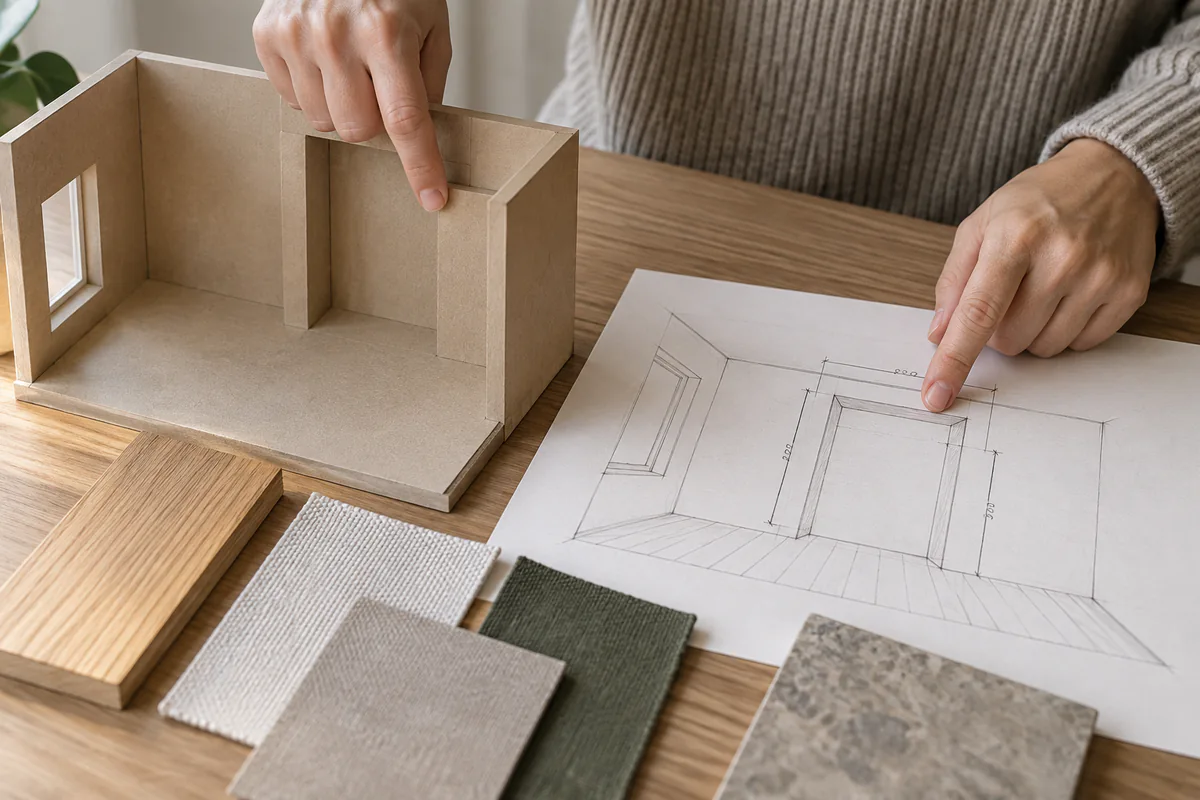
Authority anchors (why constraints matter)
Life-safety and hazardous materials are not “prompt domains”:
- Electrical and fire-safety public education: NFPA electrical, home fire safety.
- Asbestos: leave alone / use accredited professionals (EPA protect your family).
- Lead-safe renovation awareness for older housing: EPA lead, protect your family from lead.
- Consumer product hazards: CPSC.
- Scam pressure during planning: FTC home improvement scam guidance.
- Weather and recovery planning when storms create rush decisions: Ready.gov.
If the brief’s must-not-touch list includes electrical, gas, structural, roof-load, or suspected asbestos, do not ask the model for DIY steps. Use electrical, gas, and structural stop rules and hire licensed when DIY AI is not enough.
Shown pattern
Brief excerpt (illustrative):
Scope rooms: hall bath finish surfaces only (vanity top, flooring, paint).
Outcome: waterproof finish surfaces; no layout change.
Budget band: [reader figure] + 15% contingency I chose.
Must-not-touch: electrical, plumbing relocates, exhaust fan circuit, any ceiling texture.
Non-goals: DIY wiring; AI permit answers; lowest bid by vibes.
Verification: licensed plumber/electrician if any fixture relocate; AHJ if unsure.
Prompt after the brief:
Using only the brief, draft a question pack for two licensed trades
and a checklist of documents I should request in writing.
Do not invent a build sequence. Do not price the job.
When the brief forces escalation
A good brief sometimes ends the chat era early. If must-not-touch includes a panel, gas line, bearing wall, roof structure, or suspect texture, your next artifact is a handoff packet - not a DIY outline. That is the point of when DIY AI is not enough, hire licensed. If doorstep urgency appears while you are still briefing, switch to scam literacy first (home repair scam red flags with AI).
Healthy homes programs and public building-science resources can also shape better questions for professionals without becoming a substitute brief (HUD healthy homes; PNNL Building America Solution Center).
One project, one brief
Pick the next real home task. Write the six fields on paper before any chat. Notice whether the first prompt urge was actually a request for the model to invent your constraints. That notice is the point. Full worksheet: home project brief card.