

AI Coding Workflows
Use AI coding tools, repository-aware assistants, MCP servers, and non-developer builder workflows.
13 stories (6 articles · 7 videos)
Start here
A few good first pieces before you browse the full feed.
 11 min read
AI coding without being a developer: building tools in Cursor and Claude Code
AI coding tools can help non-developers prototype small internal tools. This guide explains a test-first workflow, its limits, and when an experienced engineer must take over.
Intermediate 9 min read
AI-native IDEs and repository-aware coding workflows
Cursor, Copilot, Claude Code, and repository-aware agents change software work only when teams add boundaries. A practical workflow for codebase context, planning, tests, review, secrets, and production safety.
AdvancedMore in this topic
 12 min read
Make Codex, Claude Code, and Cursor work as one CLI team
Use AGENTS.md, CLAUDE.md, Cursor rules, and CLI print modes so Codex designs, Claude reviews, and Cursor implements—without a custom orchestration platform.
Advanced 15 min read
Multi-agent project management with Linear: Claude, Cursor, and Codex on one backlog
Run Claude Code, Cursor, and Codex against the same Linear project like a real engineering team: claim work, mark progress, hand off review, fix findings, and close issues without stepping on each other.
Advanced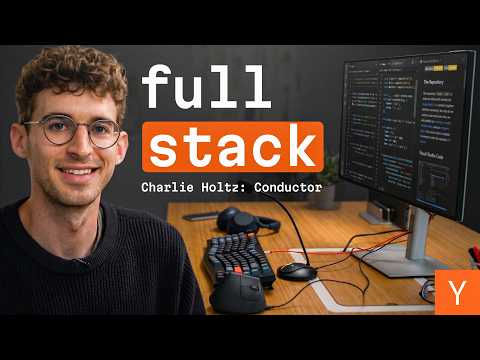 17 minutes
Conductor CEO Charlie Holtz Walks Us Through His AI Coding Setup
Y Combinator. A concrete senior-engineering walkthrough rather than a panel: Holtz compares Claude Code and Codex, orchestrates several coding agents in parallel, and marks "slop-free zones" where generated code is not allowed to land unreviewed. The setup embodies the article's rules — repository context, small reviewable patches, and the human staying architect while the agents do the typing.
Advanced 14 min read
MCP server design in TypeScript: from minimal server to production review
Build a minimal Model Context Protocol server, then review the design for schemas, authorization, idempotency, observability, deployment, and security before calling it production-ready.
Advanced 12 min read
Designing MCP tools that LLMs actually use correctly
Most MCP tools we see are technically correct and practically useless. LLMs ignore them, misuse them, or call them in unhelpful ways. The principles for designing tools LLMs adopt naturally, with examples of common failures and their fixes.
Advanced 66 minutes
Cursor Vibe Coding Tutorial - For COMPLETE Beginners (No Experience Needed)
Tech With Tim. Tim is one of the steadier educators in this space, and this is the most complete "open Cursor, build something, ship it" walkthrough for a non-developer audience — setup, prompting, debugging, basic Git and even a touch of MCPs. Watch it once and you'll know what the article means by "build a small internal tool."
Intermediate 5 minutes
The "vibe coding" mind virus explained…
Fireship. Fireship's three rules — pick a boring popular stack, get good at Git, treat yourself as the product manager — are the same guardrails the article is trying to install. Five minutes well spent before you let an AI write to your repo unsupervised.
Intermediate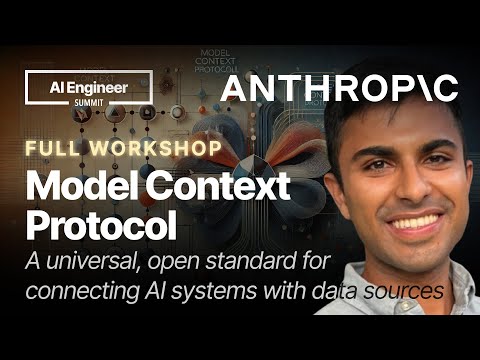 104 minutes
Building Agents with Model Context Protocol - Full Workshop with Mahesh Murag of Anthropic
AI Engineer. Anthropic's Mahesh Murag walking through MCP's design — why tools, resources, and prompts are separated, how clients negotiate capabilities, what production hosts actually do with the protocol. Watch it after the build to understand the parts of MCP the SDK quietly hides and to calibrate the article's "production-ready" checklist against the spec authors' intent.
Advanced 75 minutes
The Ultimate MCP Crash Course - Build From Scratch
Web Dev Simplified. A full, code-along build of both an MCP server and a client in TypeScript — tool definitions, schemas, prompts and resources, stdio transport, inspector debugging. It's the closest video on YouTube to actually doing what the article asks you to do, at a pace where you can pause and follow along in your own editor.
Advanced 19 minutes
Building more effective AI agents
Anthropic. Anthropic engineers walking through what they actually changed when their multi-agent systems were misusing tools — collapsing endpoints, returning names instead of IDs, leaning on MCPs and Agent Skills instead of stuffing more tools into the system prompt. Maps point-for-point onto the article's checklist for tool descriptions and return-shape design.
Advanced 29 minutes
Prompting for Agents | Code w/ Claude
Anthropic. Hannah Moran and Jeremy Hadfield from Applied AI walking through how to phrase tool calls and agent prompts on a real Pokemon-playing agent — when to push behavior into the system prompt versus the tool description, what the model needs to know about each tool's preconditions. Useful immediately after you write your first MCP server and find Claude calling it in unexpected ways.
Advanced