
Homeowners ask chatbots permit questions because phone trees are slow and rules feel opaque: “Do I need a permit to move this wall?” The model answers anyway. That answer is not a determination from the authority having jurisdiction (AHJ) - usually your city or county building department - and it is not a substitute for a licensed professional who works under those rules every week.
The subject here is question packs, not conclusions. It differs from verify local service info before acting, which covers hours, addresses, and document locations for everyday local services. Here the risk is accepting a code verdict from a model that has never read your adopted amendments.
Why models invent confident permit answers
Permits and codes are local:
- Adopted code editions differ.
- Local amendments differ.
- Owner-builder rules differ.
- Historic districts, HOAs, and leases add layers a general model will often miss.
Public portals such as the ICC digital codes library are useful for literacy - they show that “the code” is an editioned document family - but they do not certify what your AHJ requires for your address. NIST and building-research pages similarly help you understand that buildings are regulated systems, not prompt toys (NIST buildings and construction; DOE Building Technologies Office).
Never treat an AI yes/no on permits, inspections, or code compliance as authoritative. Do not start demolition based on a chat conclusion. If work touches electrical, gas, structural, roof-load, or suspected asbestos, see electrical, gas, and structural stop rules and hire licensed help.
Everyday example (illustrative)
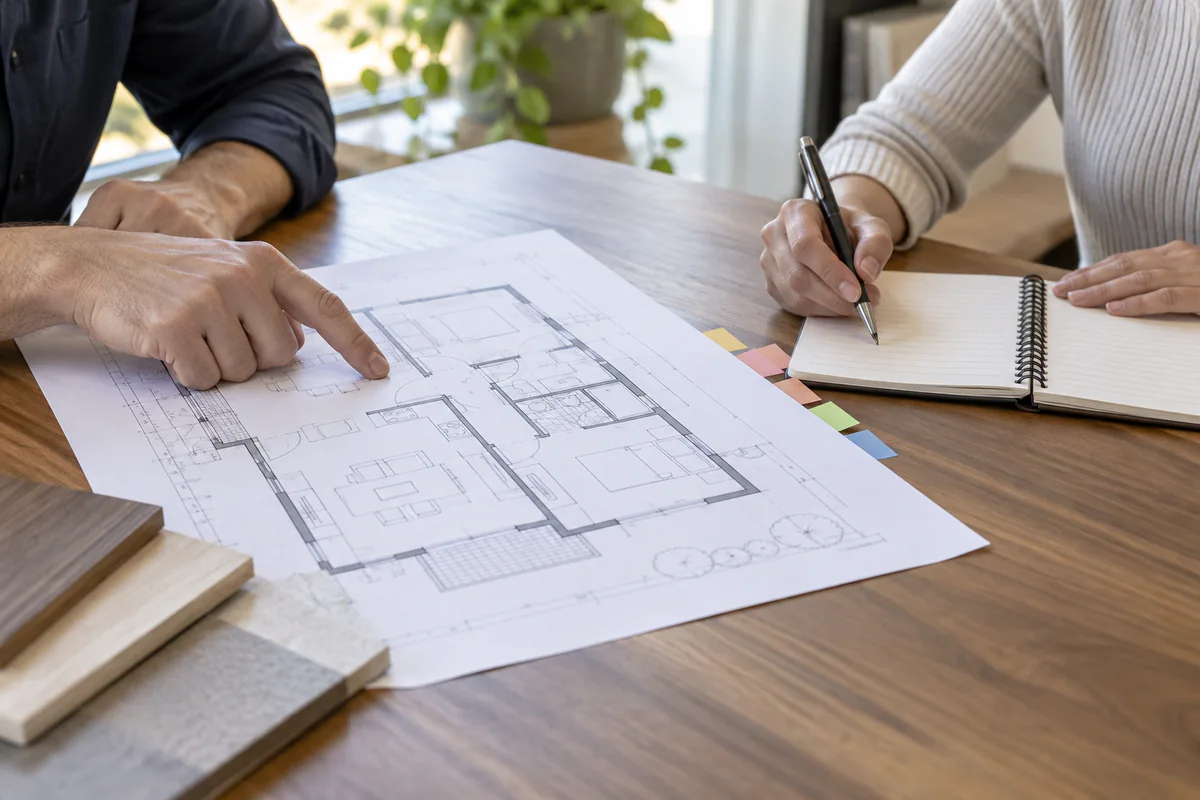
Illustrative scenario: a homeowner wants to convert a closet to a laundry niche. Path A: they ask a chatbot whether a permit is required; it says “usually not for like-for-like”; they open walls the same afternoon. Path B: they write a brief, ask the model only for a question pack and a document checklist, then call or visit the building department with photos kept privacy-safe. Same project. Different source of truth.
Build the AHJ question pack
Start from project brief before you prompt:
Here is my project brief: [scope, address city/county only, must-not-touch].
Draft questions for my local building department.
Do not answer whether a permit is required.
Do not cite a code section as applying to my address.
Ask what documents they need and which trades typically pull permits for this scope.
Strong question categories:
- Scope description - rooms, structural changes yes/no, new openings, change of use.
- Permit types - building, electrical, plumbing, mechanical; who may pull them.
- Documents - plans, site plan, product specs, energy forms if any.
- Inspections - rough / final sequences at a high level (what to expect), not DIY how-to.
- Owner-builder - whether allowed and what responsibilities attach.
- Hazardous materials - local rules when remodeling older finishes (asbestos/lead awareness).
EPA homeowner asbestos guidance is clear that remodeling can disturb asbestos-containing materials and that accredited professionals should handle sampling and major repair/removal (Protect Your Family from Exposures to Asbestos; asbestos laws and regulations overview). Lead-safe renovation awareness belongs in the same planning conversation for older homes (EPA lead).
What to bring (and what not to paste)
Bring: your brief, dimensioned sketches you made, product datasheets you already verified (materials list verify against specs), and written questions.
Do not: upload full floorplans with street address into a consumer chat to “pre-clear” the project (home photos and floorplans privacy).
When asking AI to format questions, omit street number, unit, and parcel ID if they are not required for drafting. Keep exact identifiers for the AHJ conversation itself.
Contractors and permit language in quotes
FTC scam guidance specifically calls out contractors who ask you to get required building permits as a risk signal in context of other scam tactics (How To Avoid a Home Improvement Scam). Compare how each written quote assigns permit responsibility using contractor quote comparison literacy. A low bid that dumps permits on the owner is not automatically illegal everywhere - but it is a question you ask the AHJ and your attorney of choice, not a chatbot.
Fire and electrical public education from NFPA can inform questions about smoke alarms, CO alarms, and electrical safety expectations without becoming a wiring manual (NFPA home fire safety; NFPA electrical; carbon monoxide). Ready.gov helps when disaster recovery creates pressure to rebuild fast (Ready.gov; home fires).
How AI risk framing helps
NIST’s AI Risk Management Framework is not a building code, but its insistence on mapping context and keeping humans accountable is the right posture: the model drafts questions; you and the AHJ own determinations (NIST AI Risk Management Framework). CPSC consumer safety pages similarly sit upstream of product choices, not as permit oracles (CPSC).
Use the permit questions pack. After the AHJ conversation, write the answers in your own notes with date, staff role if given, and document names - not as a screenshot dumped back into a chat for “interpretation” that quietly becomes a new fake ruling.
Differentiation check
- Local hours and “where do I submit” logistics: verify local service info before acting.
- Whether DIY AI should stop entirely: when DIY AI is not enough, hire licensed.
- Boundary against treating AI as the builder: AI is not your contractor.
After you get an official answer
Write it down the same day: date, channel (phone, counter, portal), what was asked, what was answered, and which handouts or form names were cited. If staff point you to a checklist PDF, download it from the official site - do not accept a third-party blog mirror summarized by a chatbot.
Then update your brief and your quote comparison rows so permit responsibility language matches reality (contractor quote comparison literacy). If the AHJ path implies electrical, gas, or structural work, the next call is a licensed professional, not a DIY prompt (electrical, gas, and structural stop rules).
Scam note: after disasters, fake “inspectors” and permit fixers appear. Verify identities through published city/county contacts, not through a number a doorstep seller hands you (FTC home improvement scam guidance; Ready.gov).
OSHA materials on construction hazards are workplace-oriented, but they reinforce why “just open the wall” is not a casual weekend plan when unknown systems are present (OSHA construction).
One call rule
Before the next structural or MEP-adjacent project, refuse any prompt that asks “do I need a permit?” as a yes/no. Replace it with a question pack and a scheduled contact with the building department. Bring the permit questions pack. The slow answer is the only answer that counts. If the answer implies licensed trades, stop DIY prompts immediately (when DIY AI is not enough, hire licensed).