

Companion videos

Context engineering: managing 1M-token windows without context rot — companion videos

The article is about the gap between "the model supports 1M tokens" and "the model uses 1M tokens reliably." It works through the failure modes, the four context-engineering moves (write, select, compress, isolate), and the budgets that keep long-running sessions usable. These two videos are the cleanest statement of the problem and the cleanest set of solutions, in that order.

Primary pick

7:56
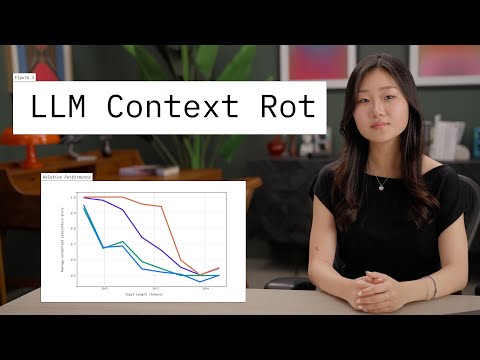
Context Rot: How Increasing Input Tokens Impacts LLM Performance

Chroma

Kelly Hong walking through Chroma's research on 18 models — why needle-in-haystack scores are misleading, how performance degrades with ambiguity and distractors, why even simple string-repetition tasks degrade past 500 tokens. Short, evidence-based, and exactly the case the article needs you to take seriously before getting to the engineering moves.

What you should get from this: Understand how long context can fail under ambiguity and distractors, then design tests around that risk.

Watch or know first: None beyond basic LLM vocabulary — it's a short research talk.

AI Expert note: Model names, pricing and capabilities change quickly. Use this for the decision pattern, then verify current model behavior before adopting it.
Open video page

Also worth watching

22:06
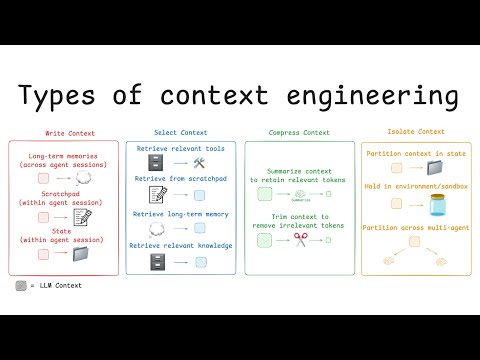
Context Engineering for Agents

LangChain

Lance Martin's framework — write, select, compress, isolate — with concrete examples of when to summarise an action history, when to offload state to files, and when to spin up sub-agents purely to protect the parent's context. Maps almost directly onto the article's section on managing 1M-token windows in practice.

What you should get from this: Apply write, select, compress and isolate patterns to manage agent context deliberately.

Watch or know first: Experience building or operating agents with long-running context.

AI Expert note: Model names, pricing and capabilities change quickly. Use this for the decision pattern, then verify current model behavior before adopting it.

Open video page