
Some regular AI users notice that starting a task unaided feels harder after repeatedly asking a model to produce the first draft. That observation does not prove permanent skill loss, and this article does not claim it does. It is a reason to check whether the workflow still includes practice for abilities the user wants to maintain.
This is not an argument against using AI for writing, coding, or analysis. It is a way to notice which specific tasks are quietly outsourcing the part of the work where learning actually happens, so you can keep an unaided rep in the loop for the handful of skills you care about protecting.
What the evidence actually shows
In June 2025, MIT Media Lab researchers published Your Brain on ChatGPT, a preprint describing 54 participants writing essays under three conditions: using an LLM, using a search engine, or writing unaided. The authors reported differences in EEG connectivity across the conditions, with the unaided group showing the strongest connectivity in their analysis and the LLM group the weakest (Kosmyna et al., MIT Media Lab, 2025). They use “cognitive debt” as an interpretive metaphor. The study does not establish a clinical condition, permanent impairment, or a dose-response law in which harm necessarily compounds with every use.
Two findings from that study are the ones worth sitting with. First, participants in the LLM group had the lowest self-reported sense of ownership over essays they had just written, and many could not accurately quote a line from their own work minutes after finishing it (full preprint, arXiv:2506.08872). Second — and this is the encouraging part, with a caveat worth carrying — an optional fourth session was completed by only 18 of the 54 participants, nine reassigned in each direction. The nine moved from the LLM condition back to writing unaided showed under-engaged neural connectivity, while the nine moved the other way, from unaided to LLM-assisted, showed higher memory recall and re-engagement of the brain regions associated with focused writing. The caveat is that session-four participants wrote on topics they had already written about, so the paper describes this result as what happened “when allowed to use an LLM on a familiar topic” — the order of operations and the familiarity of the material are not separated by this design.
This lines up with a broader idea in the automation-bias literature: the “cognitive miser” pattern, where people default to whatever costs the least mental effort available to them in the moment (What is Wrong With Automation Bias?, Philosophy & Technology, 2026). A fluent AI draft is the lowest-effort option almost every time, which is exactly why it needs a deliberate counterweight rather than being trusted to sort itself out.
The common misconception
The misconception is not “AI makes you dumber” — that framing is both unproven as a permanent, universal claim and not what the research actually says. The MIT study is a single preprint with 54 participants over four months, and its fourth-session result — the one with the most practical implications — rests on the 18 who chose to come back, nine per condition; it is real evidence of a measurable short-term pattern, not proof of irreversible cognitive decline, and the researchers themselves describe their findings as raising questions that need “deeper inquiry,” not as a settled verdict.
The more precise and more useful claim is narrower: skipping the unaided attempt on a task you are trying to get better at removes the specific friction that builds capability in that task. This is not new to AI — it is the same reason a student who copies worked solutions without attempting the problem first learns less than one who struggles first and checks second. AI just makes the shortcut available for almost everything, all the time, which means the discipline of choosing not to take it has to be more deliberate than it used to be.
The skill-preservation audit
For any recurring task, ask four questions before deciding how to use AI on it:
- Is this a skill I am actively building, or a task I just need finished? Drafting a recurring status update is a task to finish. Learning to structure a persuasive argument is a skill to build. The same tool gets used differently for each.
- What does an honest, unaided attempt look like, and can I timebox it? Ten minutes of your own attempt before opening a model is usually enough to surface what you actually don’t know yet — which is the part worth spending the AI conversation on.
- What does the assisted phase add that the unaided attempt could not? Feedback, a counterargument, a faster second draft, exposure to phrasing you wouldn’t have generated — assistance should add something specific, not just replace the labor.
- How will I check, later, that I can still do the unaided version? Without a periodic independent check, skill erosion is invisible until the day you need the skill and the tool is unavailable, unreliable, or the wrong fit for the situation.
| Task type | Baseline (unaided attempt) | Assisted phase | Independent check | Review cadence |
|---|---|---|---|---|
| Writing a persuasive argument | Short rough outline, no tool | Ask AI to strengthen weak points and offer a counterargument | Periodically write a full argument unaided and compare with a prior attempt | Cadence chosen by learner |
| Debugging your own code | Attempt to isolate the bug before requesting hints | Ask AI to review your isolation and suggest causes you missed | Debug a comparable issue with the tool switched off | Cadence chosen by learner |
| A foreign language sentence | Write your own attempt first | Ask AI to correct and explain the correction | Hold a short unaided conversation and note new gaps | Cadence chosen by learner |
| Arithmetic for a work estimate | Do the calculation by hand | Verify with a calculator or independently checked formula | Redo a comparable estimate unaided | Cadence chosen by learner |
The full skill-preservation AI use audit gives you this table blank, with space to log your own tasks, baselines, and review dates.
Do not apply this discipline to tasks that carry real safety, legal, medical, or financial consequences by treating an unaided first attempt as good enough to act on. The audit is about preserving a skill through deliberate practice, not about avoiding verification on a task where a wrong first attempt could cause harm before you get to the assisted phase.
Where the order of operations matters most
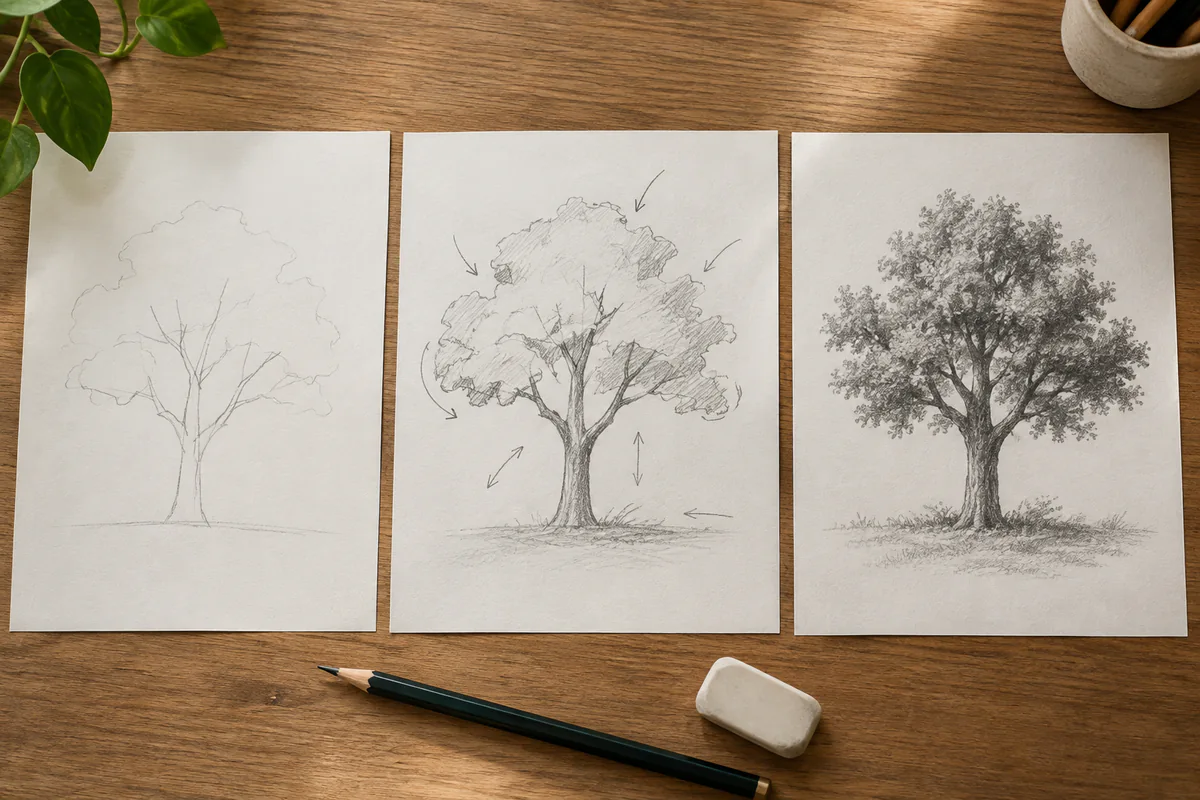
The MIT study’s fourth-session finding — nine participants going unaided-first then assisted, on a topic they had already written about — is too small and too confounded to settle the comparison, but it points at a habit cheap enough to adopt anyway: when you are learning something new, do a rough attempt before you ask for help, even if the attempt is bad. When you already have the skill and are producing output at scale (a professional writer drafting their fiftieth similar email, a developer writing routine boilerplate), the calculus changes, because the skill is already built and the marginal unaided rep adds little. Deliberate practice with AI covers the full feedback-loop workflow — attempt, rubric, feedback, retry — for turning this principle into a repeatable habit rather than a one-off resolution.
This also connects directly to delegation decisions more broadly. If you have not already, run new recurring tasks through the six-dimension check in what not to delegate to AI — the “skill” dimension there is this exact question, applied task by task rather than as a general worry.
A common trap: treating vigilance as permanent effort
The trap on the other side of this is exhausting yourself trying to do everything unaided out of anxiety about “losing” abilities you were never trying to build in the first place. Nobody needs to hand-write every email unaided to preserve their writing skill; the skill-preservation discipline is worth applying to the small number of tasks you have actually decided matter to you, not to your entire workload. If you cannot name the specific skill you are protecting and why it matters to you, the task probably belongs in “delegate freely” rather than “preserve deliberately.”
Try it today
Pick one recurring task that you have been fully outsourcing to AI and would still like to do unaided. Choose a short timebox that fits the task, attempt it without the tool, and only then bring in AI assistance for the parts your unaided attempt struggled with. Record the task, conditions, and date as a baseline. Repeat the same check on a cadence you can sustain; the article does not prescribe a scientifically validated interval.