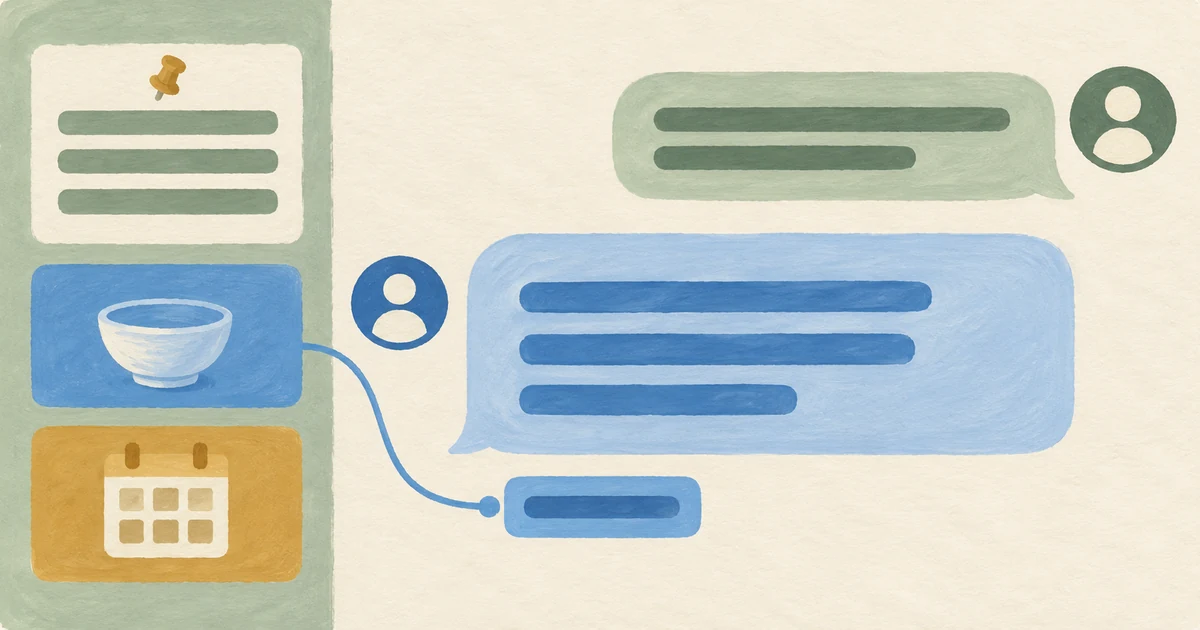


Use a source-grounded notebook for a question you can check against a small, deliberate collection of documents. Its value is the path back to the source, not a guarantee that every answer is correct or complete.
Google’s help pages now call the product Gemini Notebook; this guide retains the familiar NotebookLM name in its address. The current product guide describes source-based answers with inline citations. Check which interface you are using before assuming its behavior.
Start with one question and an approved source set
Choose a low-risk topic you already understand. Use public, licensed or otherwise authorized material, and confirm the exact account and data path before uploading anything private. Do not begin with client contracts, family records or a folder of workplace transcripts merely because they are convenient.
Create a notebook and add a few relevant sources. Record the title, version or retrieval date, owner where relevant, and why each source belongs. Inspect the imported text against the original, especially tables, scanned text, footnotes and exceptions. Google’s source documentation explains current import and refresh behavior. Do not assume a copied source stays frozen or updates instantly.
Ask a question with a known answer first. Then ask about an exception and a fact that is absent. Those tests expose different failures.
A small pilot with a checkable exception
These fictional sources and responses are authored teaching material, not a live NotebookLM run.
S1, workshop information v1: Clay and tools are included in the ticket price.
Firing is paid separately.
S2, autumn offer v2: For workshops booked in October, one firing is included.
Additional firings are paid separately.
Question: “For a workshop booked in October, what does the ticket cover?”
An incomplete answer is: “Clay, tools and firing are included,” citing S2. The citation supports only part of that sentence and omits the one-firing limit.
A checked answer is: “Clay and tools are included according to S1. For an October booking, S2 adds one included firing; additional firings remain chargeable.” It keeps the source of each claim visible. For a real booking, confirm that the offer applies to the same workshop and has not been superseded.
Now ask: “What time does the workshop begin?” Neither source supplies a time. A suitable response leaves it unresolved. A plausible time with a citation to S1 still fails.
Read the citation in context
Open the cited passage and its surrounding text. Does it support the entire claim, including the date, quantity, exception and scope? Is the source authoritative for the question? If the source itself is wrong, a faithful summary can carry that error forward.
A response saying “not found” does not prove the fact is absent from a long collection. Search or read the relevant original section before making an important absence claim. Selective retrieval can miss material, and NIST’s generative-AI profile explains why generated assertions need checking.
Keep the question, source versions, answer and corrections in the pilot record. If you change a source or its permissions, rerun the affected checks before reusing an earlier synthesis.
Check the interface and feedback boundary
Google’s notebooks-in-Gemini guide distinguishes notebook-source grounding from Gemini responses that may also use web search and other tools. Inspect which sources and prior chat context are included instead of assuming an answer used only the files you selected originally.
Read the privacy and terms notice for the actual account. For personal use, submitting feedback can include the interaction’s sources, uploads and outputs for review; qualified Workspace handling differs. Sharing a notebook or moving extracts into another app is another data decision, not a harmless formatting step.
Decide whether the notebook earns its maintenance
Use the notebook pilot sheet to record known-answer, exception and missing-answer results. A notebook is worth keeping when its source set and corrections are manageable for your task. Audio overviews and other generated study materials can be useful extensions, but each still needs an appropriate source and coverage check. A polished format is not a substitute for reading the evidence behind it.