

Companion videos

Observability for LLM apps — companion videos

LLM observability is genuinely thin on YouTube — most of what's there is vendor demos, and most of the practitioners writing about it have small audiences. We picked the cleanest product walkthrough and the longest practitioner roundtable so you can see the same trace concepts both as a UI you would actually click around in and as a system that experienced engineers argue about.

Primary pick

9:21
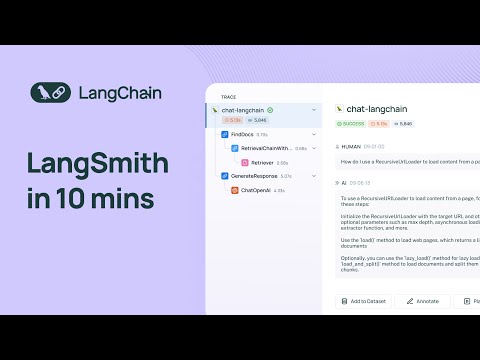
LangSmith in 10 Minutes

LangChain

A guided tour of an LLM trace, project, and dataset by LangChain's co-founder — token cost, latency, error rate, feedback aggregation, drilling into a single retrieval-step span. It's the closest visual analogue to what the article describes when it talks about "every call is a span" and why structured traces beat print logging.

What you should get from this: You can navigate traces, projects and datasets in LangSmith and read off token cost, latency, error rate and per-span detail.

Watch or know first: Basic familiarity with LLM API calls; you don't need to be a LangChain user to follow the trace concepts.

AI Expert note: It is a vendor walkthrough — watch it for the trace, project and dataset concepts rather than the product pitch; the 'every call is a span' idea transfers to any tracing stack.
Open video page

Also worth watching

2:33:51
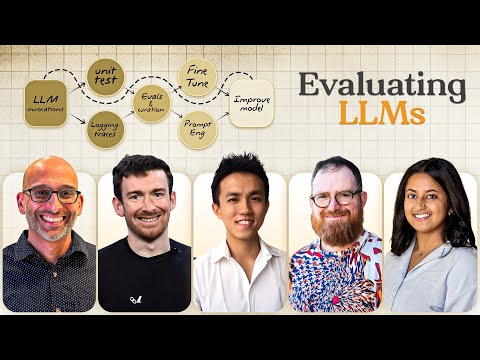
Instrumenting & Evaluating LLMs

Hamel Husain

Hamel Husain, Eugene Yan, Brian Bischof, Harrison Chase, and Shreya Shankar working through tracing, log analysis, LLM-as-judge, and the workflow around looking at real production data. Sit with it the same way you would a long podcast — it is the single best deep treatment of the article's "look at your traces" thesis on YouTube.

What you should get from this: Connect tracing, evaluation, feedback and production review into an operating loop for LLM systems.

Watch or know first: Production LLM experience — it assumes you have real traces and logs worth analysing.

AI Expert note: Two and a half hours with tiny view numbers, kept deliberately: there is no comparable long-form treatment of trace-driven evaluation, so sit with it like a long podcast.

Open video page