
A lease or a consumer contract is written to be legally precise, not to be understood quickly — which is exactly the combination that leads people to skim the parts they find boring (renewal terms, fee escalation clauses, notice periods) and only discover what they actually agreed to when a fee shows up or a notice deadline passes. Reading it properly, clause by clause, takes real time most people do not budget for before signing.
A model can meaningfully speed up the reading part: paraphrasing a dense clause in plain language, flagging dates and fee amounts, and organizing a long document into a scannable structure. What it cannot do — and what this workflow is deliberately built to avoid asking it to do — is give legal advice: it cannot tell you whether a clause is legal, whether it is enforceable in your jurisdiction, what your rights are if the other party breaks it, or what strategy to take if something goes wrong. Contract law varies by country, by contract type, and by facts a model cannot see; a confident-sounding answer here is a risk, not a shortcut.
This workflow is not legal advice. Do not ask a model to determine whether a clause is enforceable, what your legal rights are, whether the contract is fair, or what legal strategy to pursue if a dispute arises. It can paraphrase wording and flag dates, fees, and obligations from the text you give it — it has no view of your jurisdiction’s current law, no way to verify which version of a template you are looking at, and no accountability if it is wrong. For anything beyond “help me understand what this clause says,” use a qualified lawyer, a tenants’ or consumers’ rights organization, or your jurisdiction’s free legal-aid service.
Limitation periods, cancellation rights, mandatory terms, and enforceability are jurisdiction- and fact-specific. Preserve the complete original contract and obtain local advice before signing, terminating, withholding payment, or escalating a dispute.
Step 1: Get the actual signed or offered text, not a summary
Work from the contract document itself — the PDF or scan you were given or are being asked to sign — not from a listing description, a verbal summary, or a template found online that may not match your actual document word for word. If it is a scan, make sure the text is legible before proceeding; a model reading a blurry clause can misquote it with total confidence.
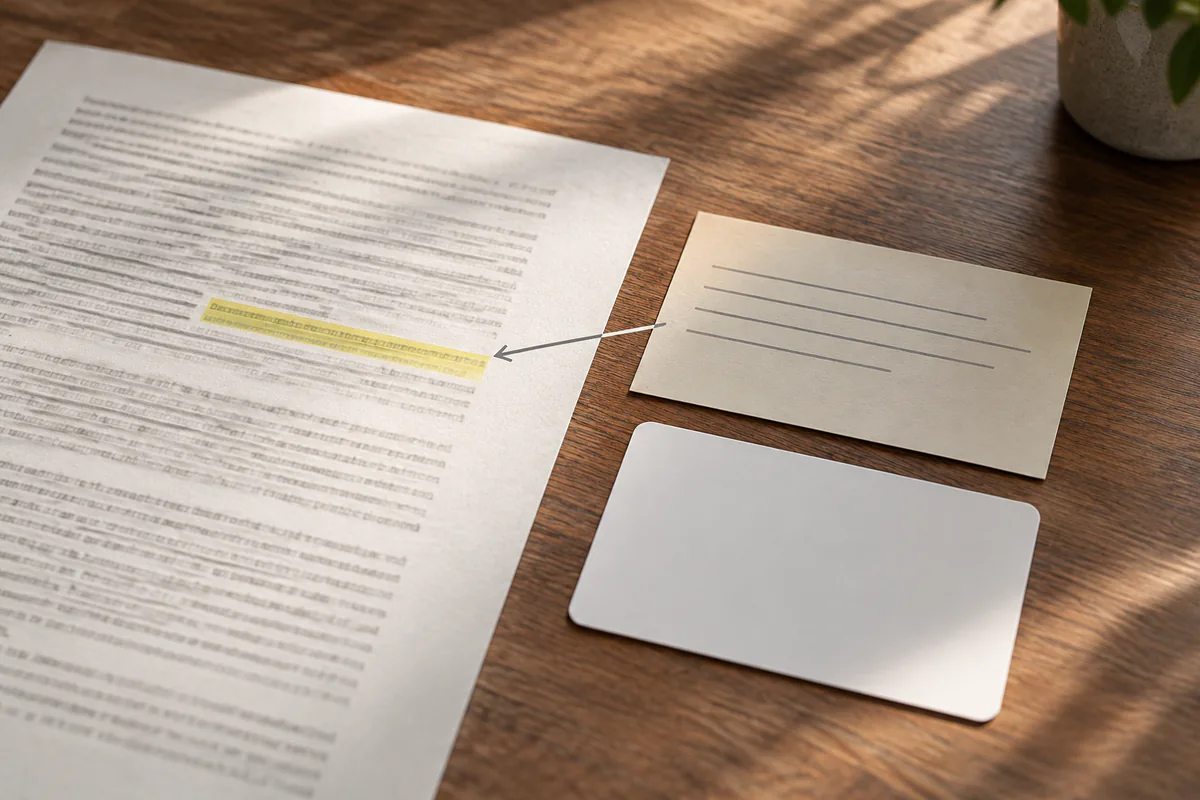
Step 2: Build a clause ledger — exact quote next to plain-language paraphrase
Go section by section (or paste the whole document if it is short enough) and ask for a structured extraction that keeps the original wording visible, not replaced.
Here is the text of a [lease / service contract], copied directly
from the document: [paste text]. For each clause that involves an
obligation, a date, a fee, a notice period, or a right to change
terms, produce a row with: the exact quoted clause text, a
plain-language paraphrase, and a note on anything that seems
ambiguous or that references another section not included here. Do
not state whether a clause is enforceable, fair, or legal — only
paraphrase and flag ambiguity.
Illustrative shape:
Exact quote: "Landlord may increase Rent upon 60 days' written notice,
  not more than once per 12-month period, in an amount not to exceed
  the increase permitted by local ordinance."
Plain-language: Rent can go up, but only with 60 days' written
  notice, at most once a year, and capped by whatever the local
  ordinance allows.
Ambiguous: The clause references "local ordinance" without stating
  the specific cap — this needs to be checked against the actual
  local rule, not assumed.
If the contract includes your name, address, ID numbers, or financial details in the same document, redact or blank those out before pasting the text into a chat tool — the clause-reading exercise does not require them, and a lease or contract paired with a real name and address is a meaningful privacy exposure on its own. See privacy and data hygiene at work for what else to check before uploading a scanned document.
Step 3: Sort obligations, dates, and fees into a single view
Once the ledger exists, pull the operational details into one table so nothing about timing or cost gets buried in prose.
From this clause ledger [paste], build a table of every specific
date, deadline, fee amount, and notice period mentioned in the
contract, with the clause number or heading each one comes from. Do
not add interpretation — just extract what is explicitly stated.
This table becomes the thing you actually check against a calendar — renewal deadlines, notice windows, fee due dates — because a paraphrase alone is easy to read once and forget, while a dated table is something you can act on.
Step 4: Turn ambiguity into questions for a professional or the counterparty
Anything the ledger marked ambiguous, anything that cross-references a section you do not have, and any clause whose consequence you do not understand becomes a specific question — for a lawyer, a tenants’/consumers’ rights service, or, for less serious ambiguities, the other party directly (a landlord, a vendor) asking them to clarify in writing before you sign.
From this clause ledger [paste], list every clause marked ambiguous
or cross-referencing missing text, plus any clause whose real-world
consequence is unclear to me. Phrase each as a specific question for
a lawyer, a tenants'/consumers' rights service, or the other party.
Do not attempt to answer these questions yourself.
Why the exact quote matters more than the summary
It is tempting to skip straight to the plain-language paraphrase and treat it as the document, especially once a contract runs to a dozen pages. Resist this: the paraphrase is a reading aid, not a replacement for the clause itself, and any real decision — signing, disputing, or asking a professional a question — should trace back to the exact wording every time. A ledger that keeps both side by side is what lets you catch the rare but consequential case where a paraphrase quietly drops a qualifying word (“except,” “unless,” “only if”) that changes what the clause actually requires.
Evidence anchors and jurisdiction check
EU consumer starting points include Your Europe contract information, the Commission’s unfair contract terms overview, and the primary Unfair Contract Terms Directive. For cross-border disputes, use the European Consumer Centres Network. Estonian readers can start with Jurist Aitab and the Consumer Protection and Technical Regulatory Authority. These are routing sources, not a legal opinion on the clause in front of you.
Common pitfalls
- Asking “is this legal” instead of “what does this say.” The first question invites a confident, unverifiable answer; the second keeps the model doing the job it is actually good at.
- Trusting a paraphrase without checking it against the quote next to it. Paraphrasing can subtly soften or sharpen a clause’s meaning — the exact quote stays in the ledger specifically so you can catch this.
- Treating a template found online as equivalent to your actual contract. Even a near-identical template can differ in one clause that matters; only the document you were actually given counts.
- Skipping the cross-reference gaps. A clause that says “subject to Section 12” is incomplete without Section 12 — flag it rather than letting the model guess what an unseen section probably says.
Validation and fallback
Re-read every clause the ledger marked as involving money, a deadline, or a right to change terms directly against the original document before you rely on it — a model paraphrasing a long contract can occasionally drop a qualifying phrase (“except during the first 90 days”) that changes the practical meaning. If a clause still feels unclear after this process, that is exactly the kind of question worth a short paid consultation with a professional rather than a second automated pass.
Build your ledger before you sign
Get the actual contract text, and run the clause-ledger, date-extraction, and question-drafting prompts above using the contract question ledger. For a longer document, reading long documents, contracts, and PDFs covers the underlying three-pass method, and why AI sometimes lies is worth reading before you trust any paraphrase of a clause you have not checked against the original wording yourself.