
Care may pass between family members, paid caregivers, and clinical teams. A hurried verbal handoff or task list can omit the cared-for person’s own preferences: how they like things done, what they find helpful or intrusive, and what they have said in their own words. This article offers a structure for recording those preferences without turning them into diagnostic or behavioural labels.
It does not create a care plan, assess capacity, authorize information sharing, or replace a regulated provider’s handoff procedure. Use the cared-for person’s consent and the minimum necessary data.
This is a method for building a handoff document that carries both kinds of information forward - practical tasks and the cared-for person’s own voice - using AI to structure notes you already have. The one thing it must never do is turn observations about a person into inferred behavioural or psychological labels; a handoff describes what was asked and what happened, not a diagnosis of mood or character.
Do not ask AI to characterize the cared-for person’s mental state, mood, or behaviour in clinical or diagnostic-sounding terms (“appears anxious,” “shows signs of decline”) based on your notes. Report specific, observed facts instead - what was said, what happened, what was asked for - and let any clinical interpretation come from the person’s actual care team, not from a summary tool.
Step 1: Gather the two categories separately
Before writing anything, separate what you know into two distinct kinds of information: practical and time-bound (medications, appointments, routines, what needs doing today) and preference-based and lasting (how they like to be spoken to, what kind of help they find useful versus intrusive, who they want present for what). Mixing these together in one long note is where handoffs typically lose the second category - the practical items crowd it out.
Here are my rough notes about caregiving tasks and observations from
this week: [paste notes]. Sort these into two lists: "Practical and
time-sensitive" (medications, appointments, immediate tasks) and
"Preferences and routines" (how they like things done, what they've
said they want or don't want). Do not add any interpretation of mood,
behaviour, or mental state - only sort what I actually wrote.
Step 2: Ask the cared-for person directly, where they can participate
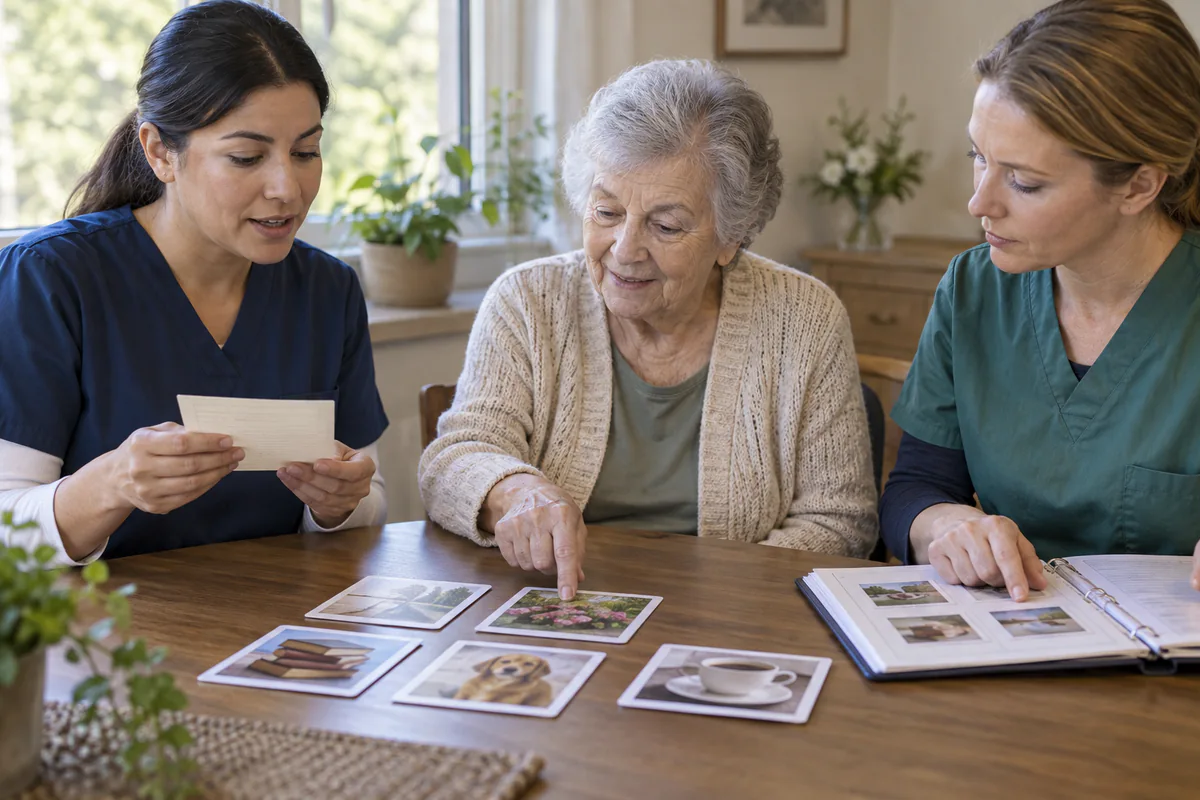
Wherever the person receiving care can meaningfully take part, ask them directly what they want recorded and how - the same principle covered in coordinating an ageing parent’s care. A handoff built entirely from other people’s observations, without the person’s own input, is a document about them rather than one that includes them.
Help me draft a short, plain-language list of questions to ask
[person] about their own preferences for a caregiving handoff - for
example: how they like to be woken or reminded about tasks, what kind
of help they find useful versus intrusive, and who they want present
for specific situations. Keep the questions open enough that they can
answer in their own words, not a leading yes/no.
Record their answers in their own words, not a paraphrase - “I don’t mind being reminded, but I hate being rushed” is a materially different instruction than “prefers minimal reminders,” and rounding it up loses exactly the nuance a handoff exists to preserve.
Step 3: Structure the routine section as observed facts, not inferred patterns
When describing daily routines and what tends to help, stick to what was directly observed or directly stated, and ask AI only to organize that into a clean structure - never to infer a broader pattern or characterization from it.
Here are my notes on [person]'s daily routine and what has helped
recently: [paste notes]. Organize this into a clean routine summary:
time of day, what typically happens, and what has been observed to
help. Do not infer a broader pattern, mood, or behavioural
characterization from these notes - only organize the specific,
observed details I gave you.
Step 4: Track source, owner, and last-updated for every section
A handoff document that mixes recent, confirmed information with weeks-old notes is a liability, not a help - the next caregiver cannot tell which parts to trust. Every section should carry who wrote it, when, and (for anything clinical) where it came from.
Add a "last updated" and "source" note to each section of this
handoff document: who wrote or confirmed each part, and when. Do not
guess at dates or sources I did not provide - leave them marked
"unconfirmed" rather than filling them in.
Step 5: Require a read-back before the handoff is trusted
Before a new caregiver relies on the document, have them read the key sections back - out loud or in writing - to confirm they understood the routines and preferences correctly, especially anything about what the person finds intrusive versus helpful. A handoff that was only skimmed is not meaningfully different from no handoff at all.
The full caregiving handoff template gives you this structure ready to use: practical tasks, the person’s own-words preferences, an observed-facts routine section, source and update tracking, and a read-back confirmation line.
A caregiving handoff can accumulate detailed personal and health information about someone who did not necessarily choose to have it typed into an AI tool on their behalf. Use the minimum necessary detail, avoid pasting full clinical histories when a summary will do, and see what ChatGPT remembers, sees, and shares before building this document in a shared or personal account. If the handoff is part of ongoing recurring care logistics rather than a one-time transition, chronic-condition care administration covers the broader coordination board this handoff can feed into.
Updating the handoff as things change
A handoff document is only trustworthy if it stays current, and caregiving situations change often enough that a stale document becomes actively misleading - a preference that shifted after a hospital stay, a routine that no longer applies, a new clinician instruction that supersedes an old one. Rather than editing over previous entries, add new dated entries and mark superseded ones clearly, the same discipline covered in chronic-condition care administration for ongoing coordination boards.
Here is an update to one section of the handoff: [paste the change
and what prompted it]. Add this as a new dated entry rather than
replacing the old one, and mark the previous entry as superseded
with today's date. Do not merge the old and new information into one
combined statement - keep them as distinct, dated entries.
This history matters most exactly when it seems least necessary - during a smooth stretch where nothing changes for months, followed by a period where several things change quickly and a new caregiver needs to know not just what is current, but what recently stopped being true.
Evidence anchors for dignity, consent, and continuity
The WHO Integrated Care for Older People resources emphasize person-centred care. AHRQ’s care transitions resources and Questions Are the Answer support structured communication. The NHS guide to consent explains the clinical consent principle, while the EDPB lawful-processing guide and data minimisation guide are starting points for EU privacy. Local care, consent, capacity, and data rules still require qualified review.
Common pitfalls
- Letting task lists crowd out preferences. Keep the two categories visibly separate so practical items do not obscure the person’s stated preferences.
- Paraphrasing the person’s own words into a category label. “I hate being rushed” and “prefers efficiency” are not the same instruction - keep their actual words where it matters.
- Asking AI to characterize mood or behaviour. Report what was observed or said; leave clinical interpretation to the person’s actual care team.
- Skipping the read-back. A handoff nobody confirms understanding of is a document, not a handoff.
- Letting the routine section go stale. Preferences and what helps can change; a “last updated” date on every section makes staleness visible instead of assumed away.
Build it before the next handoff
Separate practical tasks from lasting preferences, ask the cared-for person directly wherever they can participate, keep routine notes as observed facts rather than inferred patterns, track source and date on every section, and require a read-back before a new caregiver relies on it. Use the caregiving handoff template to hold it all together.